10 Evaluation Questions to Ask Before Selecting a Quoting Solution

Table of Content
- 1. Does the platform connect to my distributors with live pricing and inventory?
- 2. How does the platform handle duplicate SKUs across distributors?
- 3. Can I quote complex bundles and configurations accurately?
- 4. Where is the margin visible in the workflow?
- 5. How does the approval workflow function?
- 6. What happens to quote data after the customer approves?
- 7. Does the platform support rich product content?
- 8. How does the platform handle customer-specific and contract-based pricing?
- 9. What does the analytics and reporting actually show?
- 10. How long does implementation actually take, and what does it require from my team?
- FAQs
When VAR businesses pick up just any quoting tool, based on the generic demo, they end up with software that works beautifully for simple deals. The software, however, falls apart the moment a rep tries to configure a 40-line quote across three distributors.
The demo will always look good. The questions you ask before the demo determine whether the tool actually fits the way your business operates.
Here are ten questions worth asking every vendor before you commit.
1. Does the platform connect to my distributors with live pricing and inventory?
This is the first question for any VAR, and it should be non-negotiable. A quoting tool that pulls pricing from a static catalog or requires manual updates is a tool that will produce stale quotes. Distributor prices change daily. The platform needs to pull current cost data at the moment the quote is being built, not from a file that was synced last night.
Ask specifically which distributors are supported, how frequently pricing updates, and whether inventory availability is visible inside the quoting workflow.
2. How does the platform handle duplicate SKUs across distributors?
The same product will appear under different part numbers across different distributors. Without normalization, reps end up selecting mismatched items, generating re-quote requests, and creating sourcing errors that take time to untangle. Ask whether the platform aggregates and deduplicates catalog data automatically or whether that maintenance falls on your team.
3. Can I quote complex bundles and configurations accurately?
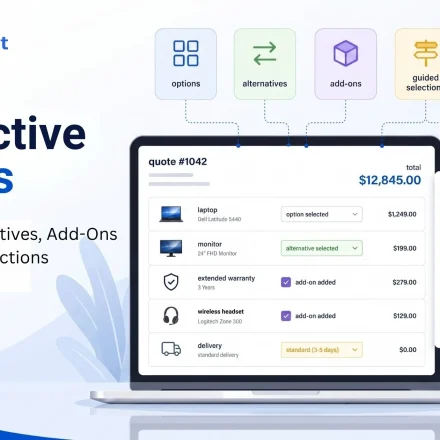
If your deals involve hardware, software, services, and recurring support in the same quote, test that scenario in the demo rather than a simple three-line example. Ask how bundle configuration rules work, whether the platform prevents incompatible combinations, and how it handles deals where bundle components come from different distributor sources.
4. Where is the margin visible in the workflow?
Margin visibility at the end of the quoting process, in a report or summary screen, is too late. Ask whether reps can see margin at the line item level while they are building the quote, and whether the platform flags quotes that fall below defined thresholds before they go out rather than after.
5. How does the approval workflow function?
Slow approvals kill deals. Ask how approval routing works, how quickly notifications reach approvers, and whether approvers can act from a mobile device or need to be at a desk. Also, ask what happens when an approver is unavailable. If the answer involves email threads or manual escalation, that is a workflow problem waiting to happen.
6. What happens to quote data after the customer approves?
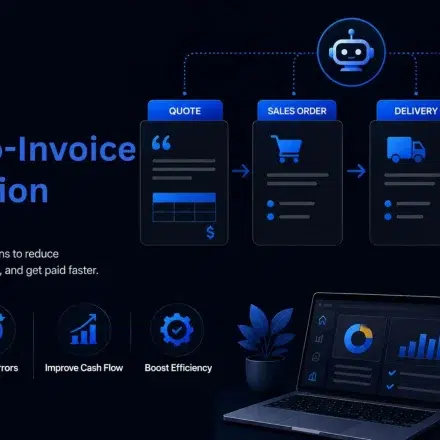
A quote that requires someone to retype information into a procurement or ERP system to generate a purchase order is a tool that has solved half the problem. Ask specifically how approved quotes move into procurement, whether purchase orders are generated automatically, and how many manual steps exist between quote approval and PO submission to the distributor.
7. Does the platform support rich product content?
For VARs managing catalogs of millions of SKUs, product descriptions, images, and technical specifications matter. A rep cannot sell a product they cannot explain. Ask whether the platform provides content enrichment through partnerships with providers like Etilize or Icecat, and whether that content is included or costs extra.
8. How does the platform handle customer-specific and contract-based pricing?
Different customers have different negotiated rates. Government and education accounts often require specific contract catalogs. Ask whether the platform supports login-based pricing that loads automatically per account and whether contract-specific catalogs can be configured separately from the standard catalog.
9. What does the analytics and reporting actually show?
Ask for a live look at the reporting, not a screenshot. Specifically ask whether you can see the quote-to-win rate, average cycle time, approval turnaround time, and discount distribution by rep. If the reporting only shows pipeline value and quote volume, it is a sales dashboard, not a quoting operations tool.
10. How long does implementation actually take, and what does it require from my team?
Every vendor will give you an optimistic number. Ask for a breakdown of what implementation involves, how many distributor connections are included, what catalog setup requires, and whether you need internal technical resources or if the vendor handles it.
For a platform built specifically for VARs, like VARStreet, implementation typically takes days to a few weeks. Generic enterprise tools can take significantly longer because they require custom configuration to handle distributor-driven workflows.
These questions will not decide for you, but they will surface the gaps that a polished demo will not.
A platform that answers all ten confidently, with specifics rather than generalizations, is one worth evaluating seriously.
Want to see how VARStreet answers these questions in practice?
Book a demo and bring this list with you.