7 CRM Analytics Secrets for Value-Added Resellers to Increase Cashflow (VARs)
Table of Content
In today’s fast-moving B2B landscape, Value-Added Resellers (VARs) can no longer rely on instinct or fragmented spreadsheets to drive business growth. Whether you manage IT services, SaaS products, or office supplies, your success depends on one thing above all: data visibility.
Key Takeaways:
- Dashboards that drive action: Executive Snapshot (pipeline value, velocity, CLV) + Sales Performance Hub (stage conversion, deal size, lead-to-opportunity).
- Measure what makes money: Pipeline Coverage, Quote-to-Close Rate, Average Deal Size, Churn/Retention; stop chasing vanity metrics.
- Pipeline hygiene = forecast truth: Prune stalled/aged deals weekly; require next-step commitments and stage exit criteria.
- Re-engage warm revenue: Utilize inactivity and product history segments to trigger targeted win-back and renewal campaigns.
- From reports to workflows: Tie insights to tasks, bundling managed services, auto-creating follow-ups, and coaching cues.
- Predictive and AI-assisted tools: Lead scoring, deal-win likelihood, churn risk, and next-best action enhance accuracy and prioritization.
- Cadence builds culture: daily updates, weekly reviews, monthly retrospectives, accurate data in, and reliable forecasts out.
- Formulas that matter:
- Pipeline Coverage = Open Pipeline / Target
- Pipeline Velocity ≈ (# Opps × Win Rate × Avg Deal Size) / Sales Cycle Length
- Quote-to-Close = Closed-Won / Quotes Sent
- Pipeline Coverage = Open Pipeline / Target
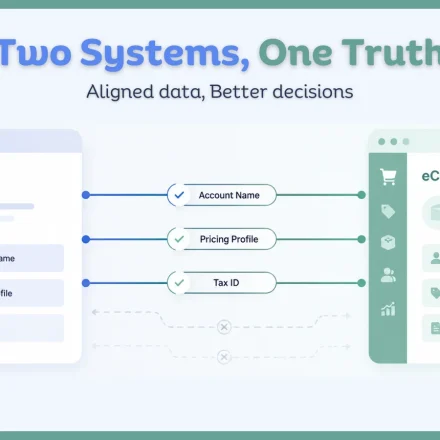
- Integrate the stack: Connect CRM with CPQ/quoting, eCommerce, and billing to see the full quote-to-cash journey.
- Coach with evidence: Use call transcripts, stage bottlenecks, and dashboard deltas for targeted, skill-based coaching.
A modern VAR CRM is more than a customer database — it’s the strategic command center of your business. According to a Salesforce study, CRM directly improves sales by 29% and increases sales productivity by 34%. Yet, many VARs still struggle with scattered systems, manual reporting, and missed opportunities.
If your sales team spends more time building reports than closing deals, your CRM isn’t working for you. For Value-Added Resellers, the difference between merely tracking sales and actively driving them comes down to one thing: actionable CRM analytics for resellers.
We’ve broken down seven expert secrets to help you stop tracking vanity metrics and start using insights that directly improve customer trust, profitability, and long-term partnerships.

7 CRM Analytics Secrets for Value-Added Resellers
1. Build Your Visibility Foundation
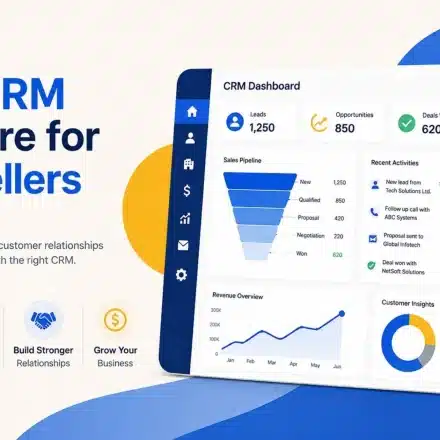
Effective analytics begins with clear sightlines. Your team should have quick access to performance data, not spend hours compiling spreadsheets. A robust CRM analytics tool for resellers should feature two core dashboards that streamline decision-making:

When dashboards become part of your daily automation-driven workflow, your data transforms from reactive reports to proactive growth enablers, which is a core skill every successful reseller should master.

Pro Tip:
Treat every CRM dashboard metric as a trigger, not a report, by auto-creating tasks, alerts, or playbooks whenever thresholds are crossed, such as stalled deals, churn risk, or quote inactivity.
2. Measure the Right KPIs for VARs
Data is valuable only when it drives action. Many VARs track vanity metrics instead of focusing on KPIs that reflect true business health and customer engagement.
Key KPIs include:
- Pipeline Coverage Ratio: Are you generating enough open deals to meet quarterly targets?
- Quote-to-Close Rate: Your efficiency score for proposal execution and customer trust.
- Average Deal Size: A reflection of upselling, cross-selling, and product bundling strategy.
- Customer Churn Rate: A crucial early signal for retention problems.
Tracking these consistently aligns your entire marketing, sales, and service teams around data-driven decisions that build sustainable partnerships and long-term value.
This helps to make informed, data-driven decisions aligned with broader business objectives.
3. Prioritize Pipeline Hygiene
A full pipeline doesn’t always mean a healthy one. Outdated or dead deals distort your forecasts and drain resources. Maintaining pipeline hygiene ensures your CRM reflects actual customer behavior, not assumptions.
Two critical weekly reports every expert VAR manager should review are:
- Stuck Deals Report: Flags opportunities stalled beyond your average pipeline velocity.
- Opportunity Aging Report: Tracks how long deals stay open. Deals older than 90 days have a close rate of less than 6%.
This consistent review process improves forecast accuracy, enhances sales skills, and keeps your team focused on viable deals: the foundation of CRM analytics for resellers.
Pro Tip:
Weight your forecasts using behavioral signals like proposal views, meeting activity, and portal logins rather than stage probability alone to convert CRM analytics into cash-flow-accurate predictions.
4. Reignite Dormant Leads and Accounts
Every VAR has quiet leads and customers, but re-engaging these dormant accounts is often the fastest way to generate revenue. Your CRM analytics should act as a detector for these hidden opportunities:
- Inactive Account Reports: Easily spot customers who haven’t placed an order in 6 to 12 months.
- Segmentation by Product History: What did they buy? Was it a firewall three years ago, or bulk furniture 18 months ago? Use this context to tailor an offer they can’t ignore.
- Automated Re-Engagement: Trigger personalized outreach campaigns based on clear events, such as the last order value or approaching renewal timelines.
Targeted win-back campaigns based on CRM insights can achieve a response rate up to four times that of a generic email blast. This strategy isn’t about filling a funnel; it’s about revitalizing existing, warm relationships.
5. The Leap from Reporting to Actionable Intelligence
Analytics should be a living, problem-solving tool, not a static report. The best CRM analytics for resellers integrate insights directly into sales and service workflows.
For instance:
- Your analytics show that deals involving managed services and subscription products close faster.
- Sales leaders adapt their strategy and train reps accordingly.
- Within one quarter, both deal size and velocity increase.
This is how resellers evolve from being reactive to predictive, using data as a trust-building, action-driving business resource.
6. Predictive Analytics and AI
The future of CRM analytics for resellers lies in automation and predictive intelligence. Modern AI-driven systems help anticipate customer needs, improve forecasts, and prevent churn.
Look for CRM platforms offering:
- Predictive Lead Scoring: Prioritizing leads based on conversion probability.
- Deal Forecasting Models: Projecting revenue outcomes using behavioral data.
- Customer Retention Signals: Detecting early signs of disengagement.
With predictive analytics, you move from guesswork to expert-level precision, strengthening customer relationships and improving ROI.
7. Embed Data Discipline into Your Team Culture
Even the most advanced CRM tool is only as effective as the people using it. Data discipline is a business skill rooted in accountability, consistency, and collaboration.
A disciplined team culture means:
- Every rep updates deal stages accurately and on time.
- Managers use insights for coaching, not micromanagement.
- Leaders use analytics for forward-looking decisions.
When your organization treats CRM as a trusted partnership between data and people, it enhances every end-user interaction, improves problem-solving, and solidifies trust across departments.
Transform Your CRM: Stop Guessing, Start Growing
In the modern B2B ecosystem, growth is rarely accidental. For VARs, mastering CRM reporting and analytics is the crucial difference between merely observing sales and actively driving a high-performance revenue engine.
With focused dashboards, clean pipelines, predictive intelligence, and disciplined data practices, you can turn your CRM into a powerful sales intelligence hub.
Ready to move from static reports to exponential revenue?
Empower your business with VARStreet CRM: the complete platform that unifies quoting, analytics, and customer data to help VARs build smarter, sell faster, and grow stronger.
Book a free demo today to learn more!
FAQs
What is pipeline velocity in a VAR business, and how do I calculate it?
Pipeline velocity estimates how fast you turn opportunities into revenue: (Opportunities × Win Rate × Avg Deal Size) ÷ Sales Cycle Length. Track it monthly to see if changes in pricing, training, or bundling speed up cash flow.
Which CRM dashboards should a VAR use for daily decisions?
Two: an Executive Snapshot (open pipeline, velocity, CLV, renewal risk) and a Sales Performance Hub (stage conversions, quote-to-close, average deal size, rep activity-to-outcome ratios).
What KPIs matter most for CRM analytics in VAR sales?
Pipeline Coverage, Quote-to-Close Rate, Stage Conversion Rates, Average Deal Size, Churn/Retention, Renewal and Upsell Rates, and Forecast Accuracy are tied to stage exit criteria.
What is pipeline hygiene, and why does it improve forecasting?
Pipeline hygiene removes dead or outdated deals, enforces next-step commitments and time-in-stage limits, and keeps forecasts grounded in reality, boosting forecast accuracy and rep focus
How can a VAR improve the quote-to-close rate using CRM analytics?
Analyze loss reasons and stage bottlenecks, standardize winning bundles (for example, hardware + managed services), tighten approval SLAs, and trigger follow-ups based on proposal views and pricing page revisits.
How can I effectively re-engage dormant accounts using CRM?
Run Inactive Account reports (6 to 12 months), segment by past product, trigger tailored offers or renewals, and route tasks to reps with pre-written sequences (email + call + demo).
How does AI or predictive analytics help VARs make more accurate forecasts?
It scores leads and opportunities, predicts win likelihood and churn, surfaces next-best actions, and weights forecasts with behavioral signals (such as opens, meetings, and portal logins) instead of relying on intuition.
What reports should managers review weekly to keep data honest?
Stuck Deals, Opportunity Aging, Stage Conversion by Rep, and Forecast vs. Reality (last 90 days). Use them for coaching and pruning, not as a form of punishment.
How should a VAR connect CRM with CPQ or eCommerce for full visibility?
Integrate quoting, catalog, pricing, and order data so that the CRM displays line-item details, proposal status, margin, and renewal dates, enabling accurate forecasts and targeted upsell opportunities.
What are the most common CRM analytics mistakes VARs make?
Tracking vanity metrics, letting deals age without exit criteria, manual reporting with no workflows, ignoring dormant revenue, and forecasting without behavioral or engagement data.
Pragya Bhardwaj
Pragya Bhardwaj is a seasoned B2B content writer with a strong background in SaaS and digital commerce. She specializes in creating clear, engaging, and search-optimized content that helps businesses connect with their audiences and build authority online. With experience across blogs, whitepapers, eBooks and website copy, Pragya brings both strategy and storytelling to every piece she writes. Editorial Policy
Read More