Automation and AI in Sales Quoting: How Smart Tools Drive Accuracy and Efficiency?

Table of Content
Automation and AI are changing that reality. By replacing manual work with automated workflows and intelligent validation, quoting becomes faster, more accurate, and easier to approve. Instead of chasing corrections or waiting for signatures, sales teams can focus on building relationships and closing deals.
According to McKinsey, companies that adopt sales automation see up to 15 percent higher revenue growth and 10 percent higher sales efficiency compared to peers. This shows that automation is not a luxury. It is becoming essential for businesses that want to compete in fast-moving markets.
This article examines how automation and AI are reshaping sales quoting. We’ll examine how quoting automation tools function, the role of AI in enhancing accuracy, and the business implications of achieving end-to-end efficiency.
The Shift to Automated Sales Processes
Quoting has always been a bottleneck in B2B sales. The complexity arises from juggling distributor catalogs, pricing rules, discounts, and approvals — all while attempting to respond promptly to a prospect. Manual quoting may have worked when volumes were low. Still, in today’s competitive environment, it is one of the clearest points of failure.
Why Manual Quoting Holds Teams Back?
Time-Intensive Data Entry
Sales reps spend hours pulling product details from spreadsheets, distributor feeds, or outdated PDFs. Every handoff slows the process and increases the risk of typos or mismatched SKUs.
Error-Prone Calculations
Discounting, tax rules, and contract-specific pricing leave room for mistakes. Even small errors can undermine credibility and erode margins.
Approval Delays
Quotes often sit in inboxes waiting for manager sign-offs. This delay frustrates customers and gives competitors the opening to step in with faster responses.
Lack of Visibility
Without centralized systems, managers cannot track the health of their pipeline or identify where quotes are getting stuck. Forecasting becomes unreliable.
These challenges are not just operational headaches. They directly affect win rates. A study by Salesforce found that 66% of sales representatives’ time is spent on non-selling tasks, with quoting and administrative work among the biggest drains. That means only a third of their time is spent on actual selling.
How Automation Changes the Game?
Sales automation software addresses these pain points by removing repetitive, manual work.
- Centralized Catalog Access: Instead of juggling multiple files, reps pull data from a unified catalog that integrates directly with distributor feeds.
- Automated Price and Discount Rules: Configurations and discounts are applied automatically, reducing the need for manual checks.
- Workflow Automation: Quotes move through approval paths automatically, with notifications ensuring no step stalls.
- Visibility for Managers: Dashboards display the location of quotes in the pipeline, enabling leaders to step in proactively.

The shift here is not just about speed. It is about consistency and trust. Automation ensures that every quote follows the same rules, every discount is validated, and every customer receives a professional and accurate proposal.
Practical Example
Consider a VAR managing quotes across five distributors. Manually, each quote requires cross-checking pricing files and emailing managers for approvals, leading to delays of days. With automation, the same process is cut to hours or less. Product data is synced in real time, pricing rules are applied automatically, and approvals are routed digitally. The outcome is not just faster quoting but also higher confidence that every deal is priced correctly.
Quoting Automation Explained
Quoting automation is more than just replacing spreadsheets with software. It is about building a system that ensures every quote is accurate, compliant, and delivered quickly without unnecessary back-and-forth.
What Quoting Automation Tools Do?
Centralize Product and Pricing Data
Instead of pulling information from multiple files, quoting tools connect directly to distributor catalogs, pricing feeds, or ERP systems. This ensures that sales reps always work with the most up-to-date data.
Apply Business Rules Automatically
Discount structures, approval thresholds, and contract-specific pricing can be preconfigured for optimal efficiency. The system enforces these rules in real time, so reps don’t need to remember every exception.
Generate Professional Proposals
With templates built into the system, reps can generate branded, customer-ready proposals in minutes. Proposals are consistently designed and compliant with company standards.
Track Quote Versions and Revisions
Every change to a quote is logged. This avoids confusion when multiple stakeholders are involved and provides a clear audit trail, ensuring transparency and accountability.
Integrate Approvals and Workflows
Instead of emailing managers for sign-off, approvals are handled within the tool through automated routing. This shortens cycle times and ensures accountability.
Why This Matters in Practice?
- Speed: Faster quoting means prospects spend less time waiting and more time considering your solution.
- Accuracy: Automated checks reduce errors that frustrate customers and cut into margins.
- Consistency: Every quote follows a standardized process, ensuring a professional and reliable customer experience.
- Scalability: As quoting volume grows, automation ensures teams don’t get overwhelmed.
Read the blog—-Maintain a Steady Flow of Repeat Business with Sales Quoting Software
Example Scenario
A distributor with hundreds of SKUs often faces the challenge of ensuring that sales representatives quote the correct combinations of products and services. With automation:
- Bundled SKUs can be configured automatically.
- Approval rules prevent reps from over-discounting.
- Proposals are generated instantly in a polished format.
What once required hours of manual effort now takes minutes, allowing the sales team to focus on customer conversations instead of paperwork.
Manual vs Automated vs AI-Enhanced Quoting

The Role of AI in Sales Quoting
Automation sets the foundation by removing repetitive tasks, but AI takes it further by making quoting smarter. Instead of just speeding up the process, AI enhances accuracy, identifies opportunities, and enables sales teams to make more informed decisions.
AI for Accuracy and Error Reduction
AI can validate quotes against historical data, current distributor feeds, and business rules to ensure accuracy and consistency. If a rep accidentally applies an unauthorized discount or selects an outdated SKU, the system flags it instantly. This prevents errors before the quote ever reaches the customer.
This layered approach combines speed with intelligence, ensuring every quote is both fast and strategically optimized.

From Quote to Close — End-to-End Efficiency
Quoting automation and AI does more than speed up proposal generation. They reshape the entire process from the first draft of a quote to the moment the deal is signed. This end-to-end efficiency is what transforms quoting from a bottleneck into a growth driver.
Faster Approvals
Automated workflows route quotes to the right managers instantly. If discount thresholds are exceeded, the system triggers an approval request without manual intervention. With AI, approval urgency can even be prioritized based on deal size or stage, ensuring high-value opportunities do not get stuck in queues.
Virtual Signatures
Paper-based signatures or manual email confirmations delay deals. Integrated e-signature tools allow customers to review, approve, and sign quotes digitally in minutes. This step alone can significantly reduce the sales cycle.
Consistency Across Systems
When quoting tools sync with ERP, CRM system, and distributor data, every document reflects the same numbers. Sales representatives, procurement teams, and finance teams operate on a single source of truth, reducing reconciliation headaches.
Reduced Back-and-Forth with Customers
Instead of multiple quote revisions, automation and AI deliver a clean, correct, and professional proposal the first time. Customers experience less friction, which builds trust and accelerates decision-making.
Practical Flow: Quote-to-Close in Action
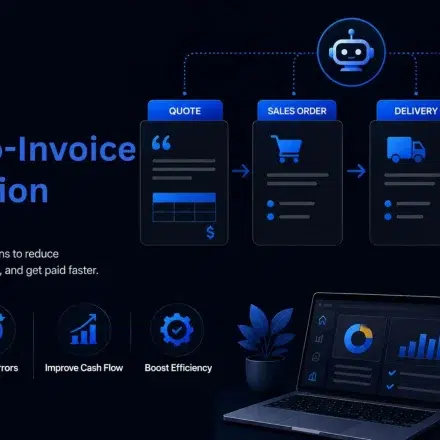
- Rep builds a quote using automated pricing and catalog feeds.
- AI validates the configuration and suggests complementary products.
- Approval routing happens automatically based on deal size and discount levels.
- The customer receives a polished proposal with an integrated e-signature.
- Signed documents are then returned to the CRM and ERP systems for fulfillment.

What used to take weeks can now be completed in days, sometimes even hours. This shift not only accelerates revenue but also elevates the customer experience.
Business Impact of Automation and AI in Quoting
Automation and AI in quoting are not just operational upgrades. They create measurable business value across speed, accuracy, revenue, and customer trust.
Reduced Cycle Times
Quoting that once took days, now takes hours or less. Faster quotes mean customers stay engaged, competitors have less room to undercut, and deals move to close more quickly. Many companies report cycle time reductions of 30-50 percent after adopting quoting automation.
Lower Error Rates
With live distributor data, automated pricing rules, and AI-driven validation, the margin for error is significantly reduced. Fewer errors mean fewer lost deals, fewer invoice disputes, and less margin leakage.
Higher Win Rates
When customers receive accurate, professional quotes faster, trust grows. Combined with AI-driven upsell recommendations, this can lift win rates and average deal sizes.
Improved Sales Productivity
Sales reps regain hours each week that were previously lost to administrative tasks. Instead of chasing approvals or correcting mistakes, they spend more time selling and building relationships.
Stronger Forecasting and Visibility
Managers gain dashboards that track quote-to-close ratios, cycle times, and revenue trends. AI insights highlight risks before they impact the pipeline, improving forecast accuracy.

The message is clear: automation sets the baseline for speed and consistency, and AI elevates it further by adding intelligence and foresight. Together, they transform quoting from a cost center into a growth engine.
Why Automation and AI Belong in Quoting?
Quoting has always been a critical point in the sales cycle. For many businesses, it remains the biggest source of delays and errors. Manual processes may get the job done, but they hinder teams from reaching their full potential. Automation and AI change this equation by making quoting faster, more accurate, and more intelligent.
The business impact is undeniable: shorter cycle times, fewer errors, higher win rates, and improved productivity. Automation eliminates repetitive work, while AI provides insights and recommendations that enable sales teams to sell smarter. Together, they elevate quoting from a back-office task to a growth driver.
See how VARStreet helps businesses automate quoting with AI-powered tools today!