Table of Content
Basics Of Walmart Marketplace
Walmart Marketplace is an e-commerce platform where independent third-party sellers list and sell products on Walmart.com. For B2B sellers, it offers another channel to reach Walmart’s online customer base.
Key things to know:
- Third-party selling: Sellers manage their own product listings, pricing, inventory, and sales through Walmart Marketplace.
- Seller requirements: Businesses generally need valid business documentation, product identifiers such as GTINs/UPCs, ecommerce selling experience, and the ability to fulfill orders and handle returns.
- Fulfillment options: Sellers can use Walmart Fulfillment Services (WFS) or manage fulfillment themselves through Fulfillment by Merchant (FBM).
- Seller tools: Seller Center helps manage products, inventory, and pricing, while Walmart Connect supports paid advertising. Eligible brands can also use Brand Portal for intellectual property management.
- Marketplace fees: There is no monthly subscription fee, but Walmart charges referral fees on completed sales. Rates vary by product category, so B2B sellers should factor them into their margins.
Advantages Of Selling On Walmart Marketplace
Selling on Walmart Marketplace can give B2B sellers access to a large customer base, another ecommerce sales channel, and tools for fulfillment and advertising. Some of the key advantages include:
Reach a Large Customer Base
Walmart’s scale gives sellers access to a massive existing audience. Approximately 280 million customers and members visit Walmart stores and ecommerce websites each week, according to Walmart’s January 2026 first-party data. For B2B sellers, this can create an opportunity to reach buyers beyond their existing sales channels.
Compete in a Less Crowded Marketplace
Walmart Marketplace has historically had fewer sellers than Amazon, giving some categories a less saturated competitive environment. Walmart had around 150,000 active sellers in 2024, according to data reported at the time.
For B2B sellers, lower seller density can make product visibility more attainable, although competition still varies by category and product.
Avoid Monthly Marketplace Fees
Walmart Marketplace charges no setup or monthly fees. Instead, sellers pay a referral fee when they make a sale, with current rates ranging from 6% to 15% depending on the category and product type.
This fee structure can be useful for B2B sellers testing Walmart as an additional sales channel because there is no recurring marketplace subscription cost.
Use Walmart Fulfillment Services
Walmart Fulfillment Services (WFS) allows sellers to outsource inventory storage, order fulfillment, and returns to Walmart. Walmart reports that items using WFS with a “Fulfilled by Walmart” tag and delivery promises of two days or less saw 50% average GMV growth in its June 2024–June 2025 first-party data.
For B2B sellers, this can reduce some of the operational work involved in fulfilling marketplace orders, provided their products are suitable for the service.
Access Built-In Advertising Tools
Walmart Connect gives sellers access to advertising tools to promote their products across Walmart’s ecommerce ecosystem. According to Walmart, Marketplace advertisers see an average 5:1 return on ad spend (ROAS). For B2B sellers, these tools can help increase product visibility and reach shoppers actively searching for relevant products.
How To Become A Walmart Marketplace Seller?
Now, you might have got an overview of the advantages of selling at Walmart Marketplace. Follow the steps given below to become a B2B seller on Walmart:
Application Process
The first step to becoming a Walmart Marketplace seller is to apply for an account on their website. Simply go to marketplace.walmart.com and click on the Apply button.
Fill the application form with all the requirements like US Business Tax ID, planned integration method for product catalog, product categories, size, and any other related information. The application process takes around 10 to 15 minutes to be completed.
When you provide enough information in the application form it serves you with more time in generating sales. It is advisable to recheck the information filled in the application form before finally submitting it. Now, click on the “Apply Now” button to submit your Walmart application.
Registration Process
After the application process gets approved, you will receive a registration link for your business. Go through the six steps to complete the registration process:

- Account Creation- In the first step of account creation, you need to generate a username and password for the management of your business listing on Walmart. After setting a unique password, these credentials can then be used to log in to the Seller Center for account management.
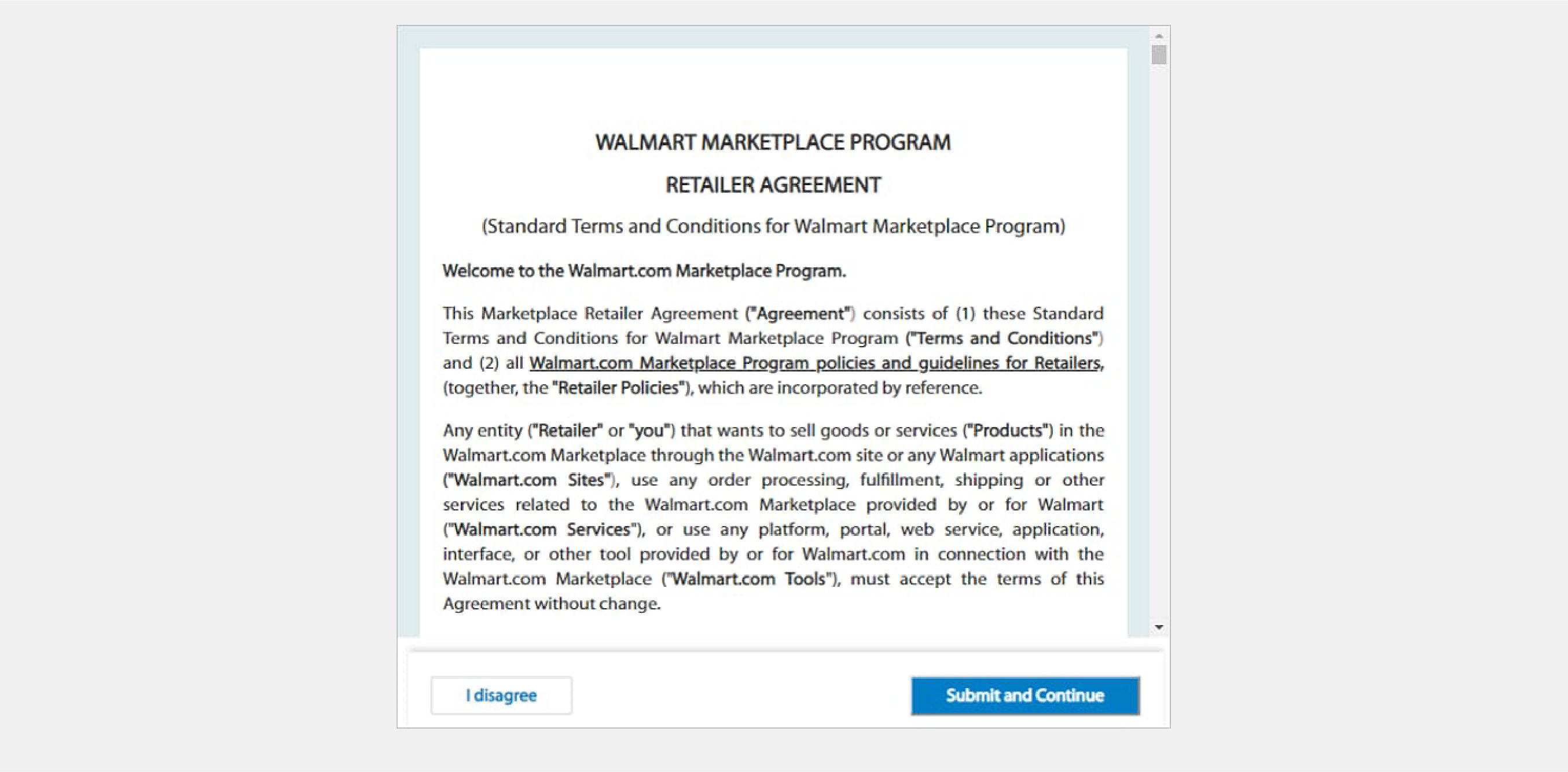
- Retailer Agreement- Review the Walmart retailer agreement. The document includes all the terms and conditions that are required to become a B2B seller on the Walmart marketplace.
- Registration Of The Company- The next step is to enter the company’s display name and corporate address.

- Taxes- Fill out the W-9 form for tax purposes. It includes name, address, and Taxpayer Identification Number (TIN).

- Payment Details- The payment partners of Walmart such as Payoneer and Hyperwallet allow you to process the sales payment of your business. The B2B sellers with W-8ECI tax certification are allowed only to select Payoneer as the payment option.

- Shipping Information- The shipping information consists of methods of shipping, regions of shipping, and the shipping pricing model. Value, Next Day, Expedited, and Standard are some of the default shipping methods.
Partner Profile
The B2B sellers can start selling on Walmart after filling out their Partner Profile. It requires the verification of your bank account.
For the company’s verification, Walmart deposits a penny to your bank account to ensure the account’s legitimacy. It is known as the “WM Marketplace Penny Test.” After this, you can check the box as complete. If you did not receive the amount in your bank account, you have to recheck your banking information before proceeding further.

Display Your Products
Now, it is time to showcase your products. Try to include images, videos, and product descriptions to make your listings look more appealing. The selection of categories and subcategories enhances the appeal for every listed product. It will assist the customers to locate your products effortlessly.
Start Selling
After complete verification and product listing, you can start selling your B2B products to the pool of customers. However, it may take some time as Walmart reviews all the profiles before allowing them to sell. The process may take up to 24 hours.
Strategies To Generate More Sales In Walmart Marketplace
Generating more sales on Walmart Marketplace requires attention to product visibility, pricing, fulfillment, seller performance, and advertising. B2B sellers can focus on the following:
1. Optimize Product Listings
- Improve listing quality: Complete relevant product attributes and provide detailed, accurate product information.
- Use search-friendly titles: Include the brand, product name, key specifications, and relevant attributes buyers may search for.
- Use high-quality images: Add clear product images that show important details and help buyers evaluate the product.
- Review listing performance: Use Walmart’s seller tools to identify areas where product listings can be improved.
2. Price Products Competitively
- Monitor competing offers and keep pricing competitive within your category.
- Consider Walmart’s referral fees and fulfillment costs when setting prices.
- Use repricing tools where appropriate to respond to changes in marketplace pricing without sacrificing your margins.
3. Improve Fulfillment Performance
- Consider Walmart Fulfillment Services (WFS) for eligible products to outsource storage, fulfillment, and returns.
- If fulfilling orders yourself, maintain sufficient inventory and consistently meet delivery expectations.
- Fast and reliable fulfillment can contribute to a better customer experience and marketplace performance.
4. Work Toward Pro Seller Status
- Maintain strong seller performance across delivery, cancellations, and other customer experience metrics.
- Meeting Walmart’s requirements can help eligible sellers earn the Pro Seller Badge, giving buyers an additional trust signal.
5. Optimize for the Buy Box
- Keep products competitively priced.
- Maintain healthy inventory levels.
- Deliver orders on time and maintain strong seller performance.
These factors can influence a seller’s ability to compete for the Buy Box, although sellers should not treat any single factor as a guarantee of winning it.
6. Run Targeted Advertising Campaigns
- Use Sponsored Products to promote relevant listings within Walmart’s marketplace.
- Test automatic campaigns to identify opportunities, then focus spending on products and search terms that perform well.
- Review available search and campaign insights to understand which products and terms are generating engagement.
7. Monitor Performance and Adjust
Use Seller Center and available marketplace analytics to track product performance, inventory, pricing, and sales. B2B sellers can use this information to identify underperforming listings, adjust pricing, and decide where additional advertising or fulfillment investment makes sense.
Conclusion
Walmart Marketplace can be a worthwhile sales channel for B2B sellers, but it is not the right fit for every business. Its large customer base, competitive fee structure, fulfillment options, and built-in advertising tools can make it attractive for sellers with products that fit a marketplace-driven buying journey.
Before getting started, evaluate your product category, pricing and margins, fulfillment capabilities, competition, and ability to meet Walmart’s seller performance expectations. For many B2B businesses, Walmart Marketplace may work best as an additional sales channel alongside their existing ecommerce and direct-sales strategy, rather than as a replacement for them.
For VARs and B2B sellers managing products across multiple sales channels, VARStreet can help bring product sourcing, pricing, quoting, and ecommerce operations into one workflow, making it easier to manage growth across channels.