Quote to Order Process B2B: Audit Trail Essentials for Procurement & Finance

Table of Content
- What the Quote-to-Order Process Actually Involves
- What an Audit Trail in eCommerce Should Log
- What Procurement Needs to See
- What Finance Needs to See
- Order Approval Workflow in B2B: Where Audit Trails Break Down
- What Good Implementation Looks Like
- How a VAR-specific eCommerce Platform Supports Quote-to-Order Audit Trails
- FAQs
A server order gets delayed because the approved quote and the final purchase order no longer match. Procurement confirms that the quote went through approvals, but finance cannot find a verified record of those approvals in the system. The vendor references a PO with different pricing, and the team ends up searching through emails, spreadsheet versions, and message threads to reconstruct what changed and when.
The median perfect order rate is around 90%, meaning 1 in 10 orders has an issue. In many cases, the problem is not missing data. It is missing traceability between the quote and the order.
This is what the quote-to-order process B2B looks like without a proper audit trail. Changes happen at every stage, but they are not captured in a way that can be verified later.
This blog covers what an audit trail should log, what procurement and finance need to see, and where the process typically breaks down.
Key Takeaways:
- Average perfect order rates hover around 90%, implying that one out of every ten orders has a problem.
- Full audit trails document all changes to prices, approvals, and orders, along with timestamps.
- Visibility into approval status and timing is required on the procurement side, while the finance team needs price and tax validation, as well as an auditable history.
- Automation of approvals can cut cycle times by 50% among top procurement organizations.
- An audit trail is not just an auditing tool; it is the proof used in dispute resolution that does not require manually compiling emails.
What the Quote-to-Order Process Actually Involves
The quote-to-order process in B2B covers every step from the initial request for a quotation to a confirmed purchase order. In a straightforward deal, that looks simple. In practice, most B2B deals involve multiple revisions, multi-level approvals, pricing exceptions, and coordination between sales, procurement, and finance teams who may all be working in different systems.
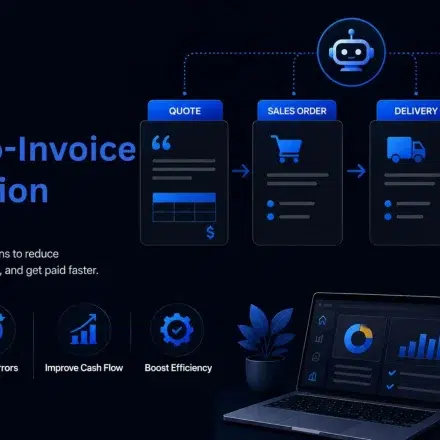
The usual phases are:
- RFQ receipt: Buyer sends requirements, and the seller starts configuration.
- Configuration and quoting: Product configuration; pricing rules; any special pricing for contracts.
- Internal review: Margin checking, compliance review, and discounts, if necessary.
- Quote sent: The quote is delivered to the buyer, who then reviews it and requests revisions.
- Revision phase: Price, product, and terms modifications.
- Approval phase: Buyer-side approval via the procurement process.
- Ordering: Convert the approved quote into a purchase order.
- PO confirmation: Place the PO with the distributor/supplier.
Every one of these stages is a point at which information can change, and the absence of a log creates a gap that can later become a source of dispute.
What an Audit Trail in eCommerce Should Log
An audit trail is only useful if it captures the right information at each stage. Logging that “a quote was modified” is not enough. The record needs to show what changed, who changed it, when, and what authorization existed for that change. Let’s understand what we need to capture at the quote, approval and order stages.
What to Capture at Quote Stage
- All quote versions with timestamps and user attribution
- Price changes with original value, updated value, and reason code
- Discount approvals with approver name, approval time, and authorized level
- Product substitutions with original SKU, replacement SKU, and user
What to Capture at the Approval Stage
- Each approval step with approver, timestamp, and decision
- Escalations where the standard approval flow was bypassed, with the reason
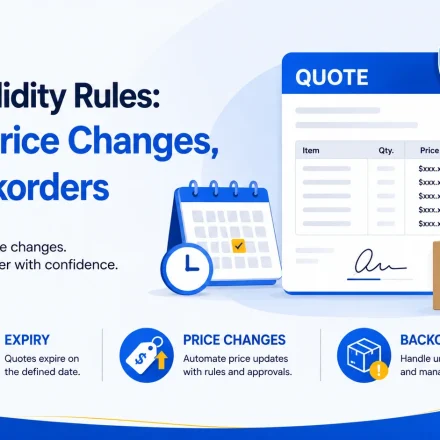
- Expiry events where quotes lapsed without action
What to Capture at the Order Stage
- Exact quote version converted to purchase order
- Differences between the approved quote and the submitted PO
- PO submission timestamp and supplier/distributor confirmation
- Post-submission changes with complete change history
What Procurement Needs to See
Procurement teams use audit trails differently from finance. Their primary concern is workflow efficiency and policy compliance, not revenue verification.
| Area | What Procurement Needs | Why It Matters |
|---|---|---|
| Approval Status Visibility | Real-time view of where each quote sits in the approval workflow | Identifies stalled approvals early and prevents deal delays |
| Cycle Time by Stage | Stage-level breakdown of quote-to-order time | Helps pinpoint bottlenecks, especially in approval stages |
| Approval Hierarchy Compliance | Record of which approval tier was applied and who approved | Confirms policy adherence based on deal size and discount level |
| On-Time Delivery Correlation | Ability to trace delays across quote, approval, and order stages | Helps identify where delays originate and improve delivery performance |
What Finance Needs to See
Finance requirements for a quote-to-order audit trail are more specific and more formal than procurement’s. Finance is responsible for revenue accuracy, tax compliance, and providing evidence for internal and external audits.
| Area | What Finance Needs | Why It Matters |
|---|---|---|
| Price Verification | Visibility into pricing across quote, approval, and invoice stages | Ensures the final invoice matches the approved quote, even in complex pricing scenarios |
| Discount and Exception Documentation | Record of all non-standard discounts with authorized approver details | Creates a defensible record for revenue recognition and audit validation |
| Tax and Freight Accuracy | Logged tax rates and freight charges at each stage of the transaction | Prevents discrepancies when rates change between quote and invoice |
| Immutable Audit Records | Non-editable historical records with changes logged as new entries | Ensures audit readiness and prevents post-facto data manipulation |
Order Approval Workflow in B2B: Where Audit Trails Break Down
Most B2B order approval workflow failures occur at three specific points.
| Failure Point | What Happens | Impact |
|---|---|---|
| Approval Outside the System | Discounts are approved via email or verbally, but not logged in the system | Audit trail shows unauthorized pricing changes, leading to finance flags and delays |
| Version Confusion at Conversion | Quote is modified after approval and converted to a PO without re-approval | Approved quote and final PO do not match, creating discrepancies |
| Missing PO Confirmation | PO is submitted, but supplier confirmation is not captured | No reliable record of what was actually ordered, making dispute resolution difficult |
What Good Implementation Looks Like
Getting audit trail coverage right across the full quote-to-order process requires four things to be in place simultaneously.
Full logging is enabled at every stage
User activities, events, and approvals should automatically create logs. Users should not rely on their memory when logging changes to deals, as some may not remember.
Structured approval routing
This feature should be established to specify which approval route is required for particular deal types. Any deals that do not meet policy requirements should be escalated automatically rather than approved without the required approval tier.
Real-time dashboards for procurement and finance
The procurement department should have dashboards showing the status of each quote. Similarly, finance should have dashboards showing all discount exceptions and pricing differences. These dashboards are expected to show information that appears from the audit logs.
Training based on processes
While setting up the logging features might be relatively easy, one area of implementation failure is failing to provide users with relevant training on what constitutes an action that requires logging. If an individual approves a request verbally and updates the system without a revision record, they create a loophole in the audit process.
How a VAR-specific eCommerce Platform Supports Quote-to-Order Audit Trails
The quoting module logs quote versions, approval decisions, and price changes throughout the quote lifecycle. Conditional approval routing automatically sends quotes outside defined margin thresholds to the appropriate approver, creating a documented approval record rather than relying on email confirmation.
Quote-to-PO conversion carries approved quote data forward into the purchase order without manual re-entry, reducing version-mismatch issues that create audit gaps. For VARs managing distributor relationships across 50+ suppliers, real-time pricing feeds ensure the cost basis in every quote reflects actual distributor pricing at the time of quote creation, rather than a manually entered figure that may already have changed.
For a closer look at how the full quote-to-cash process connects, this guide to quote-to-cash for B2B teams covers the end-to-end workflow in detail.
Book a demo with VARStreet to see how quote-to-order tracking works across the full procurement workflow
FAQs
What is a quote-to-order audit trail in B2B eCommerce?
The audit trail records everything done from the initial quote through to the order. The data is captured for price changes, approvals, revisions, and PO placement, providing the procurement and finance teams with a comprehensive, time-stamped audit trail of all activities.
What is the most common problem with B2B audit trails?
Approvals that occur outside the B2B system. The failure to log approvals for discounts causes the audit trail to show changes even when none are provided.
How does the audit trail minimize procurement disputes?
Audit trails provide reliable evidence of agreement on price, quantity, and terms. This eliminates disputes when evidence is absent.
When should B2B audit trails be evaluated?
Teams should evaluate adherence to process and approvals weekly, pricing exceptions monthly, and the full audit trail quarterly.
Neha Kaku
Neha Kaku is a content writer and strategist specializing in B2B SaaS, cybersecurity, and martech. She writes blogs, website copy, landing pages, and long-form content that is built to rank, resonate, and convert. Trained in Biotechnology, she brings a structured, analytical approach to every brief, making her equally comfortable with technical depth and narrative clarity. Her work has helped brands earn top Google rankings, drive audience engagement, and communicate ideas that move the readers to the right action. Editorial Policy
Read More