The Basics of Quote-to-Cash: What Every IT Reseller Needs to Know

Table of Content
What does Quote-to-Cash actually mean?
The standard Q2C definition covers: building a quote, getting approval, raising an invoice and collecting payment. It was written for businesses with a fixed cost base. A Value-Added Reseller (VAR) or Managed Service Provider (MSP) does not have one. Distributors like Ingram Micro, TD Synnex, and D&H update pricing multiple times a week, driven by tariff adjustments, promotional windows and inventory shifts. A manufacturer quotes from a cost they control. A VAR quotes from a cost that their distributor sets and changes without notice.
How Quote-to-Cash Works
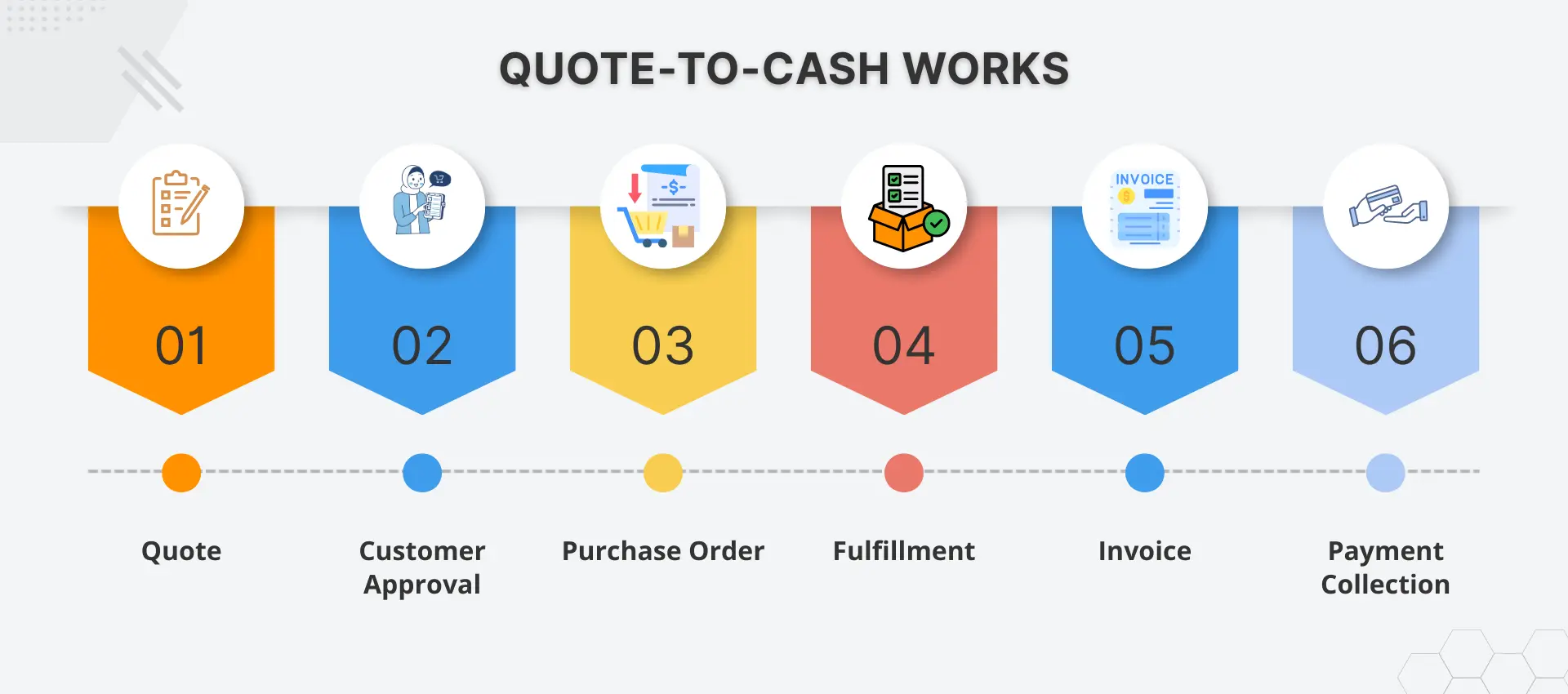
The IT VAR Quote to Cash cycle spans six connected stages. If any stage uses a different data source than the one before, the gap between them is where the margin quietly disappears.
Stage 1: Quote
Your rep builds a line-item quote from current distributor pricing. This is where the Q2C cycle starts. It is also the first place where the process can go wrong. If the pricing your rep uses comes from a manual check done an hour ago, it is already a snapshot. Costs may have moved since then.
Stage 2: Customer Approval
The quote goes to the customer for sign-off. Most IT VAR deals take between 24 hours and two weeks to get approved. That window is called the quote-to-order gap. Distributor pricing, stock levels and promotional windows all move inside it.
Stage 3: Purchase Order
The approved quote becomes a Purchase Order (PO) sent to your distributor. This is where the approval gap shows up as real money. Your rep checks the price again. It has moved. They absorb the difference and say nothing. It does not get logged as a pricing error. It just closed as a deal that came in thin.
Stage 4: Fulfillment
Your distributor ships the order. You confirm delivery and handle any exceptions. But if the stock cleared between the day you quoted and the day you ordered, you have a problem on your hands. You have a signed quote at a price and a delivery date you can no longer honor.
Stage 5: Invoice
You bill the customer at the price on the approved quote. By this point, your actual cost from the distributor may have already changed. The invoice looks normal. Finance processes it as a standard transaction. The margin gap does not surface until reconciliation, sometimes weeks later.
Stage 6: Payment Collection
The customer pays. You close out the deal. For Value-Added Resellers (VARs), fragmented systems across quoting, procurement and finance slow this stage down more than it needs to be. For Managed Service Providers (MSPs), the problem compounds. A mispriced recurring contract does not hurt once. It hurts every month.
Where it breaks: A VAR quotes 40 laptops on Tuesday at 9% margin. The customer approves on Friday. Overnight, Ingram Micro quietly updates its pricing. The rep places the order and absorbs a $736 shortfall without flagging it. The deal closes. Finance sees nothing unusual. No error was made. The stages just never shared the same data.
Why Quote-to-Cash Is Harder for VARs Than for Most B2B Sellers
Most Q2C guides are written for businesses that control their own cost base. IT VARs do not. Three things make the Q2C process structurally harder.
Distributor pricing does not stay still
Hardware costs can shift several times in a single week. A tariff announcement lands on Monday. Your distributor updates their price file by Wednesday. A promotional window that was open on Tuesday is gone by Friday. Enterprise server and laptop prices have climbed by as much as 34% under current tariff frameworks. For IT VARs, that pain does not arrive all at once. It arrives in the small moves that happen between the day you quote and the day you order.
Margins are too thin to absorb cost surprises
Hardware margins in North American VAR businesses typically run between 5% and 15%. A 2-point cost increase between quoting and ordering does not leave a dent. It wipes out most of what was left. There is no buffer to fall back on.
For MSPs, the risk is different but worse. A service contract is priced once, at the time of signing. If distributor costs rise during the contract term, margin shrinks on every single billing cycle. There is no one deal to point at. It just gets quieter every month.
Multiple distributors multiply the risk
Most VARs source from more than one distributor. Each one runs its own pricing volatility on its own schedule, with no coordination between them. By the time your rep has finished checking the last portal, the price from the first one is already old. The more distributors you work with, the wider the window where something can move before you catch it.
Tools and Practices That Keep Your Q2C Cycle Running Clean
A connected Q2C workflow for an IT VAR requires three types of capabilities working together. Each one addresses a specific break point in the cycle.
A quoting tool connected to live distributor feeds
A VARStreet quoting software connected to live XML feeds gives your reps current pricing, current stock and active promotions from all signed distributors in one view. No tab-switching. No manual reconciliation. The price in the quote is the price your distributor is charging right now.
Configure, Price, Quote (CPQ) software handles the complexity of multi-product configurations: bundles, pricing rules, and discount logic. For VARs quoting deals that include hardware, software and services, CPQ automates the parts of the quoting process that most often introduce errors or require re-work.
Multi-distributor visibility at quote time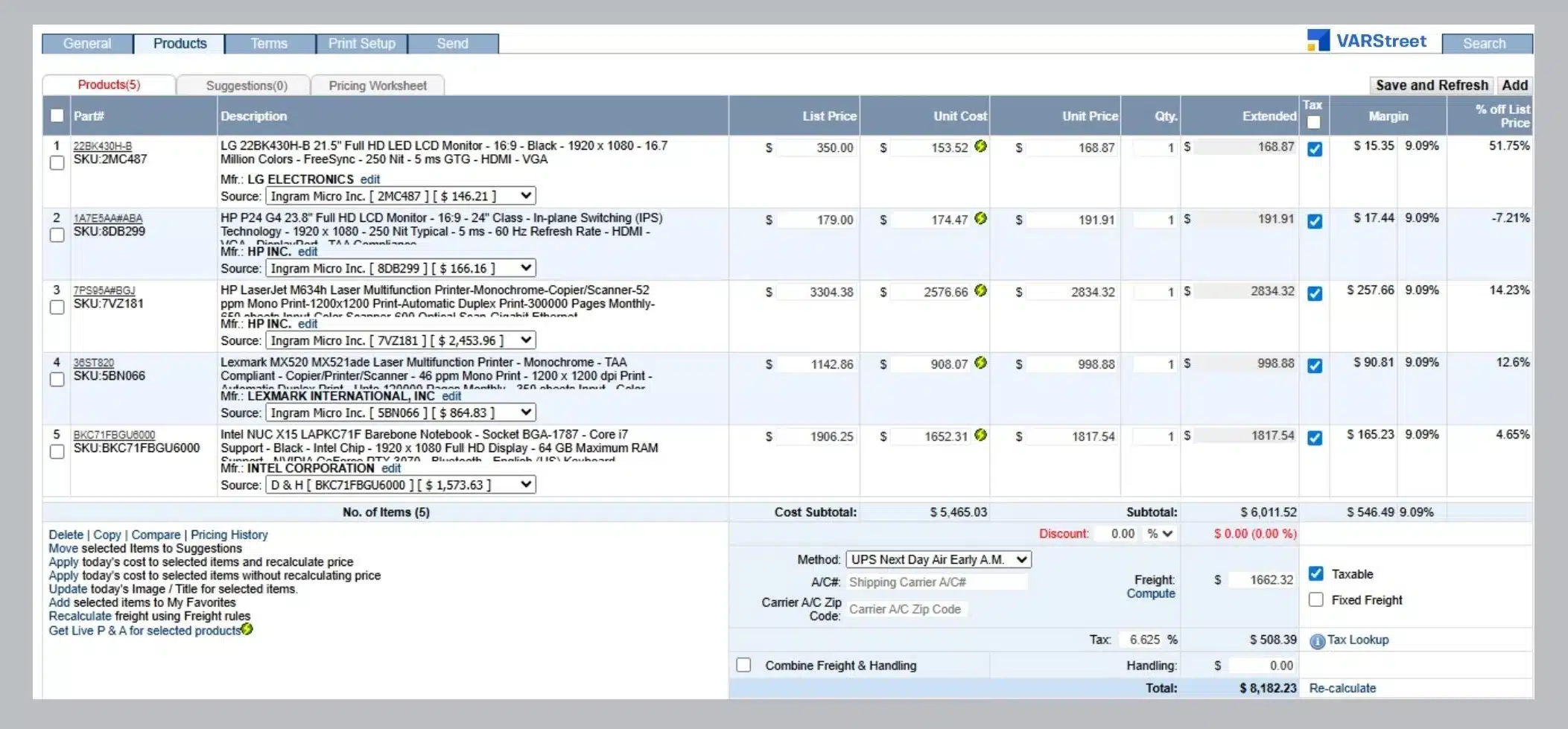
Seeing live stock and pricing across all your signed distributors at once prevents the fulfillment problem at Stage 4. With multi-distributor visibility, if Ingram stock is low when you build the quote, you see that TD Synnex has the units at a comparable price. You source from TD Synnex. You quote with confidence.
Connected PO and invoice workflow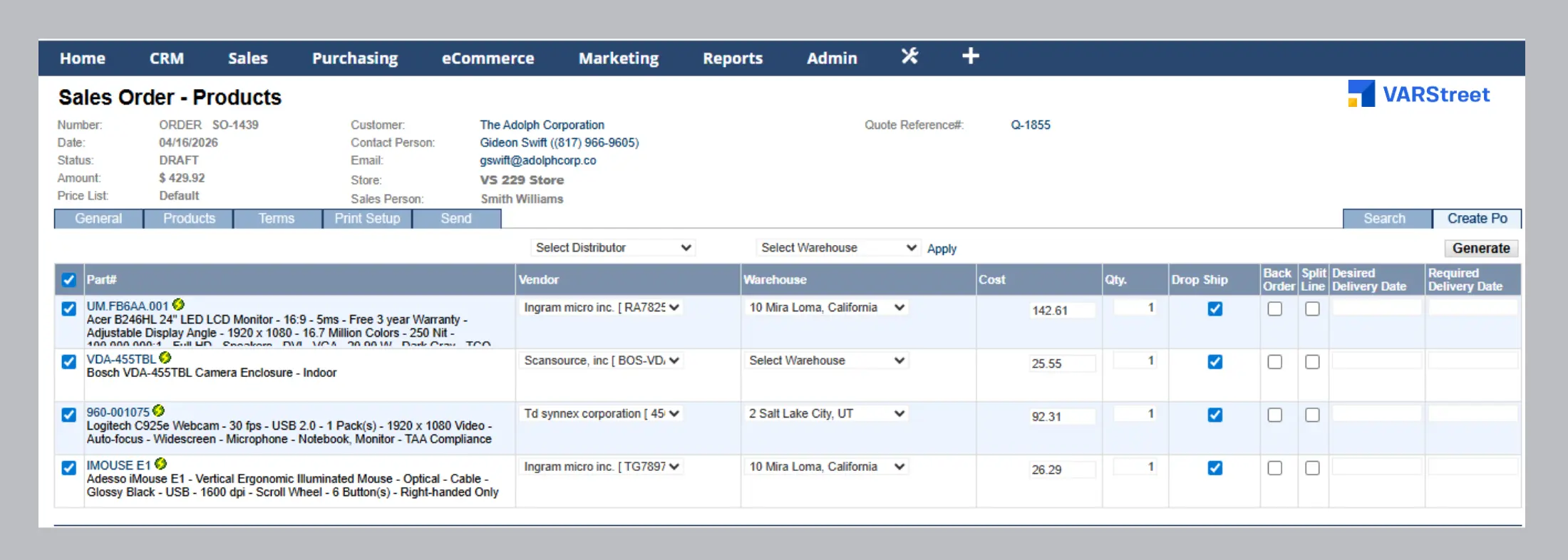
Once a quote is approved, the PO should convert in one click within the same platform that built the quote. The invoice should draw from the same data. The manual handoff between quoting, procurement and finance is where most late invoicing problems start. Removing that handoff does not require replacing your ERP. It requires a quoting platform that was built to carry the data through.
What to check today without buying new software
Pull five recent deals where the gap between your quote and your purchase order was longer than 48 hours. For each one, compare the price your rep quoted to the price you actually paid your distributor. If more than one deal shows a gap, even a small one, your quoting process and your distributor data are not in sync. That number gives you something concrete to work with before you evaluate any new tool.