
Table of Content
- Understanding the Core Difference
- Traditional CRM: What It Does Well
- Social CRM: A Modern Layer for Digital Interaction
- The Real Shift: Moving from One-Way Communication to Continuous Dialogue
- Why Businesses Need Both Systems Today
- How Social CRM Complements Traditional CRM Workflows
- Customer Engagement Strategies: Traditional vs Social CRM
- How VARStreet Aligns With This Landscape
- FAQs
Today, the pattern is different. Customers discuss products on social platforms, react to brand updates within minutes, compare experiences publicly, and expect faster, clearer responses. Engagement has shifted from scheduled check-ins to an ongoing dialogue that unfolds across many touchpoints.
This is why the comparison between Traditional CRM and Social CRM has become important. They are not competing tools but complementary systems that capture different sides of the customer relationship. Understanding both helps businesses decide how to manage engagement in a world where digital behavior shapes most buying decisions.
Understanding the Core Difference
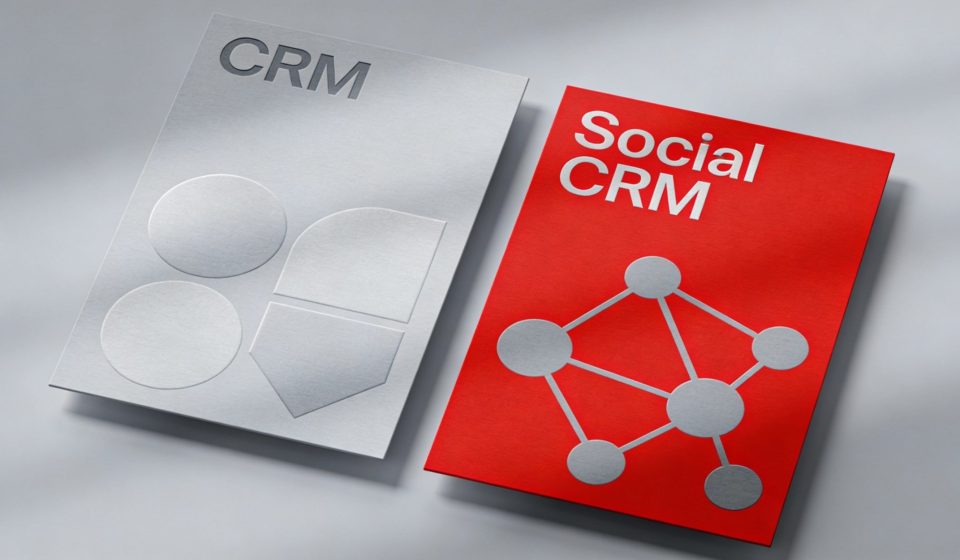
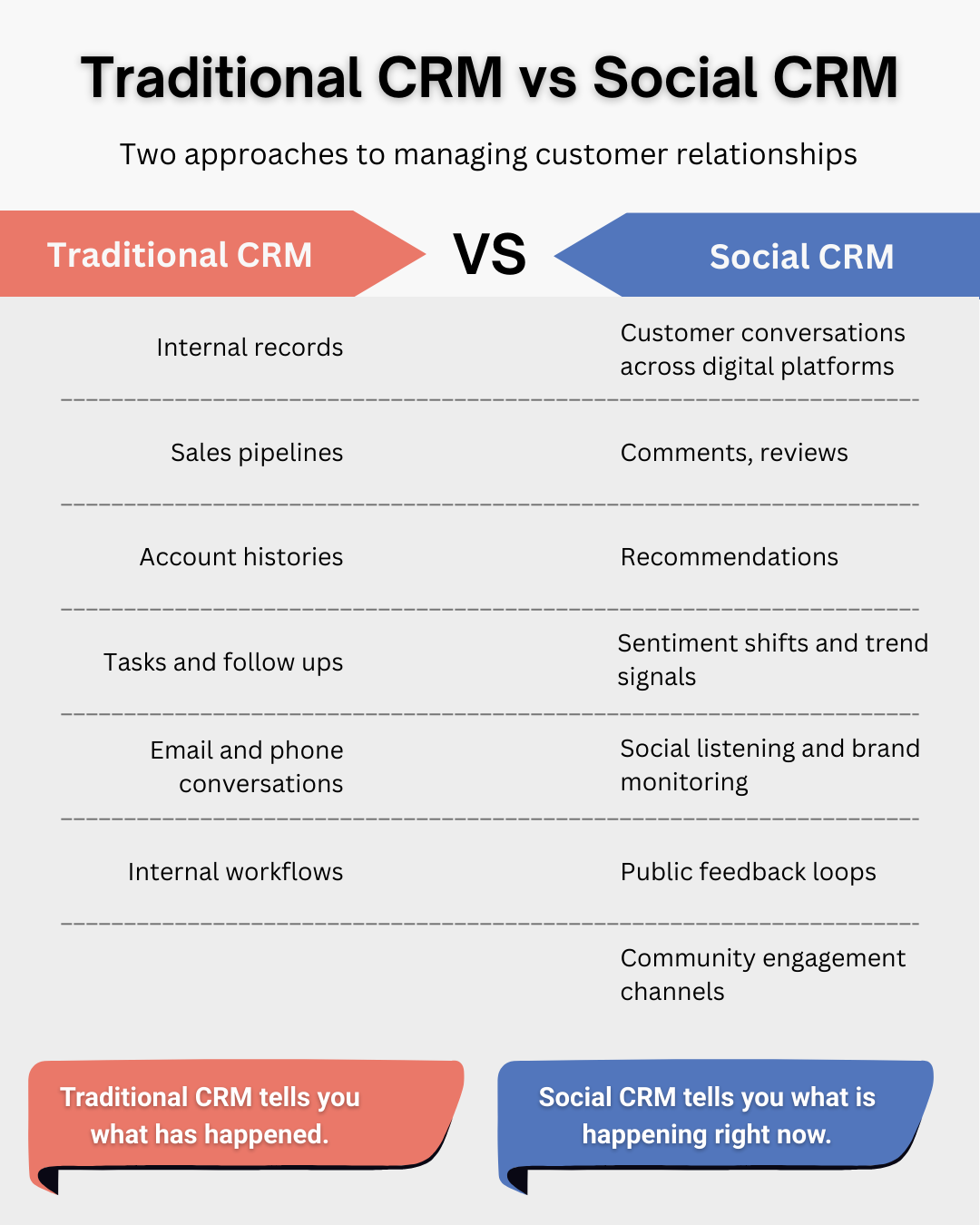
If Traditional CRM serves as the internal system that organizes contacts, opportunities, communication logs, and tasks, then Social CRM serves as the external radar that monitors customer conversations in public spaces.
One shows the company’s structured relationship as it sees it. The other shows the unfiltered reality of how customers speak and behave across digital platforms.
Modern engagement requires both views
Traditional CRM: What It Does Well
Traditional CRM systems revolve around operational clarity. They help teams answer fundamental questions:
- Who is the customer?
- What is the status of the relationship?
- What has been discussed?
- What should happen next?
For B2B companies and VARs, this structure still forms the backbone of everyday operations.
Key Features of Traditional CRM
- Contact and Account Management –A central record of customers, decision makers, account hierarchies, purchase history, and internal notes. This protects account continuity and prevents information from scattering across inboxes and spreadsheets.
- Lead Funnels and Sales Pipelines-A visual journey from inquiry to closed deal. Sales reps can prioritize tasks, track deal movement, and forecast revenue. Leadership gains a clear view of pipeline health.
- Quote and Opportunity Tracking-Every price discussion, quote version, and approval decision is logged. For VARs handling large catalogs or complex pricing rules, this prevents confusion and ensures consistency.
- Activity Logs and Reminder Systems-Calls, emails, meetings, and notes are stored in one place. Reminders help teams follow up on time, which is crucial during long sales cycles.
- Internal Notes and Documentation-Teams capture insights that influence decisions but never appear in formal communication. This includes customer preferences, risks, and long-term considerations.
- Email Tracking-Inbound and outbound emails are logged so reps and managers can review communication frequency, tone, and response patterns.
- Task Assignment and Forecasting-Tasks are linked directly to accounts and deals. Forecasting tools then convert this activity into revenue projections.
Strengths of Traditional CRM
- Clear Structure for Sales and Support-Teams work from the same customer record, reducing errors and improving coordination.
- Reliable Internal Recordkeeping=Every update is stored, helping businesses maintain consistency even as team members change.
- Ideal for Scheduled Engagement-Quarterly reviews, onboarding calls, and planned follow-ups fit naturally into a CRM-driven workflow.
- Strong Reporting Capabilities-Leadership can analyze deal velocity, rep performance, customer segments, and pipeline trends.
- Designed for Long and Complex Sales Cycles-B2B deals often move slowly and involve many stakeholders. CRM systems excel at organizing this complexity.
Limitations of Traditional CRM
Traditional CRM performs well inside structured workflows but struggles with modern, unpredictable customer behavior.
- No Visibility into Digital Conversations-Customers discuss brands on platforms that CRM cannot see. Reviews, social comments, community discussions, and peer recommendations remain invisible.
- Slow Response to Real-Time Issues-CRM records events after they happen. By the time a complaint appears internally, customers may have already spoken about it online.
- Limited Insight into Sentiment-CRM stores facts but not emotional context. It does not detect frustration, confusion, hesitation, or excitement unless they are expressed directly.
- Engagement Depends on Internal Teams-CRM workflows start when a rep initiates contact. It cannot pick up the signals customers naturally emit across digital spaces.
- Does Not Capture Silent Research-Modern buyers study the market quietly. They read forums, join groups, compare vendors, and evaluate alternatives without speaking to sales. CRM misses this behavior entirely.
These gaps matter because customer expectations keep rising. A brand that only sees formal communication risks missing early warning signals and potential opportunities.
Social CRM: A Modern Layer for Digital Interaction
As communication expands across digital platforms, businesses need a way to understand what customers say and how they behave outside scheduled interactions. Social CRM provides that missing layer.
It is not about posting more content. It is about listening more carefully and interpreting the real context. When customers express concerns, share appreciation, ask questions, or publicly compare products, Social CRM captures these signals and routes them to the right teams.
This creates a more complete understanding of the customer relationship by combining internal history with live conversation.
Key Features of Social CRM
- Social Listening-Monitors industry conversations, customer comments, and brand mentions across platforms. Helps teams detect rising topics, concerns, or opportunities early.
- Brand Mention Tracking-Captures praise, complaints, comparisons, and questions posted publicly. This allows fast and informed responses.
- Review and Rating Capture-B2B buyers depend heavily on reviews. Social CRM aggregates them so teams can analyze recurring themes and respond with clarity.
- Engagement Tracking Across Platforms-Records comments, shares, questions, and tags across communities and social networks. Helps teams understand what resonates with customers and what triggers concern.
- Sentiment Analysis-Interprets tone and emotional context. Distinguishes curiosity from worry, praise from hesitation, and approval from disappointment.
- Community Interaction Tools-Supports participation in discussions where buying decisions often form. This is valuable for VARs because peer recommendations influence purchasing.
- Collaborative Response Management-Ensures coordinated replies to public comments or issues. Ownership, tone, and follow-up are consistent across teams.
How Social CRM Improves Customer Engagement
Social CRM shifts engagement from a reactive, scheduled model to a real-time, customer-driven model.
- Faster Response to Issues-Teams see concerns before they escalate publicly.
- Early Detection of Customer Sentiment-Positive and negative signals appear long before formal conversations.
- Insight into Buying Influences-Prospects form opinions from peer reviews and discussions long before they speak to a rep.
- Understanding Unfiltered Customer Views-Social CRM captures the raw comments customers make when they are not speaking directly to the brand.
- More Human and Personal Engagement-Thoughtful participation in discussions builds trust and presence.
- Turning Public Moments into Private Conversations-A comment or review can become a direct dialogue when routed properly.
- Stronger Long-Term Loyalty-Customers appreciate brands that listen, acknowledge concerns, and respond transparently.
The Real Shift: Moving from One-Way Communication to Continuous Dialogue
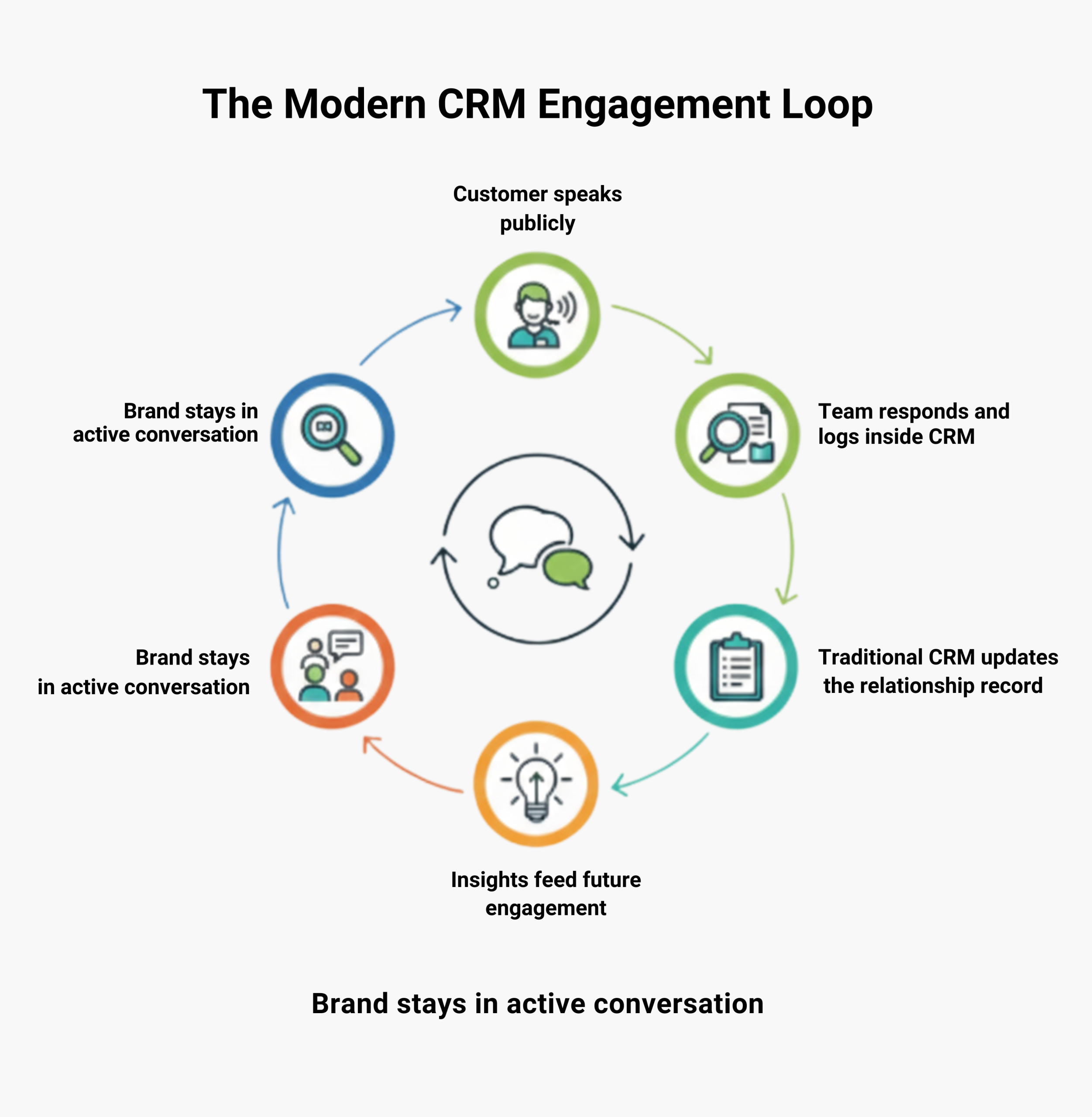
Traditional CRM reflects a world where brands set the pace of communication. Social CRM reflects a world where customers shape the pace themselves. When businesses rely only on scheduled outreach, they miss countless signals customers share across digital spaces.
A modern engagement model blends both.
-
- Customers initiate conversations naturally
- Businesses respond with context
- Teams stay aware of sentiment and concerns
- Engagement becomes continuous rather than episodic
Social CRM does not replace the operational structure of traditional CRM. It fills the space where modern customer behavior lives.
Why Businesses Need Both Systems Today
Customer engagement now spans private conversations and public interactions. Prospects compare brands online, ask peers for advice, and often form opinions before speaking with a company representative. Existing customers raise concerns on social channels long before submitting tickets. Online sentiment can shift faster than internal teams realize.
Traditional CRM alone cannot keep pace with this environment.
Social CRM alone cannot replace structured processes, pipelines, or internal accountability.
When combined:
- Sales sees both formal communication and public conversation
- Support teams understand sentiment before responding
- Marketing learns what messaging resonates across communities
- Leadership gains a complete understanding of customer behavior
Together, they create an engagement system that feels both organized and naturally responsive.

How Social CRM Complements Traditional CRM Workflows
-
-
Bridging Internal and External Conversations
-
- Traditional CRM stores formal interactions.
- Social CRM captures informal digital conversations.
When both are connected, teams see the full context behind customer needs and concerns.
-
-
Turning Public Signals into Private Discussions
-
When a customer posts a question or review online, Social CRM routes that signal into the workflow. A sales rep or support agent can follow up with clarity, turning a public moment into a constructive private conversation.
-
-
Understanding Sentiment Before Problems Grow
-
- Traditional CRM can identify a drop in engagement.
- Social CRM identifies the root cause.
This early insight helps teams address potential issues before they affect renewals or customer satisfaction.
-
-
Improving Retention Through Real Context
-
Renewals, upsell timing, risk evaluation, and personalization all improve when teams combine structured CRM records with live feedback from social platforms. Retention becomes proactive rather than reactive.
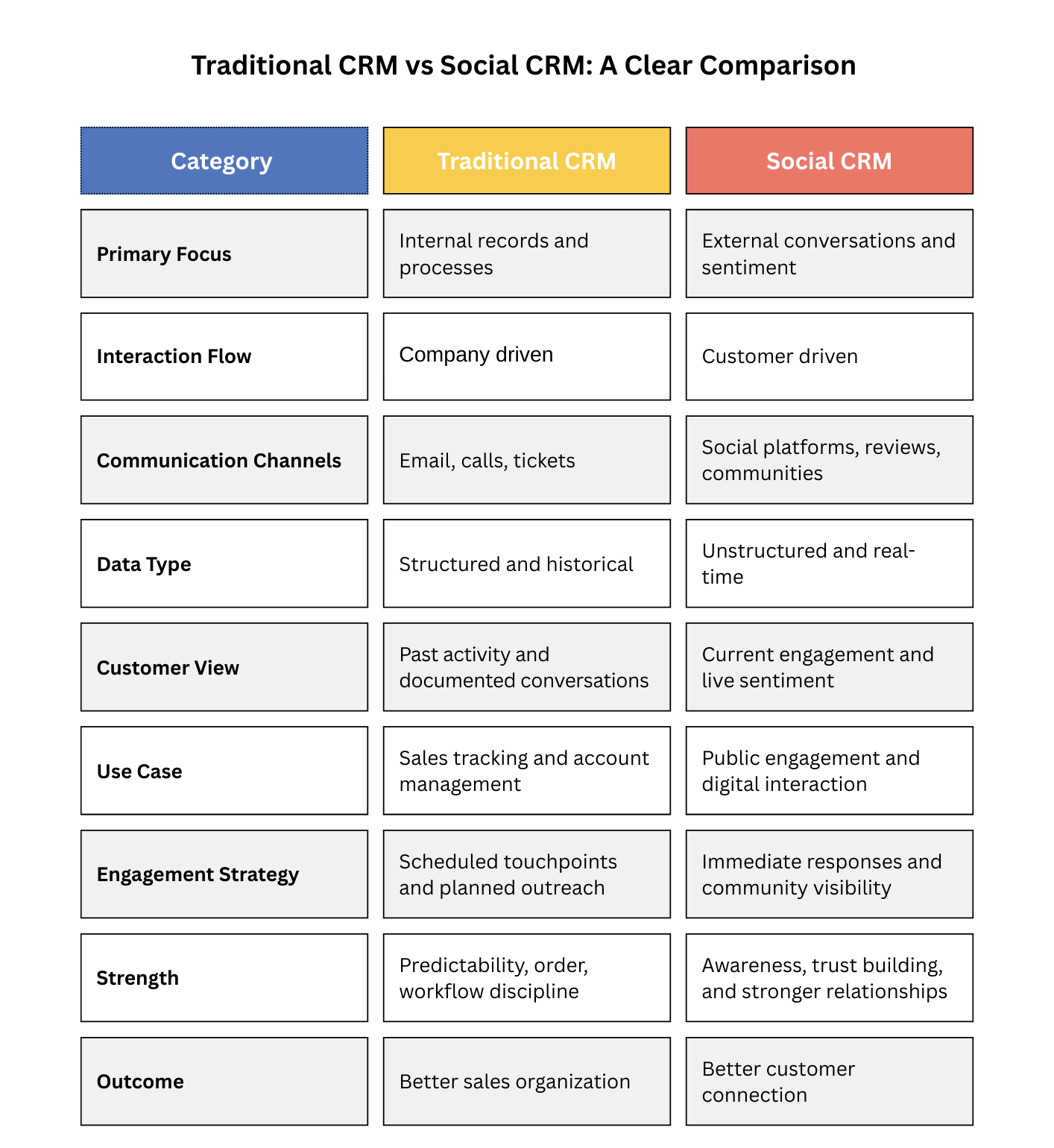
Customer Engagement Strategies: Traditional vs Social CRM
Customer engagement now requires two complementary strategies.
Traditional CRM Engagement
Traditional CRM emphasizes structure and predictability. It works best when engagement follows a planned rhythm.
How it works:
- Scheduled calls
- Planned emails
- Quarterly business reviews
- Ticket-based support
- Structured follow-ups
Where it excels:
Long sales cycles, complex deals, and account models where stakeholders expect regular updates and formal communication.
Social CRM Engagement
Social CRM supports ongoing interaction that evolves across digital spaces.
How it works:
- Responding to live comments
- Joining community discussions
- Addressing public reviews
- Building a community presence
- Tracking sentiment and mood shifts
Where it excels:
Competitive markets, public-facing industries, and environments where peer insights, online reviews, and social conversations influence buying decisions.
A business that uses both tools does not just track customers. It understands them.
How VARStreet Aligns With This Landscape
VARStreet supports IT reseller engagement by providing a CRM foundation that strengthens sales and support workflows. The platform provides:
- Centralized customer records
- Quote to order tracking inside the CRM
- Real-time catalog and pricing visibility
- Connected sales automation
- Smooth coordination between sales, procurement, and support
While VARStreet is not positioned as a Social CRM solution, it works naturally alongside one. Social CRM captures the external signals. VARStreet provides the internal processes that turn those signals into structured actions.
Together, they help resellers build a complete engagement system without adding complexity.
Ready to build stronger customer relationships with a CRM designed for real engagement? Explore how VARStreet supports sales, quoting, and customer management for modern IT resellers.