Table of Content
As companies navigate growing customer expectations and rising complexity across digital channels, an effective catalog management system (CMS) has become essential.
According to current industry reports, the Catalog Management Systems Market will increase at a 13.6% CAGR between 2025 and 2030, from USD 2.25 billion to USD 4.26 billion.
The growth is driven by increasing digital transformation across retail, telecom, IT, and manufacturing sectors.
In this blog, we explore the growing importance of catalog management, the technological trends fueling its evolution, and how businesses can leverage it to streamline workflows, improve order fulfillment, and boost customer satisfaction.
What is Catalog Management?
Catalog management is the process of organizing, maintaining, and distributing up-to-date product or service information across various channels from a centralized system. This includes information like product names, descriptions, specifications, pricing, inventory levels, images, technical support documents, and more.

Efficient catalog management ensures consistency, reduces errors, supports real-time editing and software maintenance, and facilitates a better shopping experience for B2B and B2C buyers alike. Whether it’s a digital storefront or an offline sales channel, catalog data powers the customer journey from discovery to checkout.
Why is Catalog Management More Critical Than Ever?
The post-pandemic digital economy has drastically accelerated the shift to online and omnichannel commerce. Customers now want a rich buying experience in the B2B eCommerce space. Whether browsing a website, using a mobile app, or interacting with a sales rep, the customer wants that consistent buying experience.
Without centralized catalog management:
- Product information becomes fragmented.
- Pricing discrepancies arise across platforms.
- Order fulfillment errors increase.
- Inventory mismatches lead to customer frustration.
- The user guide or support content may be outdated.
In contrast, a robust CMS improves operational efficiency, accelerates product launches, supports dynamic pricing strategies, and empowers customer support teams with accurate, accessible information.
Key Benefits of Catalog Management
- Centralized Product Data: Consolidates product details, specifications, and images in one source of truth.
- Real-Time Inventory Syncing: Ensures that inventory levels are appropriately mirrored across numerous sales platforms.
- Dynamic Pricing Management: Supports automatic pricing updates based on market conditions, promotions, or digital currency fluctuations.
- Improved Order Fulfillment: By ensuring accurate inventory and product information, order fulfillment becomes faster and more reliable.
- Streamlined Workflow: Integrates with ERP, CRM, and eCommerce platforms to automate product data updates and approvals.
- Reduced Manual Errors: Automation reduces the risks of outdated descriptions, pricing errors, and misinformation.
- Enhanced Customer Experience: Helps deliver accurate, rich content that aids decision-making and reduces return rates.
Changes in the World of Catalog Management
Let’s take a look at some of the key changes that are relevant and will stay in the world of catalog management:
1. Manual to Automated Catalog Management
Traditionally, catalog updates involved manual entry, which was time-consuming and error-prone. Modern catalog management systems now automate routine tasks such as product categorization, pricing updates, and inventory syncing. Automation reduces human error, improves speed, and allows teams to focus on strategic decision-making instead of data entry.
The key benefits include:
- Real-time inventory syncing across channels to avoid overselling or stockouts.
- Automated product categorization and tagging using AI or rule-based engines.
- Dynamic pricing updates based on supplier changes, demand, or custom logic.
- Reduced human error through intelligent validation and bulk editing tools.

2. Cloud-Based Catalogs
Cloud computing platforms have revolutionized catalog management. Businesses are moving away from on-premise solutions due to high maintenance and limited scalability. Cloud-based catalog management systems offer:
- Anywhere Access: Teams can access and update data from any device.
- Low Maintenance: Providers handle software maintenance and security.
- Scalability: Easily scale as your product range or business grows.
- Integration-Friendly: Seamless compatibility with sales platforms, digital wallets, and marketing tools.
3. Use of AI and ML in Catalog Management
Artificial Intelligence (AI) and Machine Learning (ML) are redefining how businesses manage product catalogs. AI-powered catalog systems:
- Auto-classify products based on taxonomy and relevance.
- Detect anomalies like duplicate entries or pricing conflicts.
- Enrich content using external sources and AI language tools.
- Predict inventory demand for efficient stocking and delivery.
Machine learning models also help identify workflow bottlenecks and recommend automation rules, improving operational agility.
4. Enhanced Data Management
Clean data is the backbone of effective catalog management. Modern tools ensure your product information stays reliable, accurate, and ready for omnichannel use. The key capabilities include:
- Data validation at the point of entry.
- Deduplication to eliminate redundancies.
- Normalization for consistent taxonomy.
- Data enrichment using AI or third-party sources.
- High-quality analytics enabled by structured data.
6. Support for Rich Media
In 2025, rich media like images, videos, 3D renders, and AR/VR previews are integral to product listings. Advanced CMS platforms support high-resolution media uploads, optimize file formats for faster webpage loading, and ensure seamless media delivery across devices. This boosts engagement and helps buyers make confident purchase decisions. Key capabilities supporting rich media are:
- High-resolution image support with automatic format optimization (e.g., WebP, AVIF) for faster load times.
- Product videos to demonstrate features, use cases, and unboxing.
- 360-degree views and 3D renders for interactive product visualization.
- Device-responsive media delivery for seamless performance across desktop, tablet, and mobile platforms.

7. API Integrations
The ability to integrate with third-party systems is now a must-have for any CMS. API integrations allow catalog systems to exchange data with ERP software, eCommerce platforms, pricing engines, and digital wallets. This ensures consistency, reduces duplication, and enables a unified source of truth across the business. Key benefits of API-powered integrations:
- Seamless sync with ERP, CRM, and inventory systems to keep product and stock data up-to-date.
- Integration with pricing engines for real-time pricing, promotions, and discount logic.
- Smooth connection to eCommerce platforms like Shopify, Magento, or BigCommerce.
- Support for digital wallets and currencies streamlines checkout and payment processes.
- Automated data exchange that reduces manual updates and eliminates errors.
Catalog Management for IT VARs and Telecom Resellers
IT resellers and telecom companies often deal with vast, complex product catalogs that change frequently due to evolving technologies, fluctuating distributor inventories, and dynamic pricing. Effective catalog management is essential to stay competitive in this environment.
Modern catalog management systems offer features tailored to this industry, such as:
- Aggregate data from distributors.
- Maintain technical documentation.
- Enable faster pricing and inventory updates.
- Provide real-time product availability to sales teams.
These features not only reduce manual work but also improve accuracy and speed in sales operations.
Empowering SMEs with Smarter Catalog Tools
Small and medium enterprises (SMEs) often face catalog chaos due to limited staffing, technical knowledge, or resources. A modern catalog management system is a game-changer, offering intuitive interfaces, guided onboarding, and self-service options that democratize access to enterprise-level capabilities.
Catalog management platforms help SMEs:
- Upload new products in bulk via spreadsheet imports or distributor syncs
- Edit product details, like descriptions, specs, pricing, and SKUs, without coding or IT support
- Integrate catalogs with webpages, storefronts, and social channels, ensuring consistent and up-to-date product information across all touchpoints
- Access user guides, documentation, and training modules to onboard new team members and troubleshoot issues
- Contact technical support or leverage AI-powered assistance for help with errors, updates, and platform optimization
- Customize workflows and approval processes using low-code tools, enabling catalog governance without complexity
With the right tools, SMEs can maintain professional, scalable catalogs that rival those of much larger players, without needing a full IT department.
Choosing the Right Catalog Management Tool
When selecting a CMS, consider features like:
- Multi-channel publishing support.
- Workflow management capabilities.
- Technical support and training.
- Compatibility with your computing platform.
- Order and inventory integration.
- Pricing automation, including support for digital currency.
- Ease of editing and maintenance.
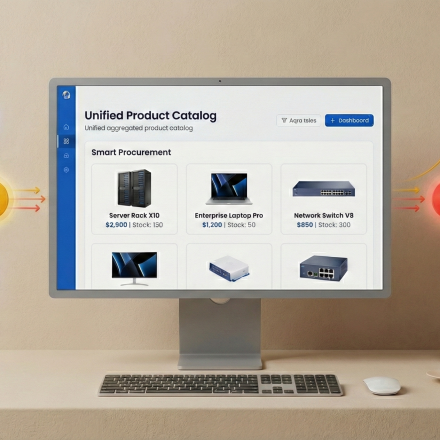
VARStreet, for instance, offers an aggregated catalog management solution for IT and office supplies resellers with access to over 50 distributors and a 7-million SKU aggregated catalog. Its platform also supports CRM, ERP, and eCommerce integration for seamless product data flow.
Conclusion
As commerce becomes increasingly digital and dynamic, catalog management has shifted from a back-office function to a strategic necessity. Businesses of all sizes can benefit from investing in modern catalog management systems that offer flexibility, automation, and scalability.
From improving customer satisfaction to reducing service costs and boosting efficiency, catalog management impacts every layer of your operations. With the right tools and strategy, companies can confidently navigate the ever-changing demands of digital commerce.
Ready to take your product data to the next level? Request a personalized demo of VARStreet’s catalog management solution and see how it fits your business needs.