Table of Content
Recent research by Mordor Intelligence shows the global B2B eCommerce market is already above 32 trillion USD in 2025 and is projected to grow strongly through 2030. PunchOut connectivity is one of the key ways that volume will move through digital channels.
Here is an overview of how PunchOut is reshaping the B2B landscape today and where it is headed.
What Is PunchOut Connectivity?
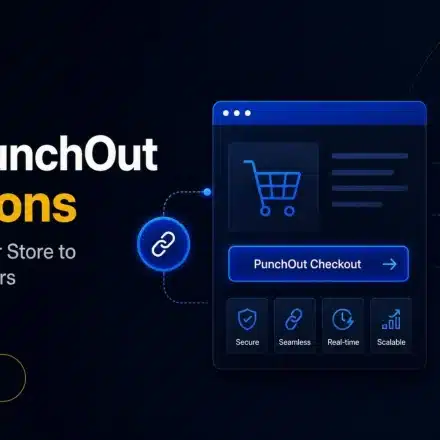
At its core, PunchOut acts as a digital integration between a supplier’s eCommerce platform and a buyer’s backend system, such as an ERP or eProcurement platform like SAP Ariba, Oracle PeopleSoft, or Coupa.
The process is generally straightforward:
-
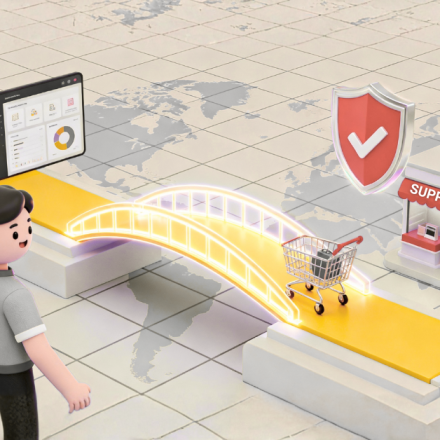
- The Bridge: Buyers “punch out” from their internal system and land directly in the supplier’s web store.
-
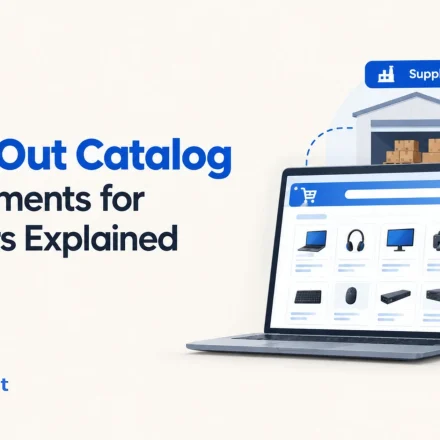
- The Experience: They browse personalized catalogs and add items to their cart, much like a standard B2C shopping experience.
-
- The Return: Instead of checking out with a credit card, the cart is transferred back to their ERP for approval and Purchase Order creation.
This process aims to reduce the need to move back and forth between screens to copy and paste data, ensuring the ordered product matches the user’s intent.
The Present Impact: Efficiency and Control
For many modern businesses, PunchOut connectivity serves as a helpful differentiator. It often shifts the focus from administrative data entry to more strategic procurement activities.
Operational Efficiency
By automating the transfer of order data, businesses can reduce human error and often speed up order processing cycles.
Compliance and Control
It helps reduce “maverick spending” or unauthorized purchases. Since transactions route through the ERP, purchases generally align with corporate policies and approval workflows.
Buyer-Supplier Relationships
When a supplier is easier to work with, they often become a preferred partner. PunchOut tends to strengthen these long-term partnerships by offering greater transparency regarding pricing and availability.
Recent market adoption trends suggest that eProcurement platforms utilizing PunchOut are capturing a growing share of B2B digital commerce, indicating that this technology is becoming a common expectation rather than a niche requirement.
The Tech Behind the Shift: PunchOut Integration Trends
To understand where the industry is headed, it is helpful to look at the underlying technology. Historically, PunchOut has relied heavily on static standards.
The Standards (cXML and OCI)
Currently, cXML (Commerce XML) and OCI (Open Catalog Interface) are the dominant languages for inter-system communication.
The Shift to APIs
One of the most notable trends in PunchOut integration is the shift toward an API-first approach. Unlike static catalog files, RESTful APIs enable real-time data exchange. This facilitates dynamic inventory updates, live pricing adjustments, and generally smoother integration across diverse platforms.

The Future of B2B Commerce: PunchOut 2.0
The industry is approaching a significant evolution. The future of B2B commerce PunchOut is likely to be less about simple connections and more about intelligent automation.
Automation and AI Integration
Next-gen PunchOut solutions are expected to increasingly leverage Artificial Intelligence. We may see systems that do more than facilitate an order; they might help predict it. AI-driven procurement could enable predictive ordering based on historical data, dynamic pricing that adjusts to contract terms in real-time, and automated supplier selection.
Global Interoperability
As multinational corporations standardize their procurement processes, PunchOut will likely become critical for cross-border transactions. The trend suggests the adoption of universal standards that ensure consistency across regions, currencies, and compliance frameworks.
Hyper-Personalization
Future PunchOut catalogs are expected to be highly tailored. This goes beyond a logo on a landing page to include contract-specific terms, personalized product recommendations, and a user experience that mirrors popular B2C applications.
Marketplace Expansion
PunchOut appears to be expanding beyond single-supplier catalogs. The future may lie in multi-vendor procurement marketplaces where buyers can punch out to a unified platform to compare vendors and consolidate spend while maintaining their internal approval chains.
Challenges and Considerations
While the benefits are often clear, the path to adoption requires planning.
Technical Complexity
Implementation often requires integration expertise. Ensuring a supplier’s platform functions well with SAP, Oracle, and Jaggaer simultaneously can be a technical hurdle.
Supplier Readiness
Not all suppliers are ready for this shift. Smaller vendors may hesitate due to setup costs, which could limit the pool of available PunchOut-ready suppliers.
However, for many organizations, the long-term efficiency gains and the solidification of the buyer-supplier bond often outweigh the initial setup efforts.
Summary: From Efficiency to Ecosystem
To visualize this shift, here is how the landscape seems to be evolving:

Conclusion
PunchOut connectivity is moving from an optional feature to core infrastructure in B2B eCommerce. As more trade shifts online, enterprises will ask a simple question of every serious supplier: “Can you plug into our procurement system with PunchOut?”
For buyers, the answer shapes efficiency, compliance, and how easily employees can get what they need. For suppliers, it influences eligibility for tenders, the depth of customer relationships, and the amount of repeat business they win.
This is where integrated B2B platforms come in.
VARStreet supports PunchOut connectivity, alongside quoting, CRM, and eCommerce in one place. That helps different types of businesses – resellers, distributors, and service providers – connect to customer procurement systems without having to build everything from scratch.
If you are planning for the next five to ten years of digital trade, it is not enough to build a good online store. You also need a clear strategy for PunchOut connectivity, future-ready integration patterns, and next-gen PunchOut solutions that can scale with your customers.