
Table of Content
- Centralize Your Catalog
- Standardize Your Data
- Enrich Content (Nobody Buys SKU Numbers)
- Automate Updates
- Personalize Catalogs
- Keep Branding Consistent
- Price Dynamically
- Sync Inventory in Real Time
- Support Every Channel Consistently
- Track Performance
- Stay Compliant
- Deliver Reliably
- Connect Catalog to Marketing
- Use AI for Heavy Lifting
- The Reality of Catalog Optimization
- FAQs
And here’s the kicker: while you’re manually updating spreadsheets at 11 PM on a Thursday, your competitors are scaling with automated multichannel product catalog management systems.
What is the difference between VARs who are growing and those who are stuck? It’s not pricing. It’s not product selection. It’s catalog optimization.
This guide breaks down 14 actionable strategies for eCommerce catalog optimization- the kind that actually moves the needle on sales, not just theory.
Centralize Your Catalog

Working with Ingram Micro, TD SYNNEX, and Avnet means juggling different SKU systems, random data formats, and descriptions that contradict each other. It’s exhausting, error-prone, and completely avoidable.
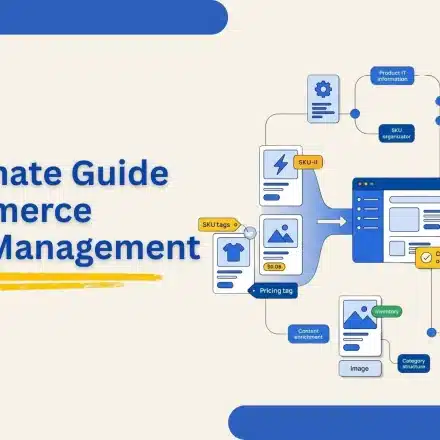
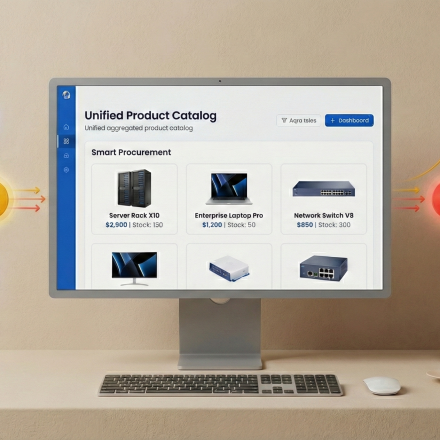
The fix: Aggregate everything into one master catalog.
When your sales team, eCommerce platform, and marketplace listings all pull from the same source, you eliminate the chaos. No more “oops, wrong price” conversations with customers. Updates from distributors flow everywhere automatically. Your team stops wasting hours on data entry and starts focusing on what actually matters—selling.
Modern product data management for eCommerce platforms automatically handles feeds from 50+ distributors. Distributor updates pricing at 2 AM? Your entire system adjusts. No manual work is required. No panic. No problem.
Standardize Your Data
Picture this: A customer finds a laptop on your site listed with 16GB RAM. They check your Amazon listing—32GB RAM. They call your sales team, and nobody knows which specification is correct. That sale? Gone. And probably the next one too, because trust just left the building.
What to standardize:
- Brand names – Pick one format (HP vs. Hewlett Packard) and stick with it across every single touchpoint
- Model numbers – Same capitalization, same spacing, same format everywhere
- Technical specs – If you use inches on one channel, don’t switch to centimeters on another
- Product identifiers – Complete UPCs, MPNs, and EANs on every product, no exceptions
Amazon Business and other marketplaces will bury or reject listings with incomplete data. Standardization isn’t a nice-to-have—it’s how customers find you in the first place.
Enrich Content (Nobody Buys SKU Numbers)
Most VARs list products like this:
“Dell Latitude 5420 – Intel Core i5 – 8GB RAM – 256GB SSD – $899”
That’s not a product description. That’s a grocery list with a price tag.
Winners do this:
“Dell Latitude 5420: Built for remote teams who need reliable performance without the enterprise price tag. The 11th Gen Intel Core i5 handles video calls and multitasking smoothly, while the 256GB SSD means fast boots every time. Perfect for organizations standardizing on Windows 11 Pro. Includes our white-glove setup service and 3-year warranty.”
See the difference? One speaks to pain points and outcomes. The other just exists.
Add content that sells:
- Installation guides that save customers from calling support
- Warranty details presented clearly, not buried in legal text
- Compatible products for easy upselling
- Configuration tips from your actual experience
- Industry-specific use cases that resonate
- Compatibility matrices that prevent ordering mistakes
This is how product catalog optimization transforms you from another reseller into a trusted advisor; the kind customers return to again and again.
Automate Updates
Manual catalog management looks like this: Tuesday, you update prices across your website. On Wednesday, your distributor changes pricing overnight. On Thursday, you realize your Amazon listings are now wrong. On Friday, you’re dealing with an angry customer who bought something you don’t actually have in stock.
Sound familiar? It should. This is the weekly nightmare for VARs still managing catalogs manually.
What should run automatically:
- Inventory levels from all distributors are syncing in real time
- Price adjustments based on cost changes and your margin rules
- Product specifications when manufacturers update their data
- Availability status (in-stock, backordered, discontinued)
- Time-based promotions that start and stop on schedule
Modern multichannel product catalog management means you stop selling phantom inventory and quoting outdated prices. Your team focuses on growth instead of maintenance. That’s the whole point.
Personalize Catalogs
Why would you show enterprise clients the same products and pricing as first-time small business buyers? You wouldn’t walk into a client meeting with a generic presentation, so why do you do it with your catalog?
Smart personalization includes:
- Negotiated pricing for contract customers that reflects their actual terms
- Industry-specific product highlights (healthcare vs. education needs are completely different)
- Purchase history-based recommendations that make reordering effortless
- Available credit and payment terms are displayed upfront
Go further with bundles:
- Remote work setups (laptop + monitor + dock + support)
- Conference room packages (display + camera + audio + installation)
- Security starter kits (firewall + switches + setup + training)
This eCommerce catalog optimization approach increases order values while making buying decisions easier for customers. They see exactly what they need, configured in the way that makes sense for their situation.
Keep Branding Consistent
A customer loves buying from your eCommerce store. They’re so happy that they recommended you to a colleague. That colleague finds your Amazon listing, but it looks completely different—different photos, different tonalities, even a different logo. They’re not convinced it’s the same company, so they keep shopping.
You just lost a warm referral because your branding was inconsistent.
Maintain consistency in:
- Logo usage across all channels (same file, same placement)
- Product photography style (lighting, angles, backgrounds)
- Description tone and voice (professional, casual, technical—just pick one)
- Visual styling and colors (your brand palette should be recognizable anywhere)
When customers recognize your brand everywhere they encounter it, they’re more likely to explore other channels and trust you with bigger purchases. That’s product data management for eCommerce that actually builds customer lifetime value.
Price Dynamically
Static pricing based on weekly spreadsheet updates? You’re already losing money, and you probably don’t even realize how much.
Dynamic pricing adjusts automatically for:
- Distributor cost changes that happen without warning
- Competitor pricing shifts in your key categories
- Inventory levels (clearance pricing for slow movers)
- Customer segments (volume discounts for bigger buyers)
- Seasonal promotions and market conditions
Here’s where it gets strategic. Different channels need different pricing approaches:
- Your eCommerce store – Premium pricing with value-added services
- Marketplaces – Competitive pricing for visibility and volume
- Quote-based sales – Flexibility to negotiate on complex deals
- Contract customers – Pre-agreed rates that honor commitments
This multichannel sales strategy flexibility lets you compete everywhere without racing to the bottom pricing. You can be the premium option on your site while still capturing price-sensitive buyers on marketplaces.
Sync Inventory in Real Time
“Great news! That server ships next week.”
Three days later…
“Actually, our distributor is backordered until next month. Sorry about that.”
One conversation like this destroys more trust than a hundred perfect transactions can build. Real-time inventory synchronization prevents this nightmare scenario. When something sells on any channel, inventory adjusts everywhere instantly—your website, your marketplaces, your quoting system, everything.
Smart inventory features:
- Backorder options – Let customers reserve out-of-stock items instead of losing the sale
- Pre-orders – Capture sales before products even arrive
- Low stock alerts – Reorder before you run out, not after
- Multi-distributor visibility – See combined inventory across all sources
This level of eCommerce catalog optimization turns potential lost sales into secured future revenue. Plus, your team stops apologizing to customers.
Support Every Channel Consistently
Here’s a typical customer journey today:
Monday, they discover your product on Amazon. Tuesday, they chat on your website with technical questions. On Wednesday, they call for a custom quote. Thursday, they order through your portal. Friday, they emailed about the shipping status.
If your team can’t see the full picture at every step, you’re creating frustration instead of loyalty. Your internal systems shouldn’t be the customer’s problem.
Your support system needs:
- Complete purchase history across all channels in one view
- Open quotes and proposals with full context
- Past support interactions and their resolutions
- Special pricing or contract terms that apply
- Sales conversation notes and commitments made
Self-service portals let B2B customers:
- Check order status at any hour, even at midnight
- Download past invoices for their records
- Reorder previous purchases with one click
- Update account information themselves
- Track packages without calling your team
This improves satisfaction while freeing your team for strategic conversations that actually grow accounts.
Track Performance
You can’t optimize what you don’t measure. Period.
Essential metrics by channel:
- Conversion rates – What percentage of browsers become buyers?
- Top-selling SKUs – Where are your moneymakers?
- Average order values – How much is each transaction worth?
- Cart abandonment – Where exactly are customers bailing?
- Search terms – What are they actually looking for?
- Time on product pages – Are they engaging or bouncing?
Maybe networking equipment crushes on marketplaces but barely moves on your direct site. That’s telling you something important about where to focus your product data management for eCommerce efforts. Don’t ignore those signals.