Pricing Table Best Practices to Design Clear, Flexible, and Friendly Quotes

Table of Content
- The Relevance of Pricing Tables in Quotes
- Pricing Table Best Practices for Modern Sales Quotes
- Advanced Pricing Table Strategies for Complex Quotes
- The Psychology of Pricing Tables: How Buyers Actually Decide
- Pricing Tables for Multi-Distributor Quoting
- Using Pricing Tables for Upselling
- Common Pricing Table Mistakes to Avoid
- Sample Pricing Table
- How VARStreet Structures Pricing Tables for Complex IT Quotes
- Conclusion
- FAQs
The Relevance of Pricing Tables in Quotes
In B2B sales, the pricing table is not just a section of the quote. It is the quote.
Customers utilize it to evaluate long-term commitment, comprehend the solution, and verify the pricing. Decisions are made more quickly if the table provides clear answers to these queries. If not, even a compelling plan may falter.
A good price table divides complicated solutions into manageable chunks. It should be simple to identify hardware, software, and services. To understand what is included, buyers shouldn’t need to make a phone call.
It also plays an important role in shaping how buyers evaluate value. When optional add-ons are included in the table, they become part of the decision. Buyers compare them to the base solution rather than treating them as an afterthought.
There is also a practical side to this. Procurement teams review pricing with a different mindset. They are not just evaluating value. They are looking for clarity and risk. If your pricing table is unclear, they pause the process. If it is structured and transparent, approvals move faster.
According to McKinsey & Company, B2B customers now use 10 or more channels during their buying journey. This means your quote is reviewed across multiple touchpoints and by different stakeholders. If your pricing table creates confusion at any stage, it slows down the entire deal.
Pricing Table Best Practices for Modern Sales Quotes
Keep the structure simple and easy to scan
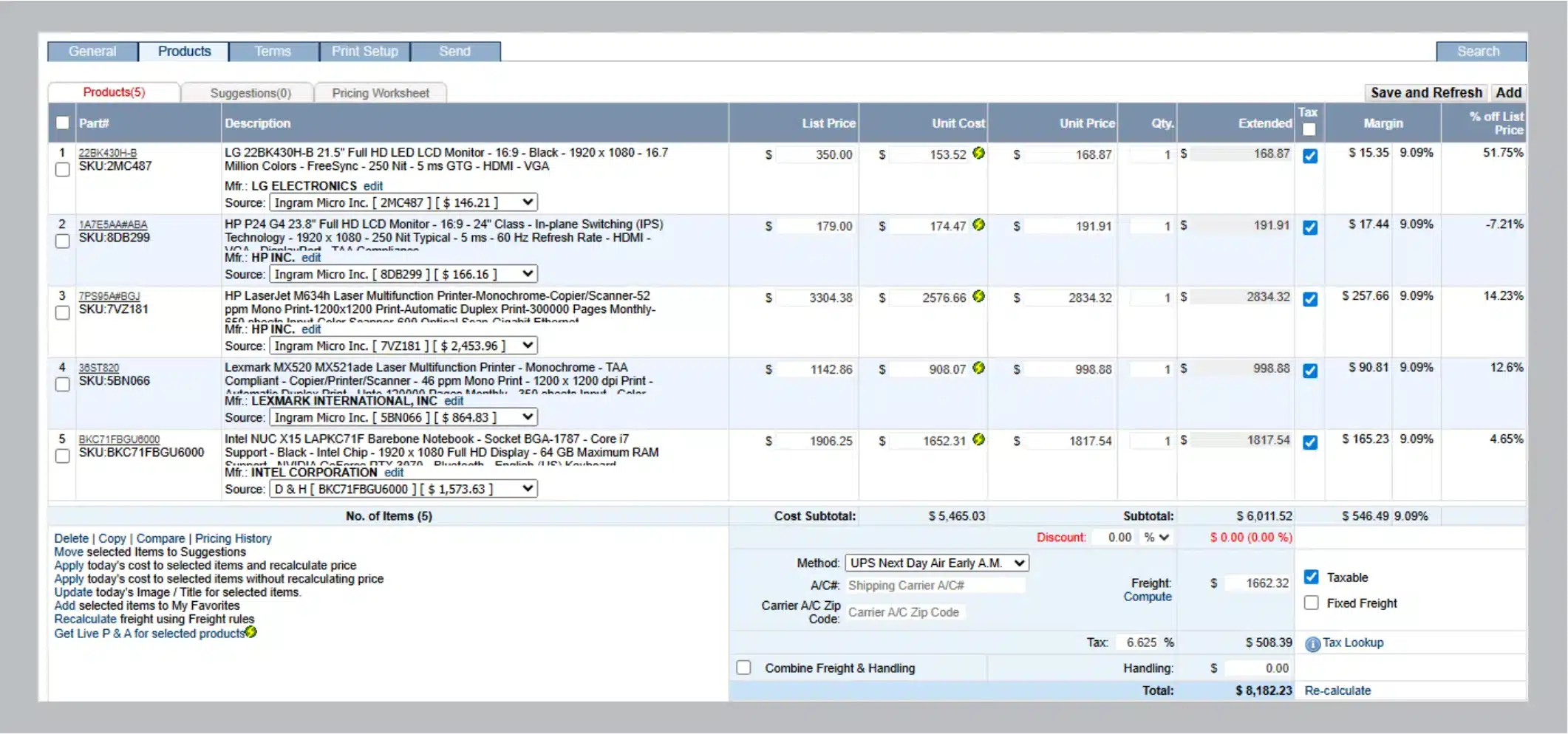
Buyers don’t study pricing tables line by line. They scan them. A
simple structure of description, quantity, unit price, and total price is usually sufficient. When the structure is straightforward, customers may grasp the table in seconds. This reduces clarification requests and keeps the process moving.
Organize line items into logical groups
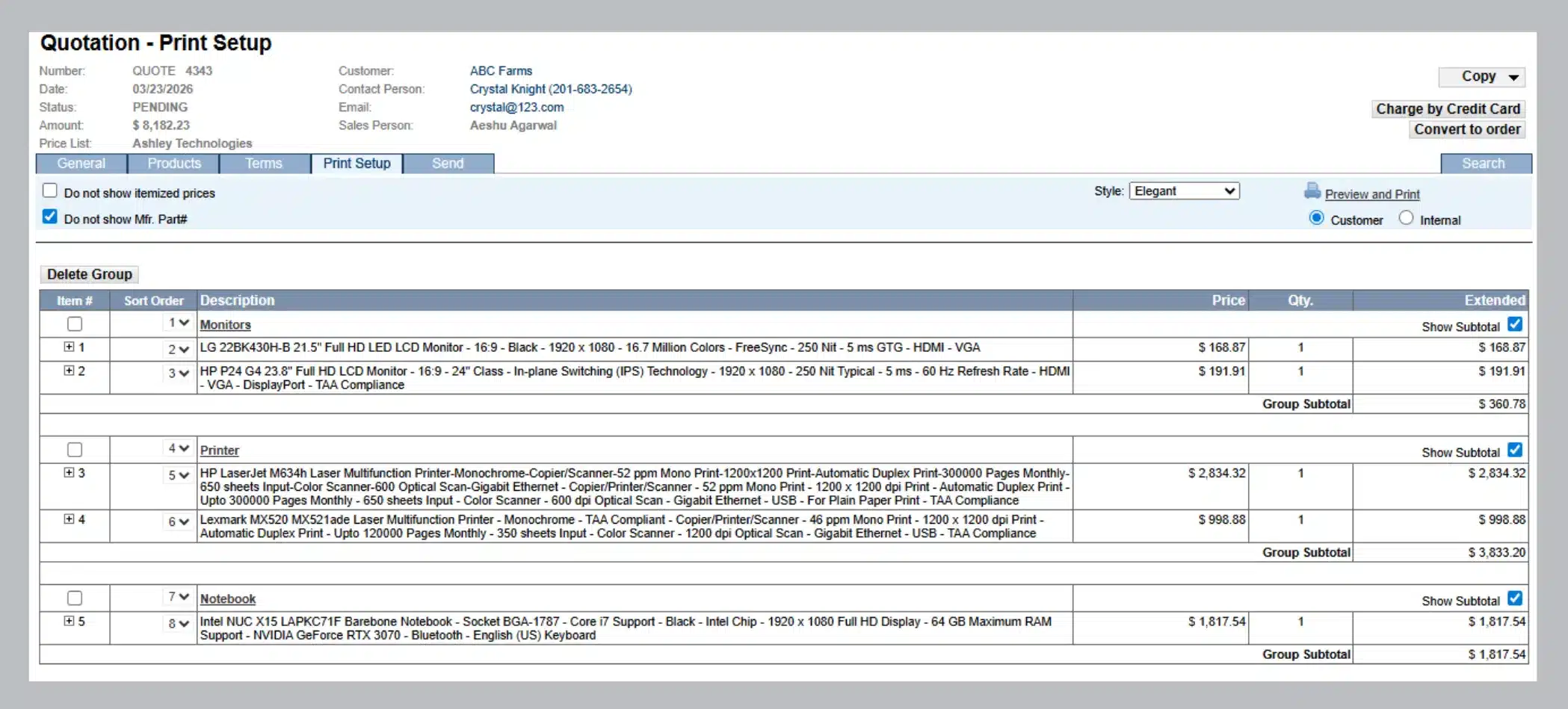
Listing everything in one large table creates confusion. Grouping things into discrete components, such as hardware, software, and services, makes the statement more understandable.
This arrangement also helps internal teams. Procurement can validate costs more quickly when things are rationally classified.
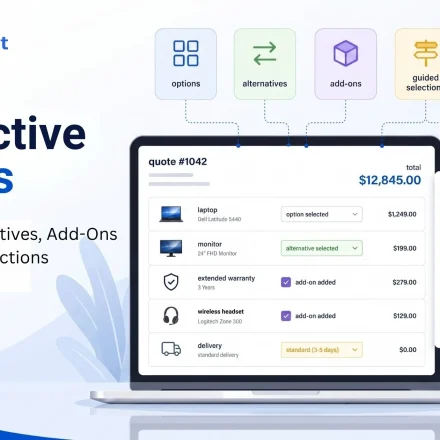
Offer configurable options within the table
Instead of presenting a single fixed solution, include options such as Basic, Standard, and Advanced packages. This gives buyers flexibility and allows them to compare choices directly within the table.
More importantly, it encourages buyers to move toward higher-value options without additional sales effort.
Highlight optional add-ons at the decision stage
Optional add-ons should be visible when the buyer is evaluating the quote. Items like installation, training, or extended support should be included directly in the pricing table.
When add-ons are introduced later, buyers are less likely to consider them. When they are visible upfront, they become part of the decision.
Advanced Pricing Table Strategies for Complex Quotes
As deals become more complex, the structure of your pricing table becomes even more important.
One of the most critical practices is separating one-time and recurring charges. When these are mixed together, buyers struggle to understand what they are committing to. Questions like whether a cost is monthly or one-time create unnecessary friction. Clear separation removes this confusion and builds trust.
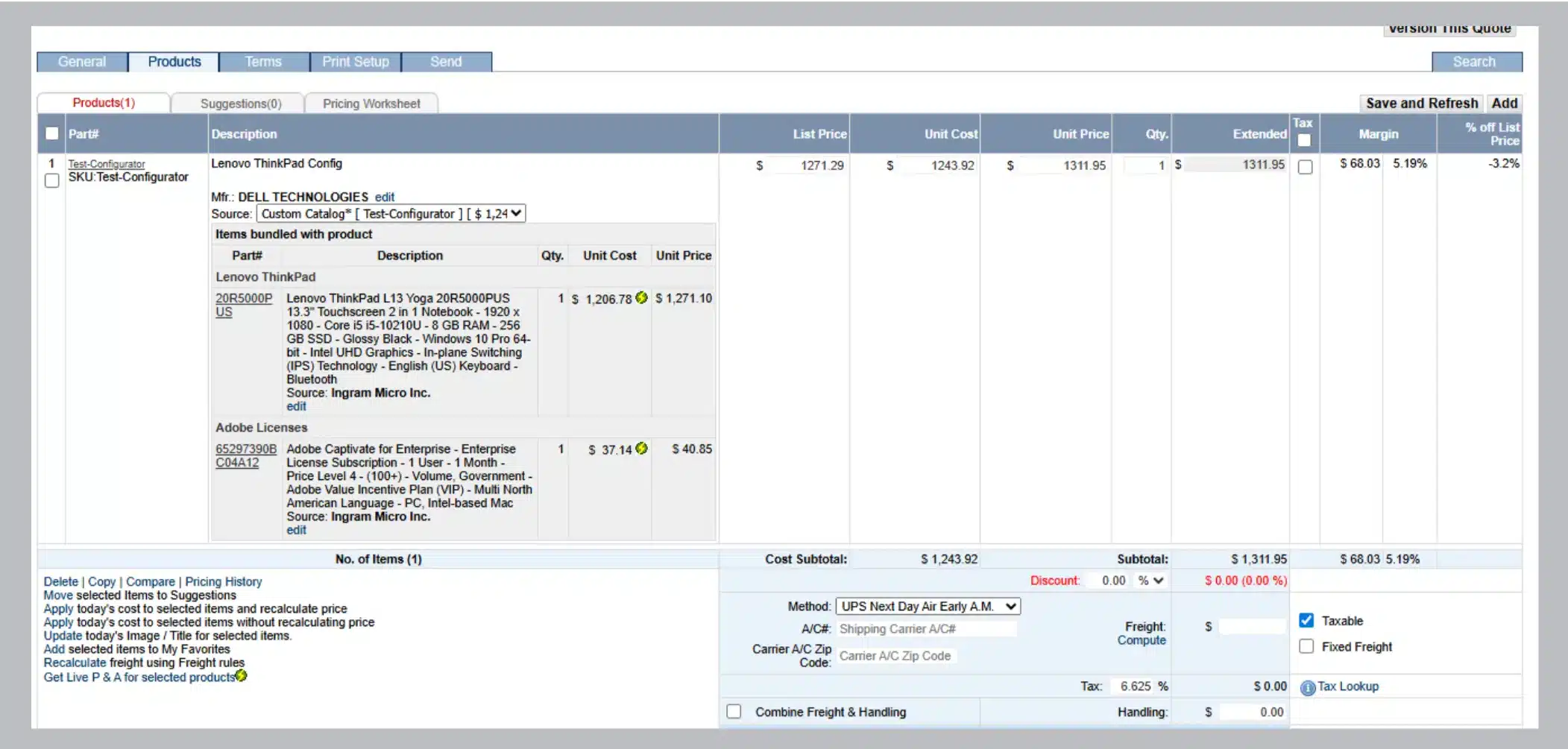
Supporting bundle pricing is another important tactic. Instead of individual products, the majority of VAR deals involve full solutions. Buyers can more easily grasp the total value when a bundle is presented as a single price. Transparency is also ensured by permitting a breakdown.
This balance between simplicity and detail is what makes a pricing table effective. Buyers get a clear summary, while still having access to the information they need.
The Psychology of Pricing Tables: How Buyers Actually Decide
Buyers look at the total first
The first thing most buyers check is the total cost. Only after that do they look at details. Your layout should support this natural behavior.
The way you present options influences choices
If you show multiple packages, the order matters. When a higher-tier option appears first, the middle option feels more reasonable. This often increases deal value.
Too much information slows decisions
More detail does not mean more clarity. Too many columns or too much data creates cognitive overload. Buyers hesitate when something feels hard to process.
Clear tables reduce perceived risk
Procurement teams are trained to avoid mistakes. If your pricing table is messy, they pause. If it is structured and clear, they move forward.
Small cues guide decisions
A simple “Recommended” label can influence choices. You do not need aggressive selling. Subtle guidance works better.
Pricing Tables for Multi-Distributor Quoting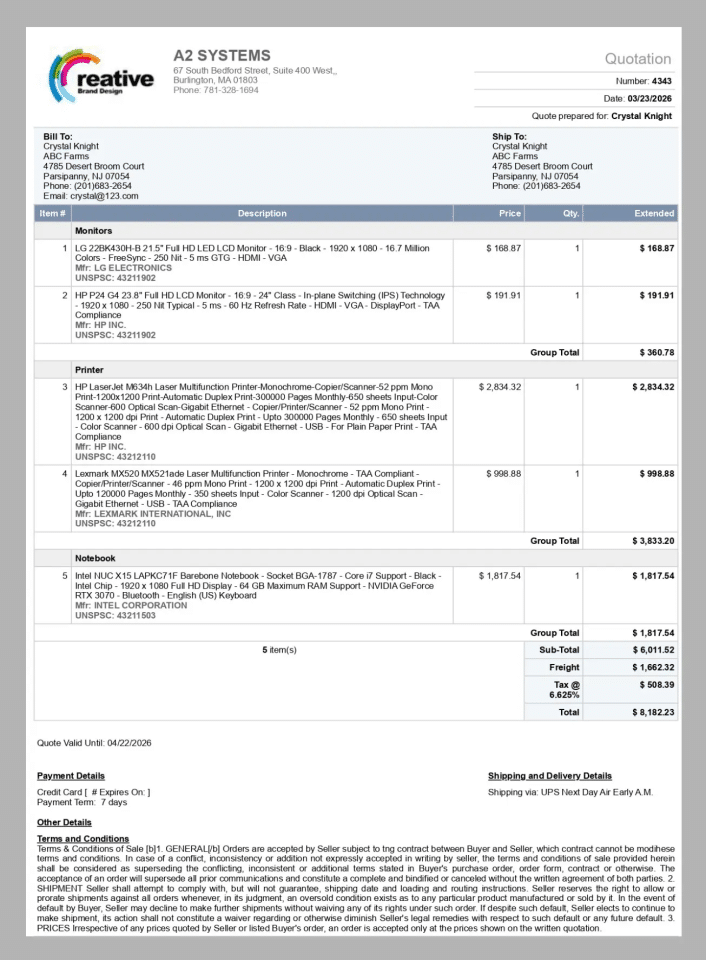
Quoting is rarely simple for VARs. Products from several distributors, each with varying prices and availability, are sometimes included in a single estimate.
The consumer anticipates a straightforward and cohesive view despite this complexity.
Many pricing tables are inadequate in this regard. They either expose too much detail or fail to reflect the underlying complexity accurately.
A well-designed pricing table keeps sourcing complexity invisible. The buyer should only see one clean price per line item. Behind the scenes, different sources and cost structures can exist, but they should not affect the clarity of the quote.
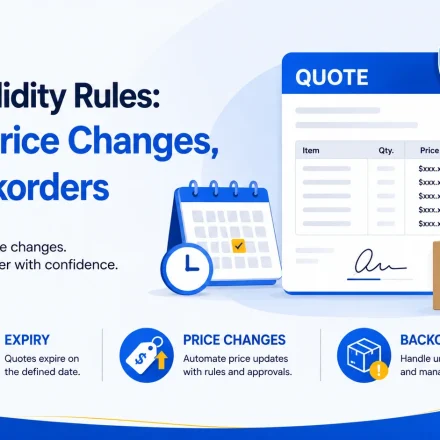
It is also important that pricing tables remain flexible. Distributor pricing can change after a quote is created. If the table cannot adapt without manual updates, it creates inefficiencies and risks errors.
Bundles add another layer to this challenge. When a solution includes items from multiple distributors, the buyer should still see a single bundle price. The complexity should be handled in the background, not pushed onto the buyer.
Using Pricing Tables for Upselling
A price table that is organized does more than merely display data. It influences consumer behavior. Think of a straightforward situation. Just the basic answer is included in the quote you submit. The buyer accepts it right away, but subsequently objects when you offer more services.
Now consider an alternative strategy. The pricing table in the same quote includes optional training and support. During the decision-making process, the buyer assesses these possibilities. Many choose to include them from the start.
The difference is not the offering. It is the timing and visibility.
When upgrades and add-ons are part of the pricing table, they feel like natural choices rather than sales pushes. Because they perceive the value in context, buyers are more willing to broaden the scope.
This behavior is likewise supported by tiered options. When buyers compare packages, they often move toward higher-value options on their own. As a result, there is less friction and a more seamless upselling process.
Common Pricing Table Mistakes to Avoid
- Many pricing tables fail not because of pricing, but because of structure.
- Overcrowded tables make it hard to scan information quickly. Vague descriptions create confusion and lead to follow-up questions. Mixing one-time and recurring costs causes misunderstandings during review.
- Another common mistake is hiding optional services. When these are not visible upfront, buyers miss the chance to evaluate them during the decision process.
- Version control is also often overlooked. Sharing updated quotes without clear tracking can lead to buyers reviewing outdated information, which creates confusion and delays.