Table of Content
- Introduction
- What Your Quote Validity Policy Should Cover
- Write a Price Validity Clause That Protects Your Margin
- Create a Clear Backorder Pricing Policy
- Build Quote Terms and Conditions Around the Order Workflow
- Create a Quote Exception Workflow for Sales Reps
- Example Quote Validity Policy for an IT Reseller
- How VARStreet Helps Keep Quote Pricing and Distributor Data Aligned
- Quote Validity Checklist for VARs
- Make Quote Validity a Sales Policy, Not a Footnote
- FAQs
What Your Quote Validity Policy Should Cover
A quote validity policy should do more than give the customer an expiration date. It should tell your sales team what to do when something changes between the quote and the order.
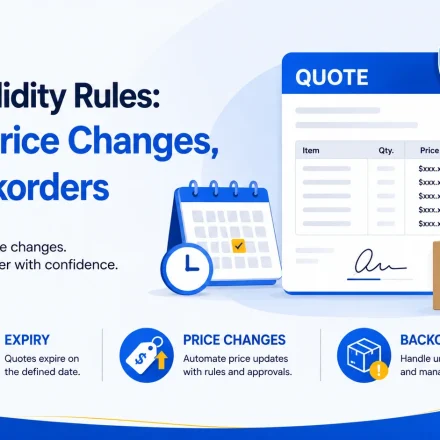
At a minimum, your quote terms and conditions should cover four areas:
- Quote expiration: When does the quoted price stop being valid?

- Price changes: What happens if your distributor changes its cost before you place the order?
- Product availability: What happens if the product is no longer in stock?

- Backorders: Can you offer a substitute, update the price, or cancel the affected line?

This matters because a quote is only one step in the reseller’s sales process. In a typical VAR workflow, the customer approves the quote first. The reseller then converts it into a purchase order and sends it to the distributor.
But some problems can arise in the gap between those two steps. A product’s cost or availability can change before you actually place the order.
Your policy should make those situations clear and upfront. So the sales reps don’t have to look for ways to handle each exception on their own.
Write a Price Validity Clause That Protects Your Margin
Your quote can have a clear expiration date and still leave your team exposed to price changes. The bigger question is what happens when your distributor’s cost changes before you place the order.
For example, your team quotes a laptop at $1,050 based on a distributor cost of $900. The customer accepts the quote two weeks later. By then, the distributor’s cost has increased to $960.
Without a clear policy, your sales team has to decide what to do. Absorb the $60 difference? Ask the customer to pay more? Cancel the order?
A price validity clause should remove that uncertainty.
What your price validity clause should cover
Your quote terms should clearly state:
- How long the quoted product pricing remains valid
- Whether pricing is subject to distributor cost changes
- What happens if the quote expires before the order is placed
- Whether special or promotional pricing has a separate expiration date
- When pricing must be reconfirmed before procurement
You should also distinguish between customer pricing and distributor cost. Your customer sees the selling price on the quote, but your margin depends on what you ultimately pay the distributor.
That distinction becomes especially important for quotes involving multiple distributors. VARStreet, for example, lets resellers compare distributor costs and apply their own pricing rules when building a quote.
A simple clause can set the right expectation:
Product pricing is valid through the quote expiration date and may be subject to change after that date. Pricing and availability should be reconfirmed before orders are placed.
Have your legal team review the final wording before using it in customer-facing quote terms and conditions. The goal is not to make the clause complicated. It is to make your pricing policy clear enough that your sales team and customers know what happens when costs change.
Create a Clear Backorder Pricing Policy
A quote can be valid on paper and still become difficult to fulfill. This often happens when a product is in stock when you create the quote but goes on backorder before the customer places the order.
For example, you quote 20 laptops based on current distributor pricing. The customer approves the quote two weeks later, but the distributor can no longer ship the full quantity. The remaining units are available only at a higher cost or with a longer lead time.
Your backorder pricing policy should tell your sales team what to do in this situation.
Decide how you will handle backorders
You can define a few standard options:
- Honor the quoted price: You absorb the additional cost and protect the customer’s price.
- Revalidate the price: You check the current distributor cost and issue a revised quote if the price has changed.
- Offer a substitute: You suggest an equivalent product, subject to customer approval.
- Remove the affected item: If the customer does not want to wait or accept the revised price, you remove the item from the order.
The important thing is to choose your approach before a backorder happens. Your sales team should not have to decide whether to absorb a $500 cost increase every time a product becomes unavailable.
It is also useful to separate availability from pricing. A product being available when you create a quote does not necessarily mean that inventory is reserved for the customer. VARStreet’s product workflow, for example, gives resellers access to distributor cost and inventory information when building quotes, while inventory and pricing can continue to change as distributor data is updated.
Your quote terms should make this distinction clear. That gives the customer a better understanding of what happens if the product cannot be supplied under the original assumptions.
Build Quote Terms and Conditions Around the Order Workflow
Your quote terms and conditions should reflect what happens after the customer clicks “Accept.” The quote is not the end of the sales process. Your team still needs to procure the products from the distributor and fulfill the customer’s order.
In a typical VAR workflow, the customer approves the quote first. The reseller then converts it into a purchase order, sends the PO to the distributor, and waits for the products to ship.
That gap is where your terms need to do some work.
Terms to include in your quotes
A standard one should cover at least:
- Quote expiration date: State exactly when the quote expires.
- Price validity: Explain how long the quoted product prices remain valid.
- Product availability: Clarify that quoted availability may change before the order is placed.
- Backorders: Explain how you will handle delays, revised pricing, or unavailable products.
- Substitutions: State whether you can offer an alternative product and whether customer approval is required.
- Taxes and freight: Explain whether these are included or calculated separately.
- Special pricing: Identify any manufacturer or distributor promotions with separate validity periods.
- Order requirements: State what constitutes customer acceptance and when the reseller considers the order ready for procurement.
Keep acceptance and availability separate
This distinction is easy to miss.
A customer accepting your quote means they agree to the quoted terms. It does not necessarily mean the distributor has reserved the products for you.
Your terms need to be clear without creating unnecessary legal language. For example:
Product availability is based on information available at the time of quotation and is subject to change until the order is placed and confirmed.
That gives your sales team a clear policy to follow when inventory changes after the quote is accepted. It also helps prevent the customer from assuming that a quoted product is automatically reserved simply because they approved the quote.
Create a Quote Exception Workflow for Sales Reps
Even with clear quote terms, your sales team needs a simple process for handling changes. Otherwise, reps may make different decisions when a distributor changes the price or a product goes on backorder.
A basic exception workflow can keep those decisions consistent.
Step 1: Check pricing and availability before quoting
Before sending the quote, confirm the current distributor cost, inventory, and expected availability. Then apply your pricing rules and set the appropriate quote expiration date.
VARStreet supports this workflow by showing distributor costs and stock while a sales rep builds the quote.
Step 2: Send the quote with clear terms
Make sure the customer can see:
- Quote expiration date
- Price validity terms
- Availability conditions
- Backorder policy
- Substitution rules
Do not rely on the sales rep to explain these conditions separately over email or phone.
Step 3: Recheck when an exception occurs
If the customer accepts the quote after a significant delay, or the product has become unavailable, check the affected items again before procurement.
Step 4: Follow one defined resolution
If something changed, your team needs to follow the policy:
- Price unchanged → Proceed to order
- Price changed → Revalidate or issue a revised quote
- Product backordered → Confirm lead time, reprice if necessary, or offer a substitute
- Product unavailable → Offer an alternative or remove the item
This gives your sales team a repeatable process instead of leaving each rep to negotiate exceptions individually. It also keeps the transition from quote → purchase order → distributor more controlled.
Example Quote Validity Policy for an IT Reseller
A policy is easier to apply when your sales team has clear language to work with. The following example brings the main rules together without making the quote terms unnecessarily complicated.
Quote validity: Product pricing is valid through the quote expiration date stated above. Pricing and product availability may change after that date and should be reconfirmed before an order is placed.
Backorders: If a quoted product becomes unavailable or is placed on backorder, the reseller may offer a substitute product or revalidate pricing and availability before procurement.
Special pricing: Manufacturer or distributor promotions may have separate validity periods and conditions.
You can adapt the wording to your own sales and procurement process. For example, you may want stricter terms for special-order products or deals with unusually long approval cycles.
The important part is consistency. Your sales reps should know when they can proceed with the original quote and when they need to check pricing, availability, or customer approval again.
Note: This is sample business-policy language, not legal advice. Have your legal team review the final wording before adding it to customer-facing quotes.
How VARStreet Helps Keep Quote Pricing and Distributor Data Aligned
A quote validity policy only works when your team has current pricing and availability information to work with. If sales reps are checking several distributor portals and updating spreadsheets manually, it becomes harder to know whether a quote still reflects current costs.
VARStreet brings distributor product data into one system. Its aggregated catalog combines products from 50+ distributors, allowing resellers to compare distributor prices and check availability without logging into multiple portals.
The platform also updates distributor cost and inventory data automatically. This means resellers do not have to maintain those updates manually.
When a sales rep creates a quote, they can see the applicable distributor cost and inventory and apply the reseller’s pricing rules.
That gives your team a more reliable workflow:
Check distributor data → Apply pricing rules → Set quote validity → Send quote → Recheck when required → Convert approved quote to PO
The software does not replace your quote validity policy. It helps your team apply that policy using the same pricing, product, and distributor data throughout the quoting process.