3 Emerging Business Models for VARs: Services, Subscriptions & Configurators

Table of Content
In a competitive market, selling hardware and software alone is no longer enough for VARs looking to build long-term customer relationships and sustainable revenue. Customers increasingly expect solutions that include services, flexible payment options, ongoing support, and products tailored to their specific requirements.
This shift is creating new opportunities for value-added resellers. Instead of relying solely on one-time product sales, VARs can explore service-based offerings, subscription models, and product configuration to create additional value for customers and new sources of revenue for the business.
The rise of ecommerce has also changed how B2B buyers research, compare, and purchase technology. Buyers are becoming accustomed to greater choice, personalization, and flexible purchasing experiences, raising the bar for VARs that want to remain competitive.
So, what are the next opportunities for VARs looking to adapt their business models? Let’s look at three areas that are gaining importance: services, subscriptions, and product configurators.
What Is the VAR Business Model?
VARs purchase products from manufacturers or distributors and resell them with additional value, such as software, implementation, consulting, support, or other services. This added value allows VARs to offer customers a more complete solution rather than simply reselling a product.
As customer expectations and technology buying habits change, the traditional resale model is evolving too. VARs are increasingly looking at services, recurring subscriptions, and customized solutions as ways to create more value and build longer-term customer relationships.
For a deeper look at how the VAR model works, read The Value Added Reseller Model: Powering Enterprise Tech Growth.
Let’s take a closer look at the three trends shaping the future of the VAR business.
Services
With rapid technological advancement, simply selling technology and providing basic implementation or support may not be enough for VARs looking to build long-term revenue. Moving beyond one-time projects and offering ongoing, high-value services can help VARs become strategic partners to their customers while creating additional revenue opportunities.
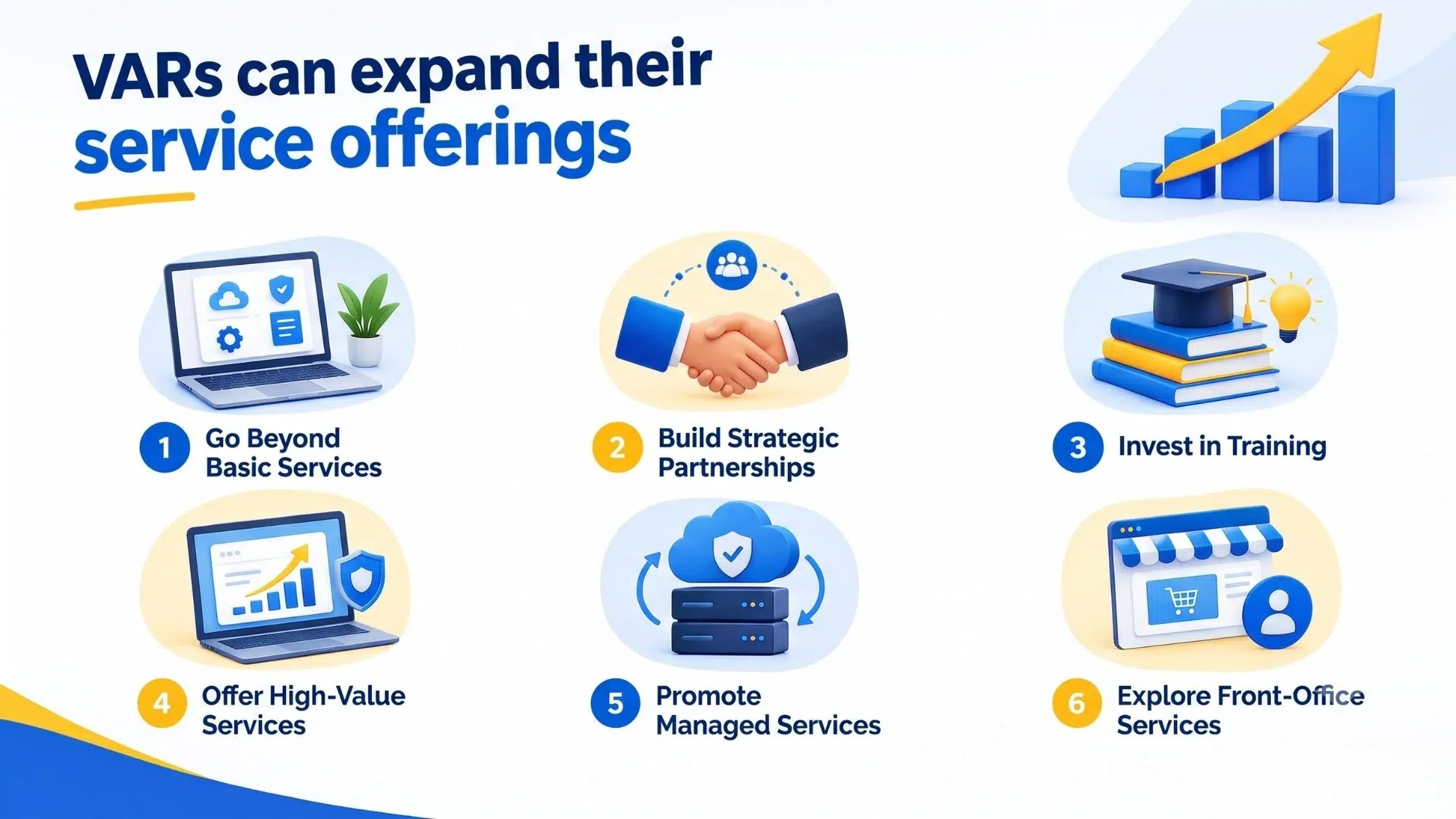
Here are some ways VARs can expand their service offerings:
- Go Beyond Basic Services: Technology implementation, integration, reporting, and initial training are useful, but they are often tied to one-time projects. Adding ongoing services can create more consistent revenue and give customers continued support after implementation.
- Build Strategic Partnerships: Instead of acting solely as a technology provider, VARs can take a more consultative role by helping customers identify technology needs, improve processes, and plan future investments.
- Invest in Training: Sales and technical teams need to understand the services they offer and the problems they solve. Regular training can help VARs identify new service opportunities and have more valuable conversations with customers.
- Offer High-Value Services: VARs can expand beyond product sales with services such as:
-
- Sales acceleration: Help customers adopt automation, sales enablement platforms, and productivity tools.
- Lead generation support: Provide marketing automation, campaign execution, and outsourced content marketing.
- Customer success enablement: Build or support customer service infrastructure, including chat, call centers, and knowledge bases.
- Promote Managed Services: Managed services allow VARs to take responsibility for ongoing technology functions instead of leaving customers to manage everything internally. This can create recurring revenue while giving customers access to expertise without having to build the same capabilities in-house.
- Explore Front-Office Services: Many VARs have traditionally focused on back-office technology and support. There is also an opportunity to offer services around customer engagement, sales, marketing, and support, helping customers address functions that directly contribute to business growth.
The goal is to move beyond transactional product sales and build services that customers continue to need after the initial purchase. For VARs, combining technology with ongoing expertise and support can create additional revenue opportunities while building longer-term customer relationships.
Subscriptions
As the Value-Added Reseller (VAR) landscape evolves, so must the value proposition and business model. The shift is clear. VARs are moving away from one-time projects and bulk payments toward a subscription-based model.
Key Shifts in the VAR Subscription Business Model:
- From Projects to Subscriptions: Traditional project-based models are giving way to recurring revenue models driven by contracts and customer experience.
- Customer Experience Drives Growth: In a subscription model, long-term profitability depends on how well VARs attract, retain, and support their customers, similar to how SaaS businesses operate.
- Profitability is Tied to Contracts:
- Success depends on contract duration, renewal rates, and customer satisfaction.
- Acquiring, onboarding, and activating new customers requires upfront investment, which must be recovered over time.
- Success depends on contract duration, renewal rates, and customer satisfaction.
- Recurring Revenue Example:
- A B2B software installation is typically followed by a renewable subscription.
- Customers are less likely to switch due to the sunk cost of time, money, and training.
- Familiarity with existing systems also reduces support and retraining needs.
- A B2B software installation is typically followed by a renewable subscription.
Three Critical Metrics for Subscription-Based VARs:
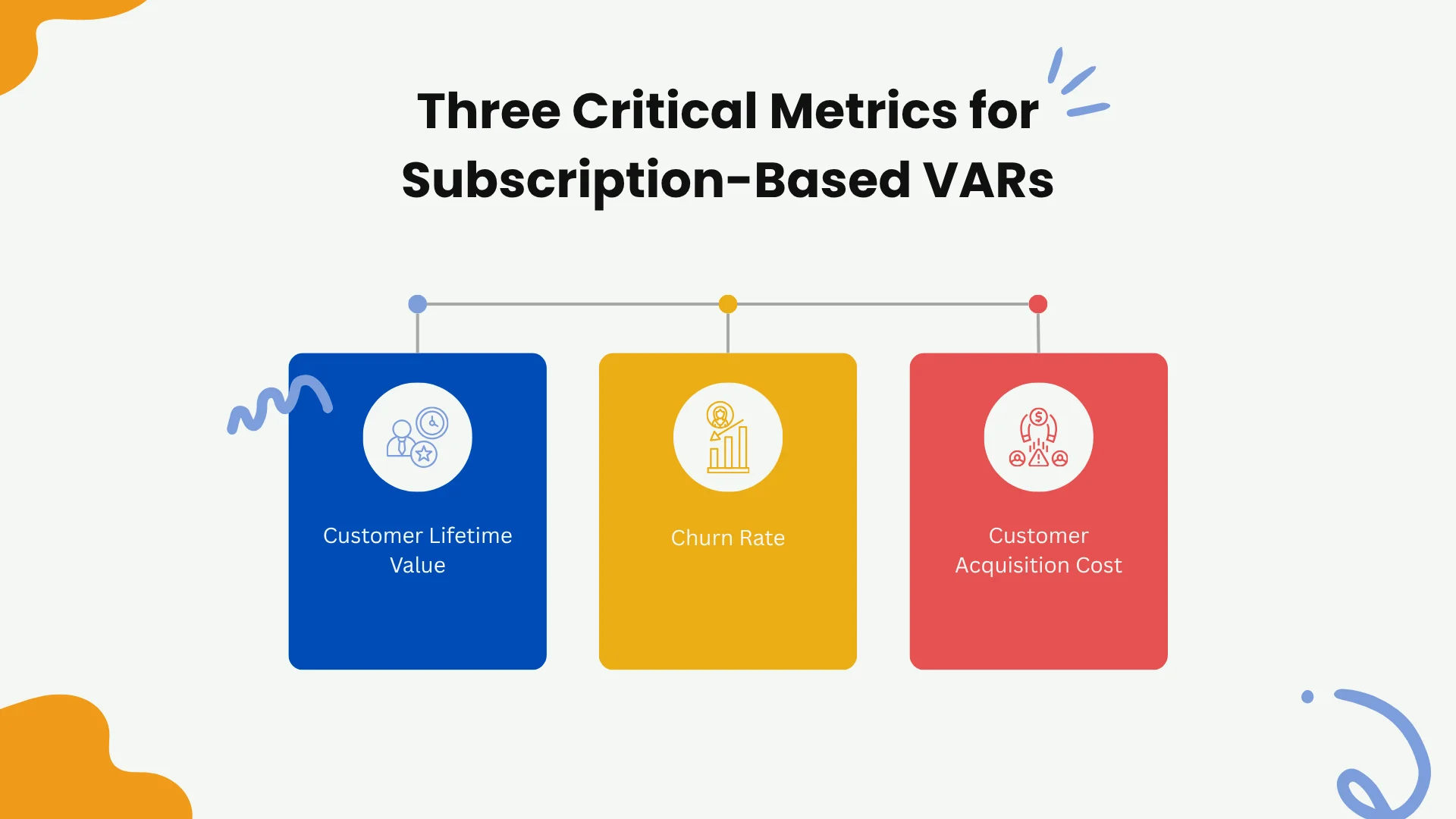
Subscription models require VARs to look beyond sales revenue and track metrics that show whether recurring business is actually profitable. Three metrics are particularly useful:
1. Customer Lifetime Value (LTV)
LTV estimates the total value a customer generates over the length of the relationship.
- A simple calculation is: Monthly service fee × length of engagement
- Higher LTV generally indicates that customers are staying longer and generating more revenue over time.
- In practice, LTV can also be calculated using gross margin rather than revenue alone, giving a clearer view of the customer’s actual contribution to profitability.
2. Churn Rate
Churn rate measures the percentage of customers who cancel or stop their subscription during a given period.
- A lower churn rate means more customers are staying with the business, supporting more predictable recurring revenue.
- High churn can reduce LTV and make it harder to recover the cost of acquiring and onboarding customers.
- Tracking churn over time can help VARs identify issues with pricing, service delivery, or customer satisfaction.
3. Customer Acquisition Cost (CAC)
CAC measures how much a VAR spends to acquire a new customer.
- Costs can include sales and marketing efforts, BDR time, onboarding, setup, and technology activation.
- Comparing CAC with LTV helps determine whether a subscription offering can generate sufficient value over the customer relationship.
- If customers leave before the business recovers its acquisition and onboarding costs, even strong subscription revenue may not translate into profitability.
Strategic Implications for VARs:
- Understanding the link between acquisition, activation, retention, and customer experience is vital.
- High churn before recovering CAC results in financial losses, no matter how many new deals are closed.
- To remain profitable, VARs must reduce churn, increase LTV, and control CAC.
The Path Forward:
As technology ecosystems change rapidly, VARs must adopt a recurring revenue mindset. This approach enables:
- Predictable and stable cash flows
- Long-term customer relationships
- Sustainable growth driven by support and service
For VARs, the subscription model isn’t just a trend, it’s a fundamental shift toward continuous value creation. Focusing on customer satisfaction, contract renewals, and long-term service delivery will pave the way for a stronger, future-proof business.
Read the blog—–Software Reseller Business Model: The Complete Guide
Configuration
Ecommerce has made product customization much easier for buyers. Instead of choosing from a fixed set of products, customers can select specifications, features, accessories, and other options based on their requirements.
For VARs, product configuration presents a similar opportunity. VARs have traditionally provided training and support services to their customers, but configurators can help them offer more personalized technology solutions while creating additional upselling opportunities. As part of a Make-to-Order (MTO) strategy, customers can select the components and options they need instead of settling for a standard package.
A well-designed configurator can also help VARs simplify complex product choices, reduce confusion during the buying process, and give sales teams a clearer way to build solutions around specific customer requirements.
Why VARs Should Embrace Product Configuration?
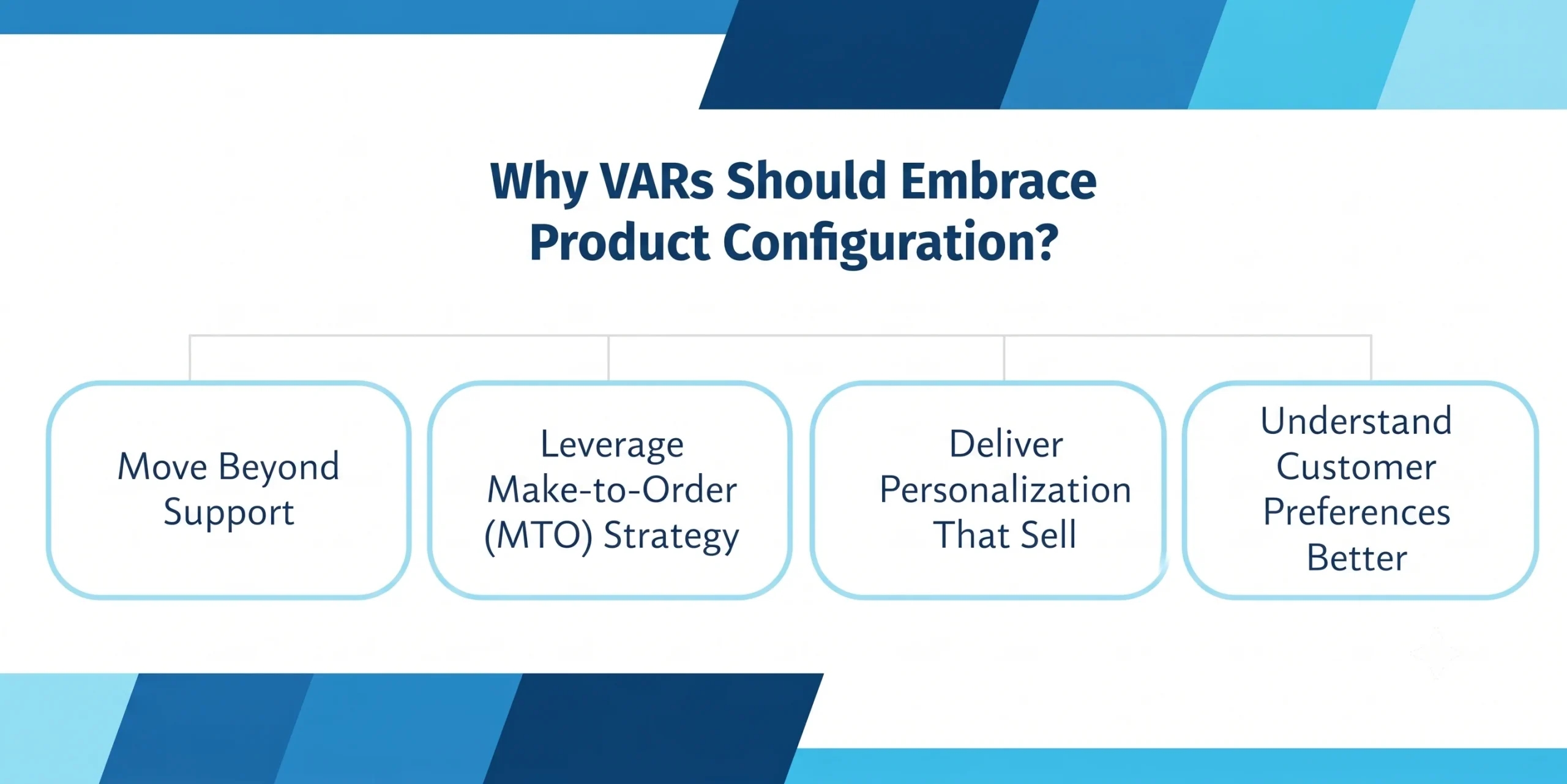
Product configuration gives VARs a way to move beyond selling standard products and build solutions around what each customer actually needs. It can also create opportunities to increase deal value by combining customized products with complementary software, accessories, and services.
- Create Higher-Value Solutions: Instead of selling a standard product, VARs can configure solutions based on customer requirements and include relevant products or services as part of the overall offering.
- Support Make-to-Order (MTO): Product configurators allow customers to select the specifications and options they need before an order is placed. This gives customers more control over the final solution and helps VARs manage customized orders more systematically.
- Make Complex Choices Easier: Technology products often come with multiple specifications and compatibility requirements. A configurator can guide customers through available options, making it easier to build a suitable solution without relying on lengthy back-and-forth conversations.
- Use Configuration Data: The options customers select can provide useful insight into their preferences and requirements. VARs can use this information to make more relevant recommendations and identify opportunities for future sales.