Winning Sales Proposals: The Ultimate Guide to Closing More Deals

Table of Content
If this situation feels familiar, it’s a common challenge. Many B2B sellers and resellers find that their proposals don’t hit the mark because they fall into a common trap: they focus on themselves instead of the customer. They send what amounts to a glorified price list, highlighting features instead of the value and outcomes the customer will achieve.
But what if there was a better way? A proven framework for creating winning sales proposals that not only capture attention but also get signed.
In this guide, we’ll walk you through our complete process for crafting proposals that close deals. You’ll learn:
- The critical difference between a quotation and a sales proposal (and why sending the right one is key).
- The essential elements of effective proposal writing.
- Advanced pricing strategies to communicate value effectively.
- How e-signature integration can help you finalize deals faster.
Ready to enhance your process and win more business? Let’s begin.
Quotation vs. Sales Proposal
First, let’s clarify a common point of confusion in the sales process: a quotation and a sales proposal are not the same document. Using these terms interchangeably is a frequent misstep, but understanding their distinct purposes is one of the foundational best practices in sales proposals.
A quotation is a transactional document that provides a fixed price for a specific product or service. It answers the question, “How much does this cost?”. Quotes are ideal when a client knows exactly what they need, for example, a specific number of hardware units or a standard service package. The scope is clear, and the decision is primarily based on price.
A sales proposal, in contrast, is a persuasive, strategic document designed to sell a comprehensive solution. It answers the question, “How will you help us solve our problem and achieve our goals?”. You send a proposal when a client has a challenge or an objective, but needs your expertise to define the best path forward. Modern CPQ tool for faster quoting (Configure, Price, Quote) can streamline the creation of both, ensuring accuracy whether you’re sending a simple price list or a detailed value proposition.
Think of it this way: a quote is a price tag in a store. A proposal is a consultation with a personal stylist who explains why certain pieces will work for you and how they will help you achieve your desired look.
When you send a quote for a complex need, you risk being commoditized and competing solely on price. When you send a proposal, you elevate the conversation from cost to value, positioning your company as a strategic partner rather than just a vendor.

The Anatomy of a Winning Sales Proposal
Now that we’ve established when to use a proposal, what are the components that make it successful? A winning proposal tells a story where your client is the hero facing a challenge, and your company is the expert guide with a plan for their success. Every section should reinforce this narrative.

Here is the architectural blueprint for proposal success strategies.
1. The Executive Summary
This is arguably the most critical part of your proposal. Many decision-makers will only read this section to decide if the rest is worth their time. Your executive summary should be a concise, powerful overview that summarizes the client’s problem, your proposed solution, and the expected outcomes and benefits. Keep it client-centric and focused on the value they will receive.
2. The Problem Statement
This is where you build trust and demonstrate that you’ve listened. Go beyond generic industry challenges and detail the specific pain points your prospect is facing, using the language they shared during discovery calls. By accurately reflecting their situation, you show that you truly understand their needs and aren’t just offering a one-size-fits-all solution. This is where insights from qualification frameworks like MEDDICC become invaluable, allowing you to articulate the Metrics, Economic Buyer, and Decision Criteria with precision. It’s also effective to mention the cost of inaction and what might happen if the problem isn’t addressed.
3. The Proposed Solution
Here, you outline the “how.” This section should be a clear action plan detailing what you will do, the timeline for completion, and key milestones. The secret to an effective solution section is to connect every feature or deliverable back to a specific benefit that addresses the client’s challenges. This section forms the foundation of a future MSA (Master Service Agreement) or SOW (Statement of Work). For complex deals, this might also include a mutual action plan, outlining responsibilities for both you and the client to ensure a smooth implementation. This clarity is crucial for internal approval workflows, as it gives stakeholders on both sides a clear picture of the engagement.
5. The Investment: Communicating Value, Not Just Price
How you present your pricing is as important as the numbers themselves. This section is so crucial that we’ve dedicated the entire next section to it.
6. Call to Action (CTA): Define the Next Steps
Don’t leave your prospect wondering what to do next. A winning proposal concludes with a clear, direct, and simple call to action. A vague CTA can cause a deal to stall. For larger clients, the next step might be to submit the proposal through their procurement portal.
Make your CTA unambiguous. For example:
- “To move forward, please select your preferred package and sign below.”
- “Click here to accept this proposal and schedule our project kickoff call.”
Adding an expiration date for the proposal can also create a sense of urgency and encourage a timely decision.
Advanced Pricing Strategies for Winning Sales Proposals
Many B2B sellers default to a cost-plus pricing model, which is a missed opportunity. A more strategic approach is Value-Based Pricing. This model sets your price based on the perceived value and ROI you deliver to the client, not on your internal costs. If your solution will generate or save your client $100,000, an investment of $20,000 is easily justified. This approach requires a clear ROI model and an understanding of the client’s TCO (Total Cost of Ownership), shifting the focus from your price to their net gain.
The most effective way to present value-based pricing is with a tiered model.
The “Good, Better, Best” Tiered Approach
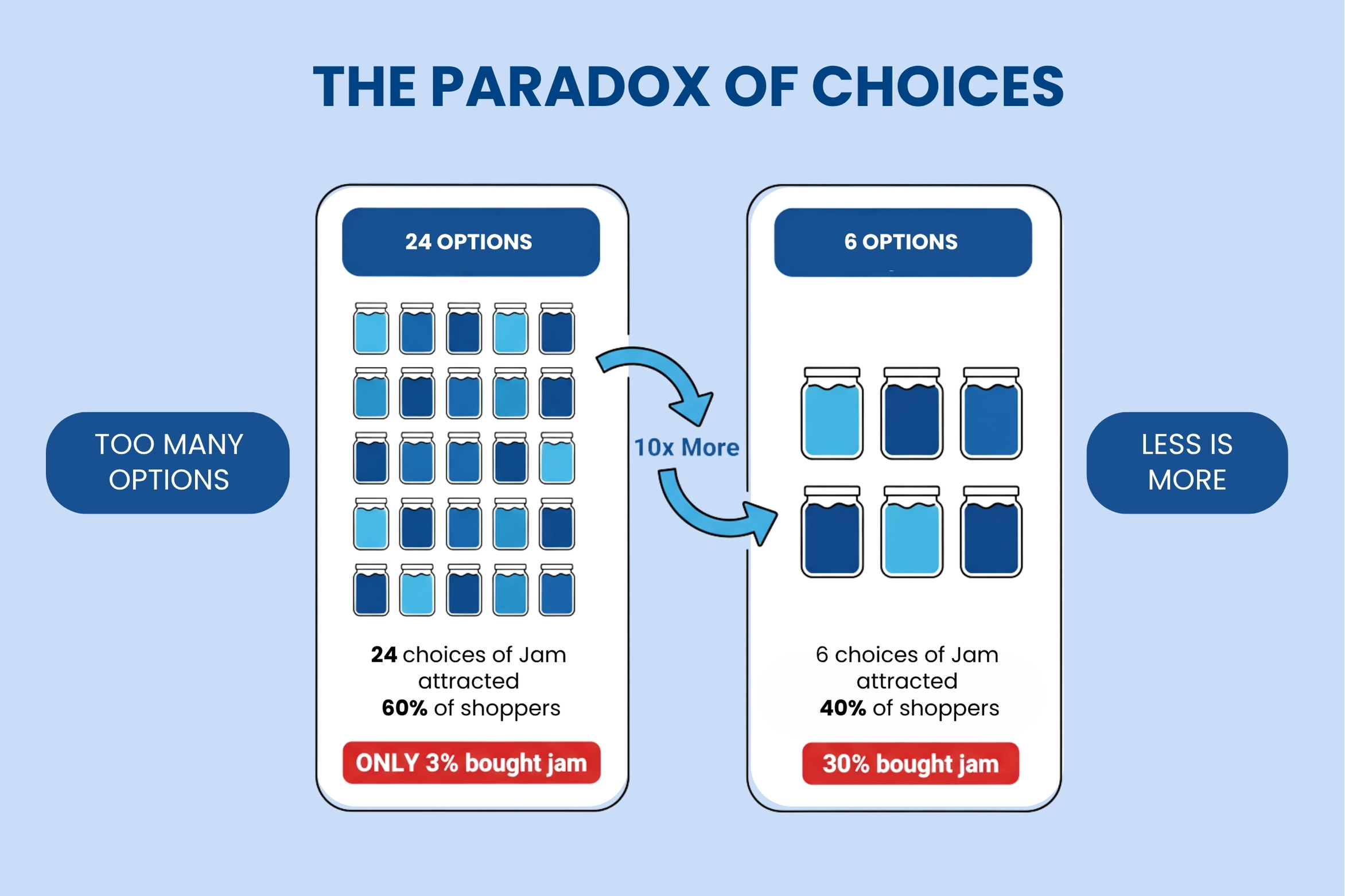
Instead of offering a single price, present three options. This approach has a powerful psychological effect, shifting the buyer’s mindset from “Should we work with them?” to “Which of these options is the best fit for us?“. A famous study on choice showed that while a large selection of jams attracted more onlookers, a smaller selection of just six options resulted in ten times more sales (30% vs. 3%). This “less is more” principle applies directly to proposals.
Here’s how to structure it:
- Option 1 (Good): This is your essential package. It includes the core services needed to solve the client’s primary problem, but may have certain limitations. It provides an accessible entry point for clients with tighter budgets.
- Option 2 (Better): This is the option you want most clients to choose. It offers the best balance of value and price and should be positioned as the “Recommended” or “Most Popular” choice.
- Option 3 (Best): This is your premium, all-inclusive package. It includes everything from the “Better” tier, plus high-value additions like dedicated support or advanced services. This tier helps capture maximum value and also makes the middle option appear more reasonably priced by comparison—a principle known as price anchoring.
Close Deals Faster with E-Signature Integration & Audit Trails
You’ve created a compelling proposal, and the client is ready to proceed. The final step—getting the signature—should be as seamless as possible. Relying on printing, signing, scanning, and emailing creates unnecessary friction and can delay the close.
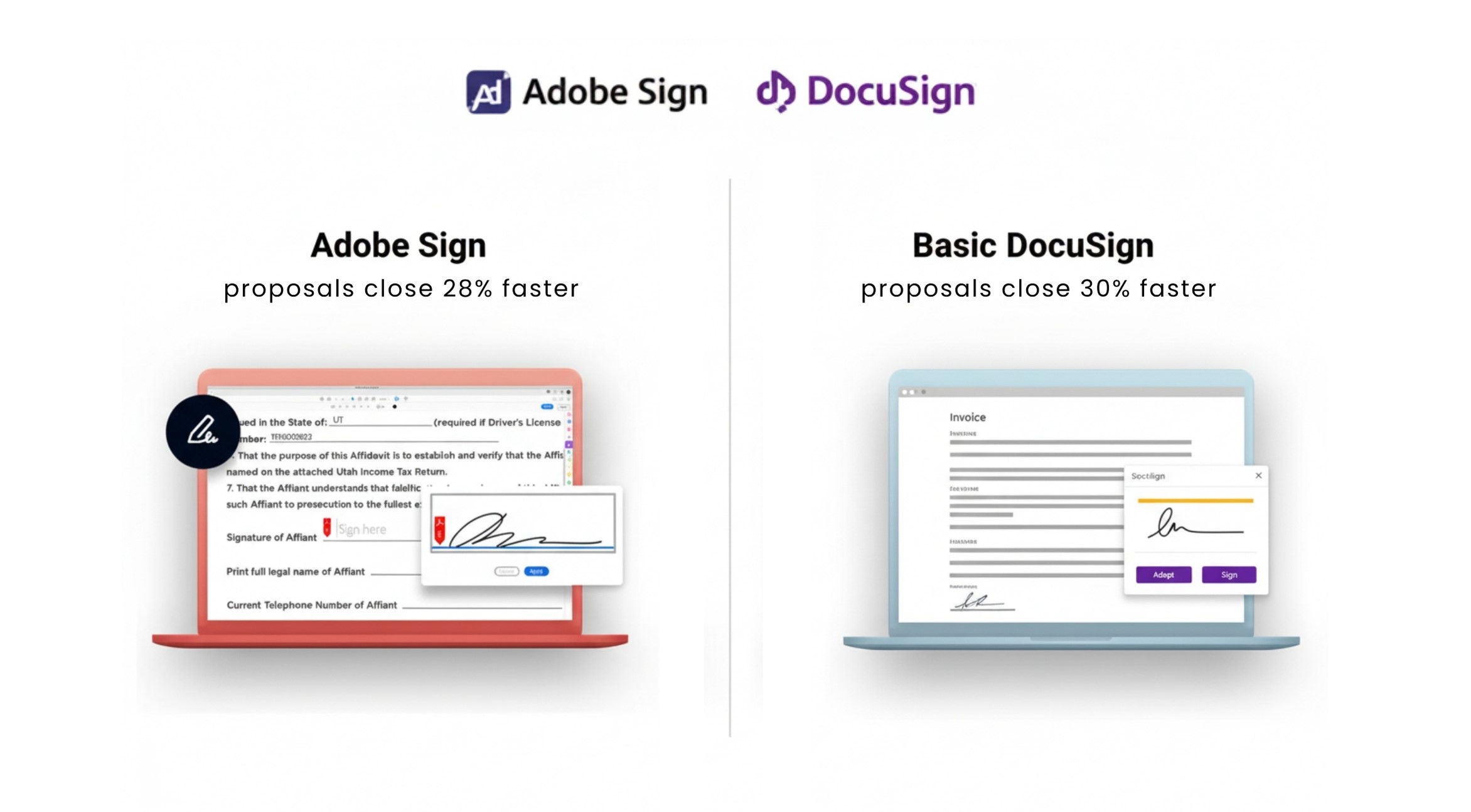
The solution is to integrate directly into your proposals. Research from Forrester Consulting shows that customers using Adobe Sign experienced signature cycles that were 28 times faster. Another study found that proposals with e-signatures close 30% faster.
Here’s why this is a game-changer:
- Increased Speed: Clients can sign from any device in seconds, dramatically shortening your sales cycle.
- Frictionless Experience: You make it incredibly easy for them to say “yes.” This provides a modern, professional experience that clients appreciate.
- Enhanced Security: Reputable providers like DocuSign are legally binding and secure, creating a detailed audit trail for every document.
- Sales Intelligence: Modern proposal software provides valuable insights. You can track when your proposal is opened, how many times it’s viewed, and which sections receive the most attention. This allows for timely and relevant follow-up, turning your proposal into a tool that helps the deal desk close deals. Modern platforms also simplify the negotiation process, allowing for digital redlining and version control before the final signature.
Conclusion
Stop thinking of your sales proposal as just a document. It’s a critical conversation, a strategic tool, and often, the deciding factor in a competitive deal. A winning proposal doesn’t just list prices; it builds confidence, demonstrates a deep understanding of your client’s world, and clearly articulates the value of a partnership with you.
By shifting your focus from features to outcomes, from transactional quotes to value-based solutions, and from manual processes to streamlined, professional workflows, you do more than just improve a document; instead, you elevate your entire sales approach. You position your team not as vendors, but as indispensable partners in your client’s success.
Implementing these strategies is the key to creating proposals that don’t just get read, but get signed.
Ready to build winning proposals that close deals faster?
VARStreet’s all-in-one platform, featuring advanced CPQ and proposal generation software, empowers B2B sellers and resellers to create customized, value-driven proposals in minutes. Stop wasting time on manual processes and start focusing on what matters most: building relationships and growing your business.
Click here to see how VARStreet can help you streamline your sales process and transform your proposals into your most powerful closing tool.