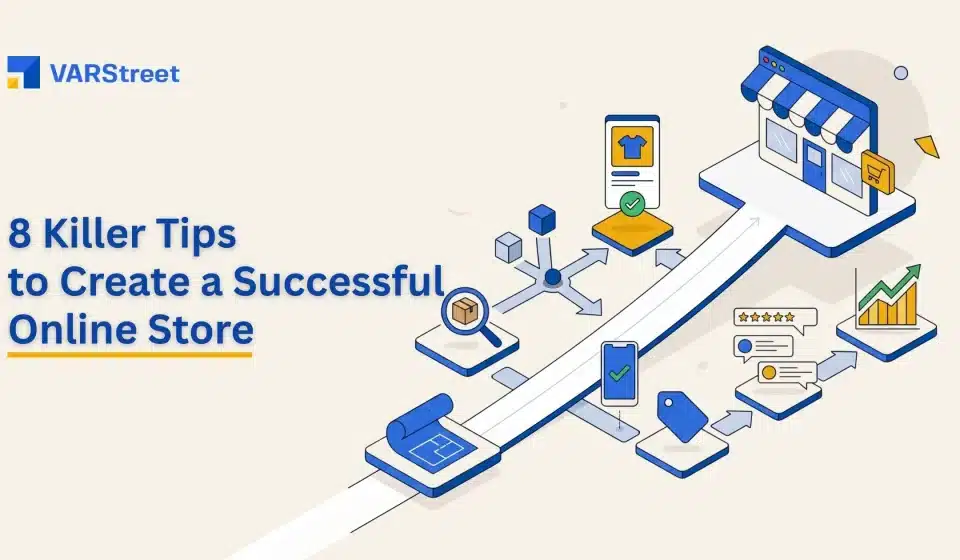
8 Tips to Create a Successful Online Store for IT Resellers and MSPs

Table of Content
- Introduction
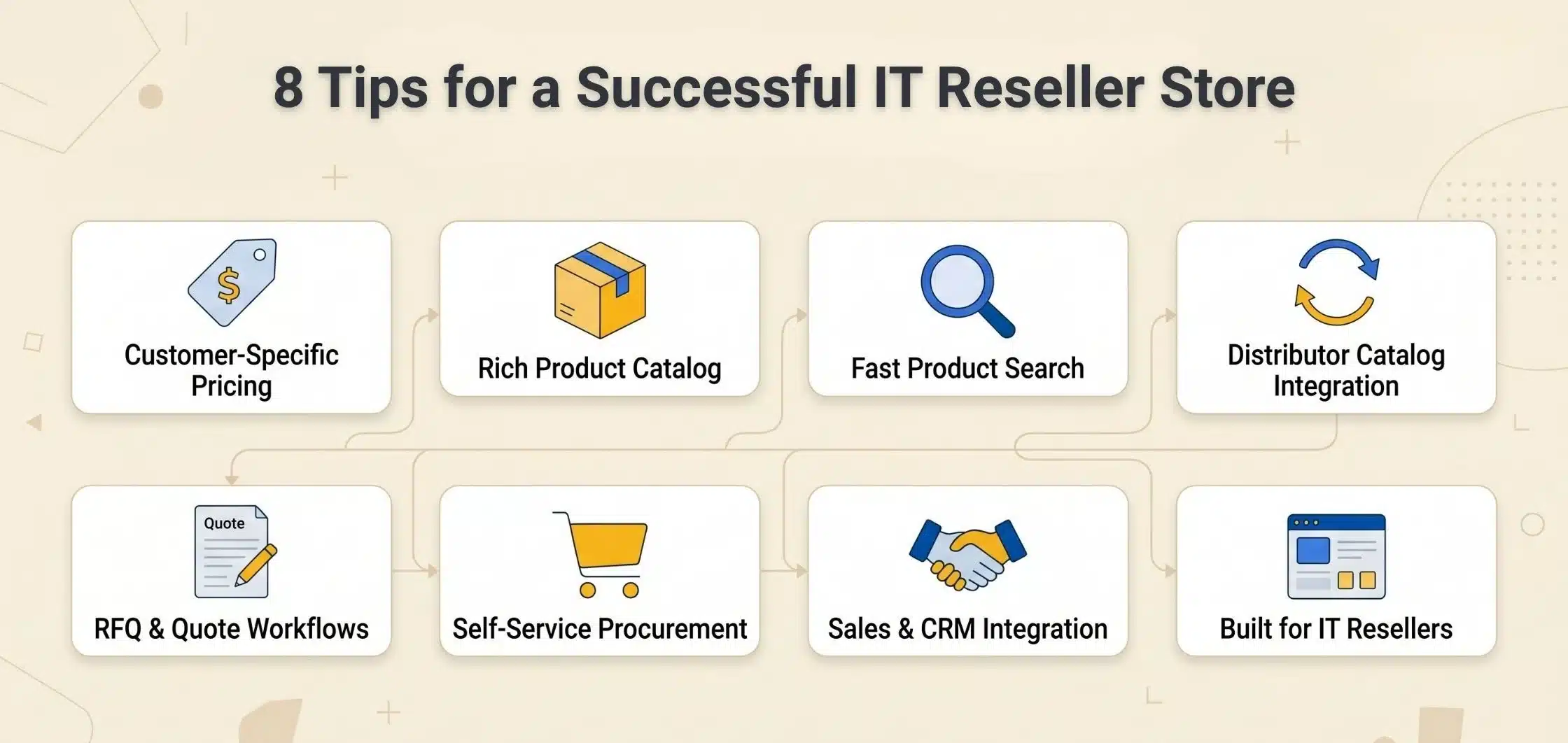
- 1. Offer Customer-Specific Pricing
- 2. Build a Rich and Accurate Product Catalog
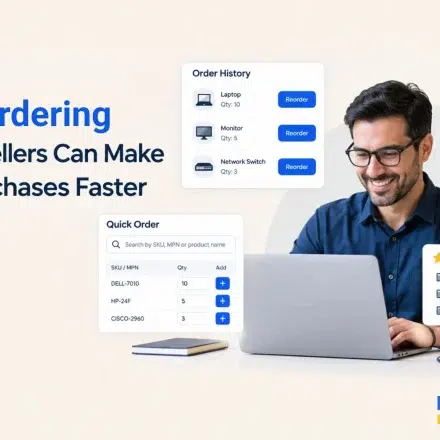
- 3. Make Search the Fastest Path to Purchase
- 4. Integrate Distributor Catalogs Directly Into Your Store
- 5. Support RFQs and Quote-to-Order Workflows
- 6. Enable Self-Service Procurement
- 7. Connect Your Store to Sales and CRM Workflows
- 8. Choose a Platform Designed for IT Resellers
- Conclusion
- FAQs
1. Offer Customer-Specific Pricing
-
Why Generic Pricing Creates Friction
One of the quickest ways to discourage B2B buyers from using your online store is by showing them pricing that doesn’t match their negotiated agreements.
Most IT resellers operate with customer-specific contracts, volume discounts, special pricing arrangements and preferred product lists. When a customer logs into an online store and sees standard pricing instead of their agreed-upon rates, confidence drops immediately.
Instead of becoming a purchasing tool, the store becomes another reason to call the sales team.
-
What a Better Experience Looks Like
A successful online store should automatically display account-specific pricing, contract products and relevant purchasing options.
Customers should feel that the store recognizes who they are and understands their relationship with your business.
When buyers can view accurate pricing without contacting sales, purchasing becomes faster, easier and more likely to happen online.
2. Build a Rich and Accurate Product Catalog
-
Product Information Drives Purchasing Decisions
Technology buyers depend heavily on product content.
They need specifications, compatibility details, manufacturer information, images, datasheets and warranty information before making a purchasing decision.
Incomplete product pages create uncertainty and often force customers to leave the site.
-
Make Product Content a Competitive Advantage
The best online stores invest heavily in catalog quality.
Comprehensive product information helps buyers evaluate options independently and reduces reliance on sales representatives for routine questions.
For IT resellers managing large catalogs, rich-content integrations can help maintain complete product records at scale while improving the overall shopping experience.
3. Make Search the Fastest Path to Purchase
-
Buyers Don’t Browse Like Consumers
Many B2B buyers arrive knowing exactly what they need.
They search by manufacturer part number, Stock-Keeping Unit (SKU), product family, brand or technical specification.
If your search experience cannot accommodate these behaviors, customers struggle to find products quickly.
-
Focus on Speed and Relevance
A successful online store should make product discovery effortless.
Advanced filtering, predictive search, category navigation and attribute-based search capabilities help buyers find the right products without unnecessary clicks.
The easier products are to find, the easier they are to buy.
4. Integrate Distributor Catalogs Directly Into Your Store
-
Manual Catalog Management Doesn’t Scale
Technology catalogs change constantly.
New products are introduced, inventory levels fluctuate and pricing updates occur throughout the day.
Attempting to manage these changes manually creates operational bottlenecks and increases the risk of errors.
-
Automation Improves Accuracy
Direct integrations with distributors help synchronize product data, availability and pricing.
This ensures customers see more accurate information while reducing administrative work for internal teams.
For Value-Added Resellers (VARs) and MSPs managing large product catalogs, distributor integrations are often essential to maintaining a successful online store.
5. Support RFQs and Quote-to-Order Workflows
-
Not Every Purchase Ends With Checkout
Unlike consumer eCommerce, many B2B transactions begin with a quote request.
Customers may need custom pricing, product bundles, volume discounts or technical consultation before placing an order.
Stores that force every interaction through a shopping cart often create unnecessary friction.
-
Give Buyers Flexibility
A successful online store should support both direct purchasing and quote requests.
Customers should be able to move easily between browsing products, requesting pricing, reviewing proposals and placing orders.
This flexibility mirrors how technology buying actually happens and encourages greater platform adoption.
6. Enable Self-Service Procurement
-
Buyers Want More Than Ordering Capabilities
Once customers begin purchasing online, their expectations expand.
They want access to order history, invoice downloads, user management, approval workflows and account information.
If these capabilities are unavailable, customers still need to contact support for routine tasks.
-
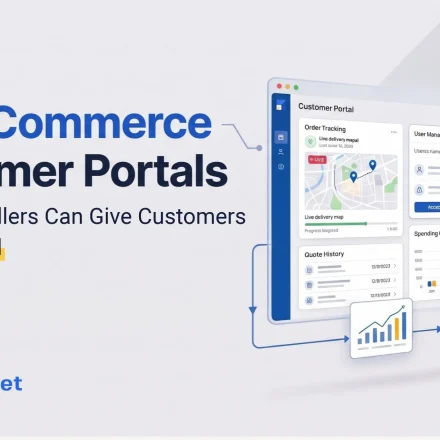
Turn Your Store Into a Business Tool
The most successful B2B stores become procurement hubs rather than simple sales channels.
Self-service capabilities improve convenience, reduce support requests and strengthen customer relationships.
The easier it is for customers to manage their purchasing activities independently, the more valuable your store becomes.
7. Connect Your Store to Sales and CRM Workflows
-
Online Stores Should Not Operate in Isolation
Many organizations treat eCommerce as a separate system.
The result is disconnected customer data, inconsistent experiences and duplicated effort.
Customers expect continuity regardless of whether they interact online or through a sales representative.
-
Create a Unified Buying Experience
Connecting your online store with Customer Relationship Management (CRM), quoting and sales systems helps ensure everyone works from the same information.
Sales teams gain visibility into customer activity while buyers experience a smoother purchasing journey.
The result is better customer service and more efficient internal operations.
8. Choose a Platform Designed for IT Resellers
-
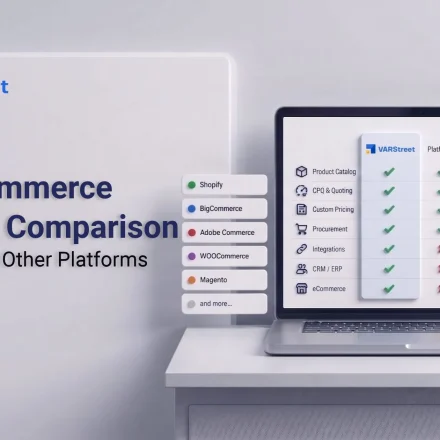
Generic Platforms Often Create Limitations
Many eCommerce platforms were originally designed for retail environments.
While they may offer attractive storefronts, they frequently lack the functionality required by IT resellers and MSPs.
Capabilities such as customer-specific pricing, distributor integrations, Request for Quote (RFQ) management, procurement support and large catalog management are often difficult to implement.
-
Invest in Long-Term Scalability
A successful online store should support your business today and as it grows.
Choosing a platform built specifically for the IT channel can reduce customization requirements, simplify operations and accelerate time to value.
The right platform becomes an enabler of growth rather than a constraint.
Conclusion
Creating a successful online store is not about adding more products or launching a more attractive website.
It is about building an experience that helps customers buy more efficiently while making operations easier to manage.
For IT resellers and MSPs, that means offering customer-specific pricing, maintaining accurate product data, enabling self-service procurement, supporting quote-to-order workflows and integrating the store with the systems that power the rest of the business.
Organizations that focus on these capabilities are far more likely to drive adoption, increase online revenue and strengthen customer relationships.
Ready to create an online store designed specifically for IT resellers and MSPs? Schedule a demo with VARStreet to see how integrated eCommerce, catalog management, quoting, CRM connectivity and distributor automation can help you deliver a better buying experience and accelerate growth.