Enterprise-Grade B2B eCommerce: The Key to Scalable Growth and Higher ROI for VARs and MSPs

Table of Content
- Why Traditional Growth Models Stop Scaling
- What Makes a B2B eCommerce Platform Enterprise-Grade?
- How Enterprise eCommerce Enables Scalable Growth
- Where Does the ROI Come From?
- Why Integrations Determine Success
- A Real-World Example of Scalable Growth
- What VARs and MSPs Should Look for in an eCommerce Platform
- Conclusion
- FAQs
Why Traditional Growth Models Stop Scaling
Many channel businesses reach a point where growth begins exposing inefficiencies that were previously manageable.
A sales representative receives a request for a quote involving hardware, software licenses, and managed services. To create that quote, they may need to compare inventory across multiple distributors, verify customer-specific pricing agreements, seek internal approvals, and manually transfer information between systems.
Individually, none of these tasks seems particularly difficult.
Collectively, they consume an enormous amount of time.
The Hidden Cost of Manual Quoting
In many growing VAR organizations, sales representatives spend a surprising amount of their day gathering information rather than engaging customers.
A single quote may require checking multiple distributor portals such as TD SYNNEX, Ingram Micro, D&H and Arrow to compare pricing and availability. Once pricing is confirmed, information often needs to be copied into quoting systems, approval workflows, CRM platforms and ERP applications.
These manual processes create delays that affect both internal productivity and customer experience.
More importantly, they prevent sales professionals from focusing on the activities that actually generate revenue.
When Growth Creates More Complexity Than Revenue
As transaction volumes increase, organizations often respond by adding more staff.
While additional headcount may temporarily relieve operational pressure, it does not solve the underlying problem. Businesses eventually reach a point where every increase in revenue requires a corresponding increase in administrative effort.
This is not scalable growth.
Scalable growth occurs when organizations can support higher transaction volumes without significantly increasing operational overhead. Achieving that level of efficiency requires systems that automate routine processes and connect critical business functions.
What Makes a B2B eCommerce Platform Enterprise-Grade?
Not all eCommerce platforms are designed for the realities of the IT channel.
Many traditional eCommerce solutions were originally developed for consumer retail environments. They excel at facilitating straightforward online purchases but struggle to support the complexity associated with modern B2B transactions.
Why Consumer eCommerce Platforms Fall Short
A typical consumer shopping experience involves fixed pricing, simple inventory management, and a relatively straightforward purchasing process.
VARs and MSPs operate in a completely different environment.
Pricing can vary by customer, contract, volume commitment and distributor. Product availability changes frequently. Procurement often involves multiple vendors. Approval workflows may span multiple departments. Large customers may require PunchOut integrations with procurement platforms such as Ariba and Coupa.
These requirements extend far beyond the capabilities of a standard shopping cart.
The Requirements of Modern Channel Businesses
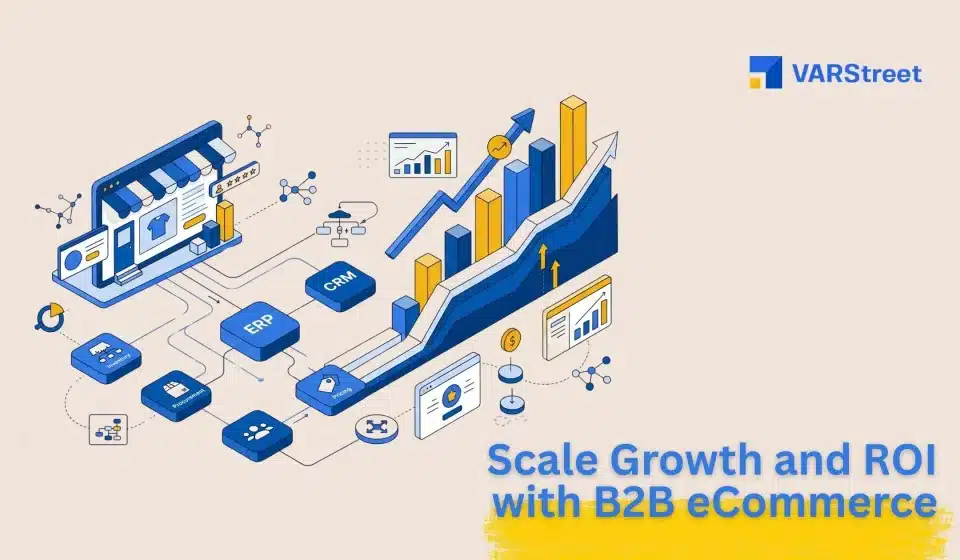
Enterprise-grade B2B eCommerce platforms are built to address these complexities. They support customer-specific pricing, advanced quoting workflows, distributor integrations, procurement automation, account-based purchasing controls and connectivity with critical business systems.
Most importantly, they create a centralized environment where customers, sales teams, operations staff and distributors can work from the same source of information.
That consistency becomes increasingly valuable as organizations grow.
How Enterprise eCommerce Enables Scalable Growth
Organizations often view eCommerce primarily as a sales channel. In reality, its greatest value frequently comes from improving operational efficiency.
Eliminating the Small-Quote Bottleneck
Many sales teams spend an outsized amount of time processing low-value and repeat orders.
Customers frequently know exactly what they want to purchase. They simply need access to accurate pricing and a convenient purchasing process.
When every transaction requires manual intervention from a sales representative, organizations create unnecessary bottlenecks.
Enterprise eCommerce addresses this challenge by giving customers secure self-service access to product catalogs, negotiated pricing, order history, and purchasing tools.
Routine transactions can move through the system with minimal human involvement, allowing sales teams to dedicate more time to strategic opportunities and customer relationships.
Creating Operational Leverage
The most successful channel organizations understand the concept of operational leverage.
Instead of adding people to handle increasing workloads, they invest in systems that automate repetitive tasks and improve efficiency.
Enterprise eCommerce helps businesses to process more transactions, manage larger catalogs, and support more customers without employing more people.
That operational leverage becomes a significant competitive advantage over time.
Meeting Modern Customer Expectations
Business buyers have changed.
Today’s procurement professionals expect the same convenience they experience when purchasing products in their personal lives. They want immediate access to information, transparent pricing, order visibility, and streamlined purchasing experiences.
Many buyers prefer to conduct research independently before engaging with a sales representative.
Organizations that continue relying exclusively on traditional purchasing methods risk creating friction that drives customers elsewhere.
Enterprise eCommerce helps VARs and MSPs meet these evolving expectations while maintaining the personalized service that remains essential in B2B relationships.
Where Does the ROI Come From?
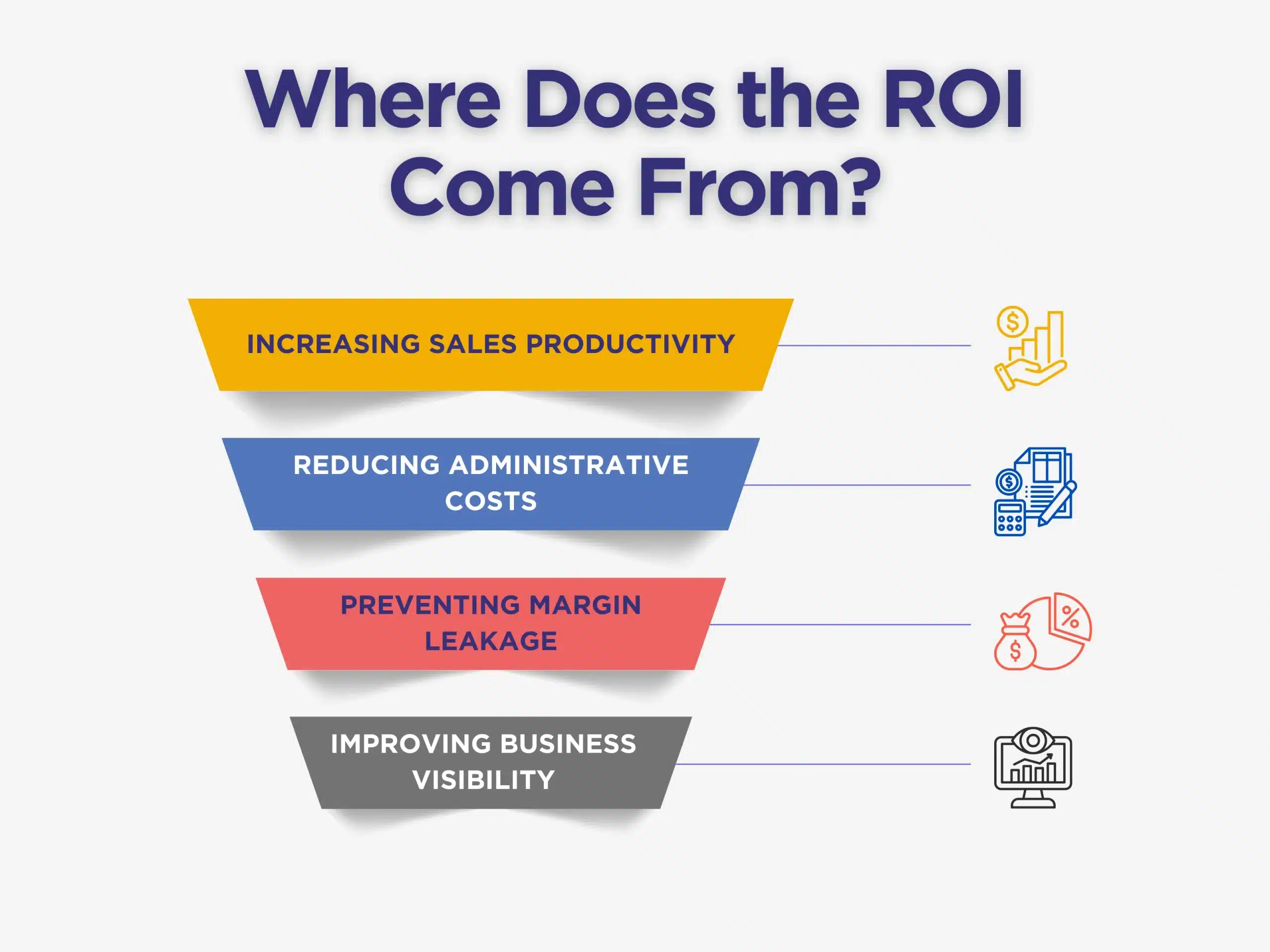
While revenue growth often receives the most attention, the strongest returns from enterprise eCommerce typically come from operational improvements.
Increasing Sales Productivity
Sales professionals generate the most value when they are solving customer problems, identifying opportunities, and building relationships.
Administrative tasks reduce the amount of time available for these activities.
Enterprise eCommerce automates quoting, order processing, and routine customer interactions. It enables sales teams to focus on higher-impact work. This often results in greater revenue productivity without increasing headcount.
Reducing Administrative Costs
Every manual process carries a cost.
Data entry, pricing verification, order tracking, and procurement coordination may seem like small tasks individually, but together they consume significant organizational resources.
Automation reduces the need for repetitive administrative work and helps organizations operate more efficiently as they scale.
Preventing Margin Leakage
Margin erosion often occurs gradually and can be difficult to detect.
Pricing errors, inconsistent discounting, outdated distributor information, and approval process gaps all contribute to lost profitability.
Enterprise-grade platforms help organizations enforce pricing rules, approval thresholds, and contract-specific agreements. This creates greater consistency across transactions and reduces the risk of costly mistakes.
Improving Business Visibility
Growth becomes easier to manage when leaders have access to accurate, real-time information.
Enterprise eCommerce platforms provide valuable insights into purchasing trends, customer behavior, sales performance, product demand, and profitability metrics.
These insights support better decision-making and help organizations identify opportunities for continuous improvement.
Why Integrations Determine Success
One of the most common reasons eCommerce initiatives fail to achieve their full potential is a lack of integration.
A storefront alone does not eliminate inefficiencies if employees still need to manually move information between systems.
Connecting Distributor Ecosystems
For VARs and MSPs, distributor integrations are essential.
Real-time access to pricing, inventory availability, promotions, and procurement workflows allows organizations to operate more efficiently while improving customer responsiveness.
Without these integrations, teams are forced to rely on manual processes that introduce delays and increase the likelihood of errors.
Unifying ERP, CRM, and PSA Workflows
Successful channel businesses depend on a wide range of business systems.
ERP platforms such as NetSuite and Microsoft Dynamics manage financial and operational data. CRM systems such as Salesforce and HubSpot support customer engagement. PSA tools like ConnectWise and Autotask help MSPs manage service delivery.
When these systems operate independently, inefficiencies emerge.
When they operate together, organizations gain a unified view of customers, products, pricing, inventory, and orders. This alignment improves accuracy, accelerates workflows, and enhances overall business performance.
A Real-World Example of Scalable Growth
Consider a growing North American MSP supporting hundreds of mid-market customers.
A client needs to purchase laptops, software licenses, and onboarding services for a new office location.
Without an integrated ecosystem, the sales representative may need to check inventory across multiple distributors, compare pricing manually, generate a quote, seek approvals, create purchase orders, update the ERP system, and communicate order status throughout the process.
Every step introduces delays and opportunities for error.
Now imagine the same transaction in an enterprise-grade eCommerce environment.
Distributor feeds provide real-time inventory and pricing information.
The customer accesses a personalized portal with pre-approved products and contract pricing. Quotes are generated automatically, approvals move through predefined workflows, and purchase orders are routed directly through connected procurement processes.
The customer experiences a faster buying journey while the provider delivers greater efficiency with fewer manual touchpoints.
This is what scalable growth looks like in practice.
What VARs and MSPs Should Look for in an eCommerce Platform
Choosing the right platform requires looking beyond storefront functionality.
Essential Capabilities
The most effective enterprise solutions provide advanced quoting, customer-specific pricing, procurement automation, distributor integrations, ERP connectivity, CRM synchronization, and self-service purchasing experiences.
These capabilities work together to reduce complexity while supporting long-term growth.
Why Purpose-Built Platforms Have an Advantage
Many organizations discover that generic eCommerce platforms require extensive customization to support the unique requirements of the IT channel.
Distributor integrations, procurement workflows, and advanced quoting capabilities often require additional tools, middleware, and ongoing maintenance.
Purpose-built solutions designed specifically for VARs and MSPs can simplify implementation, accelerate adoption, and deliver value more quickly by bringing these capabilities together within a unified platform.
Conclusion
For VARs and MSPs, growth should not come at the expense of efficiency.
Organizations that continue relying on manual processes often find themselves hiring more people simply to keep pace with increasing transaction volumes. While this approach may support short-term growth, it rarely creates a sustainable foundation for long-term success.
Enterprise-grade B2B eCommerce offers a more scalable alternative.
By automating quoting, streamlining procurement, integrating critical business systems, and empowering customers through self-service experiences, organizations can improve operational efficiency while delivering a better customer experience.
The result is a business that grows smarter, not just bigger.
If your organization is evaluating ways to eliminate operational bottlenecks, improve profitability and create a stronger foundation for future growth, explore how VARStreet’s enterprise B2B eCommerce platform, advanced quoting software and extensive distributor integrations can help accelerate your digital commerce journey. Book a demo and see it yourself.