What is cXML and How does it Enable PunchOut Catalogs for Smarter B2B Automation?
Table of Content
With more businesses shifting to digital procurement, there’s growing pressure to make B2B buying faster, more accurate, and fully connected. Companies that rely on multiple suppliers can’t afford delays or errors in their purchasing process. That’s where PunchOut catalogs powered by cXML come into play. They streamline the buying journey, reduce manual work, and support scalable, automated B2B operations.
Key Takeaways:
- Commerce XML is a standardized protocol that allows buyers and suppliers to exchange procurement documents like punchout requests, orders, and invoices.
- cXML based PunchOut lets a buyer start in their eProcurement system, shop in a supplier store, and return an approved cart without manual reentry.
- Standardized messages improve interoperability across many different ERP and procurement platforms in global B2B networks.
- Automation of ordering and invoicing through cXML reduces errors, cycle times, and processing costs for both buyers and suppliers.
- Robust cXML implementations must handle authentication, error responses, and edge cases like returns to keep procurement processes reliable.
But what exactly is cXML? And how does it empower PunchOut catalogs to transform B2B eCommerce?
Let’s explore.
The PunchOut Catalog Advantage
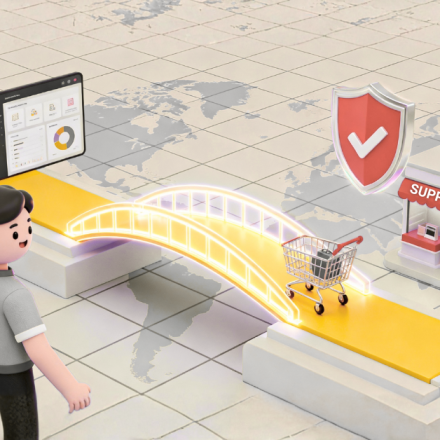
A PunchOut catalog is a dynamic, real-time bridge between a buyer’s eProcurement system and a supplier’s online catalog. Instead of uploading product data manually into procurement systems, buyers can “punch out” to a supplier’s website, browse live catalogs, add products to their cart, and seamlessly return the cart data back to their internal procurement system, all without ever truly leaving their own platform.
According to our 2025 B2B Buyer Report, 81% of B2B buyers feel that they don’t have access to accurate stock levels and shipping estimates. This issue can be resolved using PunchOut as it provides access to real-time pricing and inventory, thereby eliminating order issues.
This model eliminates data duplication, reduces procurement friction, and gives buyers real-time access to product availability, pricing, and promotions.
This is the reason why PunchOut catalog is popular in the B2B space. Read our blog- Rising Demand for PunchOut Catalog in B2B: Understanding the Popularity to learn more.
Behind the Scenes: How PunchOut Works
PunchOut catalogs rely on standardized communication protocols to interact with eProcurement platforms. The process typically follows this workflow:

- Initiation: The buyer selects a vendor and sends a PunchOut Setup Request through their procurement software.
- Authentication & Redirection: The supplier’s system authenticates the buyer and returns a cXML-based response with a redirect URL.
- Product Selection: The buyer is redirected to the supplier’s catalog, browses, selects items, and builds a shopping cart.
- Cart Return: Once the cart is finalized, the contents are sent back to the procurement system using a PunchOut Order Message encoded in cXML.
- Order Processing: Procurement systems complete approvals, issue purchase orders, and initiate fulfillment, all automatically.
This flow is enabled and standardized through cXML.
What is cXML?
Commerce eXtensible Markup Language (cXML) is a protocol designed specifically for B2B eCommerce. Developed by Ariba in the late 1990s, it standardizes how data is exchanged between procurement systems and supplier platforms.
Unlike traditional EDI (Electronic Data Interchange), which can be complex and expensive to implement, cXML is lightweight, open, and extensible. It supports essential B2B documents such as:
- PunchOut setup and order messages
- Purchase orders and order confirmations
- Invoices and shipping notices
cXML uses a request-response model over HTTPS, ensuring secure and reliable communication between platforms. Its simplicity and flexibility make it a popular choice for VARs, manufacturers, and B2B distributors looking to modernize procurement.
cXML vs EDI: Which One Wins?
While EDI has been the legacy standard for decades, cXML is quickly becoming the preferred choice for modern B2B integrations. Here’s why:
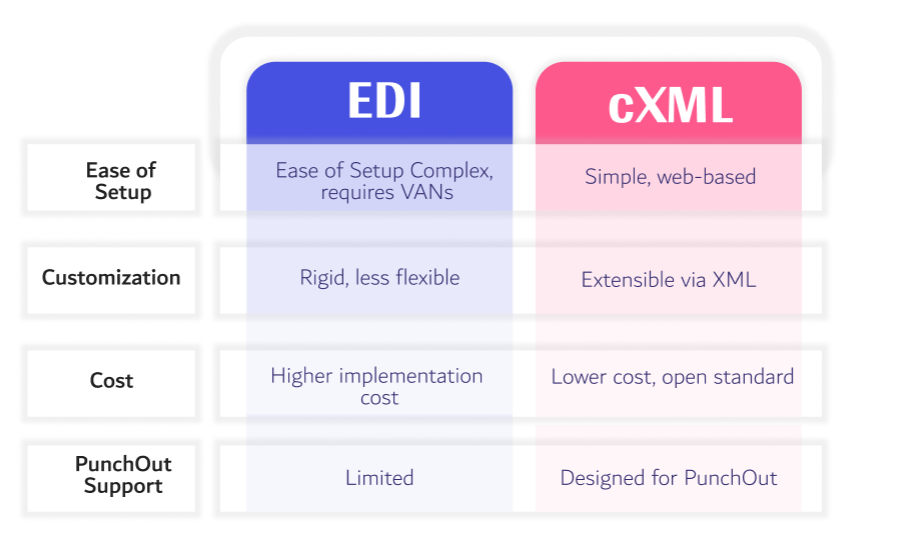
For companies aiming to scale quickly and automate intelligently, cXML offers a lower barrier to entry and a faster path to ROI.
What Does a cXML PunchOut Transaction Look Like?
A typical session involves:
- To begin the PunchOut session, the buyer’s eProcurement tool sends a cXML message with credentials and identification info to the supplier’s online store.
- The supplier responds with a cXML document, including a secure redirect URL.
- The buyer shops on the supplier’s real-time catalog and finalizes the cart.
- The cart data is returned to the procurement system via another cXML message, pre-populated with product SKUs, prices, descriptions, and UNSPSC codes.
Following approval, a purchase order is instantly generated and electronically transmitted to the supplier via cXML, ensuring quick and accurate procurement.
The result? A frictionless, accurate, and fully traceable buying experience.

Pro Tip:
Design your cXML integration with clear logging and monitoring so procurement and IT teams can quickly diagnose any transaction failures.
Why Businesses Choose cXML-Powered PunchOut?
cXML-based PunchOut integration delivers a host of benefits for both buyers and sellers. Here they are:
For Buyers
- Accelerated Procurement Cycles: Faster quote-to-order flow minimizes manual work and procurement delays.
- Improved Accuracy: Real-time product data and pricing eliminate errors due to outdated or duplicated catalogs.
- Seamless ERP and eCommerce Integration: cXML acts as the glue that connects disconnected systems without custom middleware.
- Enhanced Customer Experience: Buyers enjoy a personalized, intuitive buying experience inside their existing tools.
For Suppliers
Increased Visibility in Buyer Procurement Systems
Punchout catalogs allow suppliers’ products to be directly accessible within the buyer’s eProcurement system (like SAP Ariba, Coupa, Oracle, etc.). Gaining recognition as a preferred vendor enhances the supplier’s presence in the buyer’s procurement workflows, leading to increased trust, repeated orders, and a significant boost in sales potential.
Streamlined Backend Processing
With cXML-enabled Punchout, orders flow directly from the buyer’s procurement system to the supplier’s backend, eliminating manual entry errors and improving operational efficiency.
Increased Stickiness with Large Enterprise Buyers
Offering Punch out capability makes it easier for B2B buyers to do business with you, increasing long-term loyalty and making your catalog their preferred source.
Scalability across Multiple eProcurement Systems
cXML is a widely supported standard compatible with a range of eProcurement platforms. This allows suppliers to scale their operations and connect with multiple buyers across different systems.
For distributors and resellers, this means more closed deals, fewer manual touchpoints, and a modern procurement workflow that buyers expect.
Pro Tip:
Use PunchOut and cXML data to analyze spend by category and supplier, enabling more strategic sourcing and contract negotiations.
VARStreet’s PunchOut-Ready eCommerce Stack
At VARStreet, we specialize in delivering PunchOut-enabled eCommerce stores or B2B and IT VARs. Our PunchOut solution comes pre-integrated with leading eProcurement systems, including SAP Ariba, Coupa, Oracle PeopleSoft, and Workday.
Our engineers tailor each PunchOut configuration to your business and buyer requirements. From authentication protocols to catalog mapping, every detail is validated and tested for seamless operation, giving you an enterprise-grade PunchOut experience without the enterprise headache.
Whether you’re selling office supplies, IT products, or telecom equipment, VARStreet helps you become PunchOut-ready with zero disruption to your existing workflows.
Final Thoughts
The future of B2B eCommerce lies in intelligent automation, and cXML PunchOut catalogs are a cornerstone of that future. By connecting procurement platforms and eCommerce stores through standardized, secure communication, businesses can reduce friction, boost productivity, and deliver better customer experiences. If you’re looking to future-proof your B2B commerce strategy, it’s time to integrate cXML-powered PunchOut catalogs into your ecosystem. VARStreet can get you there- quickly, securely, and at scale.
Thinking About Implementing PunchOut? Let’s Make It Easy. With VARStreet, PunchOut integration is seamless, secure, and scalable, with no tech headaches, just smooth B2B selling. Take a tour of our PunchOut-ready platform
FAQs
What is a PunchOut catalog in B2B eCommerce?
A PunchOut catalog allows buyers to access a supplier’s real-time online catalog from within their procurement platform, shop, and send cart data back for processing.
What makes PunchOut catalogs or RoundTrip more efficient than traditional procurement?
PunchOut catalogs or Round Trip eliminate manual catalog uploads and pricing errors by providing live access to product data. They also reduce procurement friction and help teams process orders faster, improving overall operational efficiency.
What sets cXML apart from EDI when it comes to automating B2B transactions?
cXML is XML-based, web-friendly, and designed for PunchOut and procurement transactions, while EDI is older, more complex, and costlier to implement.
What types of documents does cXML support?
cXML supports key B2B transaction types including PunchOut Setup Requests, Purchase Order, Order Confirmations, Invoices, Shipping Notices
How does VARStreet support PunchOut integration?
VARStreet offers prebuilt integrations with platforms like Ariba, Workday, and Coupa, along with custom configuration support tailored to your buyer’s needs.
Can small businesses use cXML PunchOut?
Absolutely. cXML is cost-effective and scalable, making it ideal even for small distributors who want to connect with large enterprise buyers.
Why should my business use cXML for B2B transactions?
Using cXML can help streamline procurement cycles, improve order accuracy, and enable seamless integration between your ERP or eProcurement system and suppliers’ catalogs. It’s scalable, reduces manual work, and supports real-time data exchange.
Which eProcurement platforms support cXML-based PunchOut catalogs?
Leading platforms like SAP Ariba, Coupa, Oracle PeopleSoft, and Workday support cXML integrations.
How does VARStreet simplify PunchOut catalog implementation?
VARStreet offers a PunchOut-ready eCommerce platform that’s fully integrated with major procurement systems. From catalog mapping to secure authentication, every detail is tailored to ensure seamless communication between buyer and seller systems.
Pragya Bhardwaj
Pragya Bhardwaj is a seasoned B2B content writer with a strong background in SaaS and digital commerce. She specializes in creating clear, engaging, and search-optimized content that helps businesses connect with their audiences and build authority online. With experience across blogs, whitepapers, eBooks and website copy, Pragya brings both strategy and storytelling to every piece she writes. Editorial Policy
Read More